Bamboo socks beat cotton in summer: even in a direct bamboo vs cotton socks comparison, it is not close. Cotton absorbs sweat and holds it against your skin. Bamboo moves it away. In summer heat, that single difference determines whether your feet stay comfortable all day or spend the afternoon damp, hot, and causing blisters.
But the bamboo vs cotton socks question is not the only comparison worth making. Merino wool sits above both for performance, and understanding where each material wins tells you exactly which sock to buy for which situation.
In climates like the southern US, the Gulf states, and humid Canadian summers, the performance difference between bamboo and cotton becomes especially noticeable — cotton saturates fast and stays wet, while bamboo keeps working all day.
This guide is part of our complete summer socks series. For the full material ranking across all summer sock types, see the Best Socks for Summer: Complete Guide by Material and Use Case.
TL;DR: Bamboo socks beat cotton in summer. Merino beats bamboo. For everyday warm-weather wear, the bamboo vs cotton socks comparison makes bamboo the best-value upgrade — with better breathability, odor resistance, and moisture management at a price close to cotton.
Quick Answer: Bamboo vs Cotton vs Merino for Summer
Bamboo beats cotton in every summer performance category — and the bamboo vs cotton socks comparison is not a close one. Bamboo wicks moisture, breathes naturally, resists odor, and stays soft against bare skin. Cotton absorbs sweat and holds it — the opposite of what you need in heat.
Merino wool outperforms bamboo but costs more. For everyday summer wear, bamboo is the practical choice; for hiking, multi-day travel, and long shifts, merino is worth the price difference; and for any summer use, cotton is the wrong material.
- Bamboo — Best everyday summer sock. Breathable, affordable, odor-resistant. The upgrade most people have not made yet.
- Merino wool — Best performance summer sock. Regulates temperature, wicks moisture at the vapor stage, and resists odor for 48 hours. Worth paying more for active and multi-day use.
- Cotton — Fine indoors for short periods. In summer heat and during activity, it can absorb sweat, cause blisters, and develop odor quickly. Not the right tool for warm weather.
Bamboo vs Cotton Socks: The Core Comparison
This bamboo vs cotton socks breakdown explains exactly why bamboo wins in summer — and it comes down to one structural difference in the fiber itself.
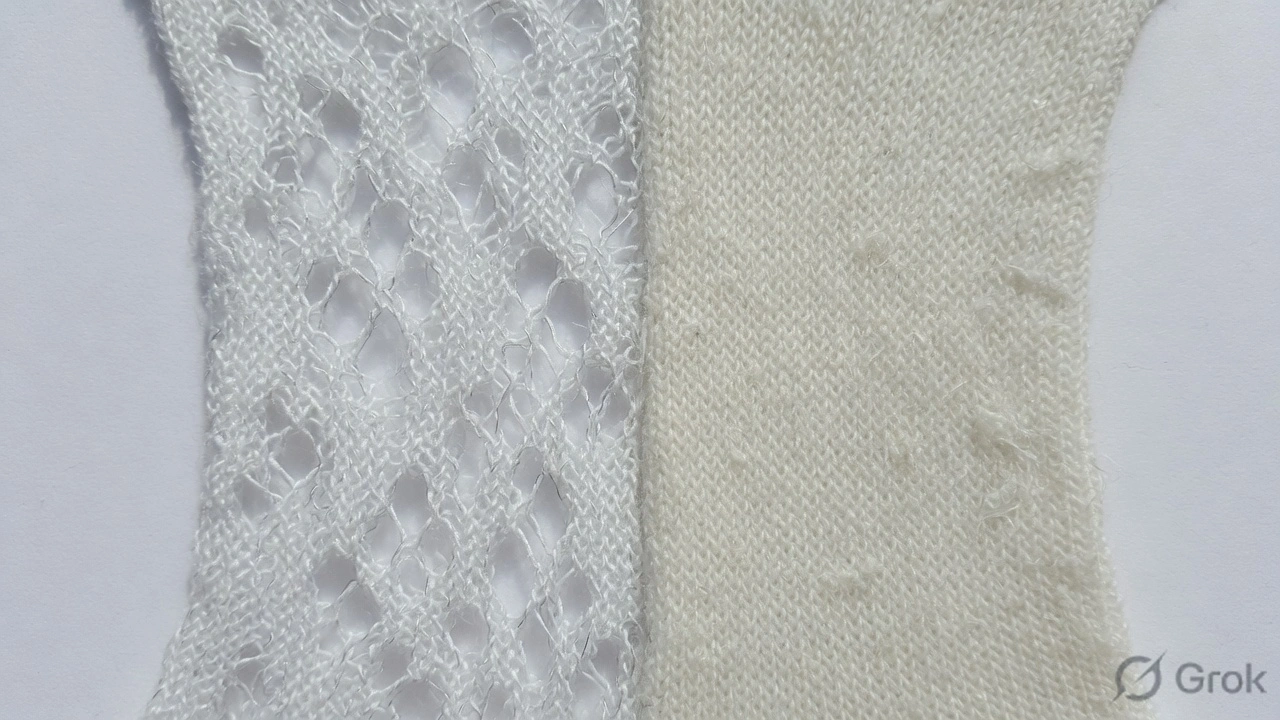
Bamboo fibers are naturally hollow. That hollow structure creates microscopic airflow channels through the fabric that move moisture away from the skin rather than trapping it. The result is a foot that stays drier, cooler, and more comfortable across a full summer day.
The five specific ways bamboo outperforms cotton in summer:
- Moisture management — Bamboo moves sweat away from the skin. Cotton absorbs it and holds it there. After 60–90 minutes of summer activity, a cotton sock is saturated. A bamboo sock stays relatively dry.
- Breathability — Bamboo’s hollow fiber structure creates natural airflow through the fabric. Cotton’s solid fiber structure insulates — the last thing you want in summer heat.
- Odor resistance — Bamboo has a natural antibacterial property that helps slow the growth of odor-causing bacteria. Cotton provides warm, moist conditions that favor rapid bacterial multiplication. The odor difference after a full summer day is significant.
- Softness — Bamboo fiber is finer than cotton and softer against bare skin. For summer wear without thick socks inside shoes, softness reduces friction and prevents the irritation that coarser cotton causes.
- Thermal regulation — Bamboo’s hollow fiber structure passively insulates against both heat and cold. Cotton absorbs heat when wet and provides no active temperature management. In summer, bamboo stays cooler throughout the day.
Bottom line on bamboo vs cotton socks for summer: Bamboo outperforms cotton on moisture, breathability, odor, softness, and temperature management. Cotton’s only advantage is price — and at retail, quality bamboo socks are available at price points close enough to cotton that the performance difference makes cotton an increasingly poor value proposition.
Where Merino Wool Fits In: Better Than Both?
Yes, merino wool outperforms both bamboo and cotton in summer on every technical measure. The question is whether the performance difference justifies the price difference for your specific use case.
Merino manages moisture at the vapor stage, before perspiration becomes liquid sweat. Bamboo manages moisture after it becomes liquid. That is the key technical distinction in comparing bamboo, cotton, and merino. Merino’s foot stays drier at the skin surface. Bamboo’s foot stays drier than cotton but wetter than merino.
According to research by The Woolmark Company, merino wool’s hygroscopic fiber structure maintains thermal equilibrium during both activity and rest phases, actively cooling the foot through evaporation, unlike bamboo’s passive hollow-fiber structure.
When to choose merino over bamboo in summer:
- Multi-day hiking or backpacking, where you cannot change socks daily
- Long-haul travel across multiple days, where odor management matters
- Long working shifts in hot conditions where 8–12 hour moisture management is required
- Any situation where temperature regulation across changing conditions matters
When bamboo is sufficient and the better value choice:
- Everyday casual summer wear — desk work, errands, light walking
- Office environments where you change socks daily
- Retail lines where per-pair cost is a primary constraint
- Sensitive skin that reacts to wool even at fine merino micron counts
Merino wins on performance. Bamboo wins on value. Cotton loses to both for summer use. For the full merino science — including the hygroscopic process step by step and the fabric weight guide — see: Are Merino Wool Socks Good for Summer? What the Material Actually Does
Full Three-Way Comparison Table: Bamboo vs Cotton vs Merino
This bamboo vs cotton vs merino performance comparison covers every property that determines summer sock comfort, rated over 6–8 hours of warm-weather wear.
Multi-day rates show how the material performs across consecutive days without washing. Price points are relative to one another —not absolute figures.
| Property | Bamboo | Merino Wool | Cotton |
| Moisture management | ★★★★☆ — moves liquid moisture away actively | ★★★★★ — absorbs vapor before it becomes liquid | ★☆☆☆☆ — absorbs and retains moisture against skin |
| Breathability | ★★★★☆ — hollow fiber airflow channels | ★★★★★ — crimped fiber structure with air pockets | ★★☆☆☆ — dense solid fiber, minimal airflow |
| Odour resistance | ★★★★☆ — natural bamboo kun antibacterial | ★★★★★ — keratin protein inhibits bacterial growth | ★★☆☆☆ — no natural resistance, odor develops fast |
| Temperature regulation | ★★★★☆ — passive hollow-fiber regulation | ★★★★★ — active bidirectional hygroscopic cooling | ★★☆☆☆ — retains heat when saturated |
| Softness | ★★★★★ — finer than cotton, smooth against skin | ★★★★★ — under 18.5 microns, no itch response | ★★★★☆ — soft when dry, rough when wet |
| Multi-day wear | ★★★☆☆ — 1 day strong, 2 days manageable | ★★★★★ — 2–3 days without odor in warm conditions | ★☆☆☆☆ — odor and discomfort within the first day |
| Durability | ★★★☆☆ — good for casual, lower for high-friction | ★★★★☆ — better in merino-nylon blends | ★★★☆☆ — degrades faster when wet repeatedly |
| Price point | ★★★★☆ — mid-range, best value for performance | ★★☆☆☆ — premium, worth it for the right use case | ★★★★★ — cheapest, does not justify summer trade-off |
| Summer verdict | Best everyday summer sock | Best performance summer sock | Avoid the summer heat |
Summary: The full bamboo vs cotton vs merino performance guide puts bamboo clearly ahead of cotton on every summer metric that matters. Merino sits above bamboo on performance — the 20% difference matters most for multi-day, high-activity, and long-shift use. Cotton’s price advantage does not compensate for its summer performance failures.
Bamboo Summer Socks for Men: What to Look For
The best bamboo summer socks for men use a 60–75% bamboo blend with nylon — bamboo delivers breathability and odor resistance, nylon adds the durability that pure bamboo lacks in high-friction daily wear.
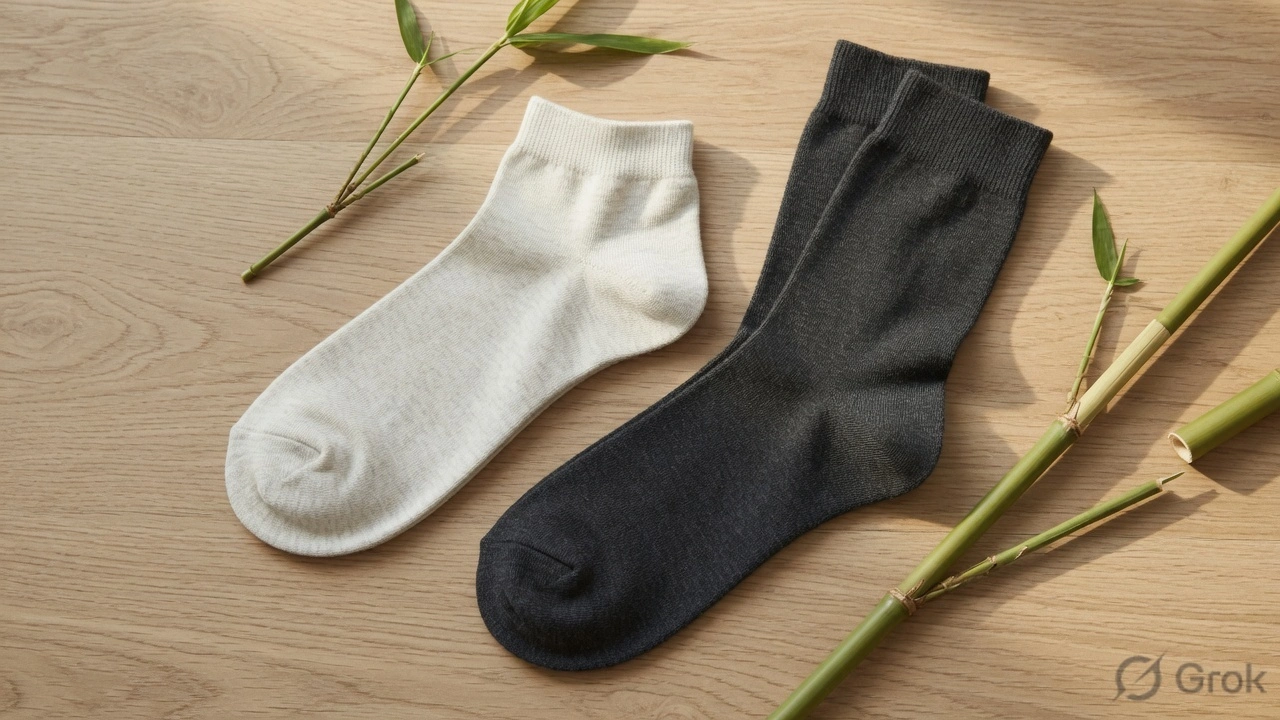
Pure bamboo socks without a nylon component lose their shape faster under the friction of active summer wear. A 65% bamboo, 30% nylon, 5% elastane blend is the standard sweet spot — maintaining bamboo’s breathability and odor resistance while adding the structural integrity that daily wear demands.
Men’s bamboo summer sock buying checklist:
- Bamboo content 60% or higher — below this, the performance advantages diminish significantly
- Nylon component for durability — 25–35% nylon prevents premature thinning at heel and toe
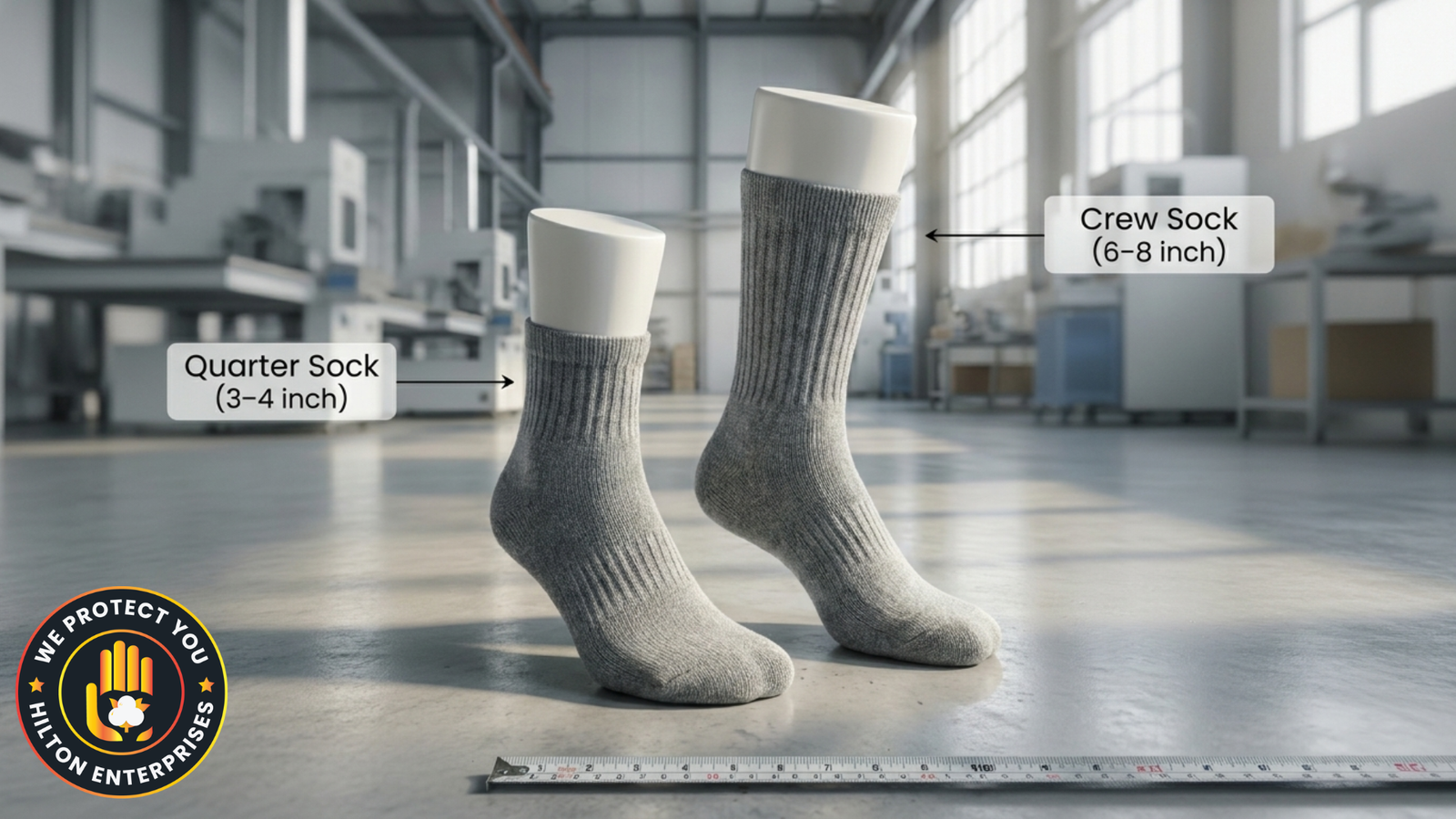
- Ankle cut for everyday and casual footwear — no-show for low-profile trainers and loafers
- Crew cut for boots and smart-casual shoes — protects the ankle collar zone from friction
- Neutral tones — white, grey, navy, and charcoal cover all men’s summer footwear occasions
For men’s summer socks across all materials and use cases — including sport, travel, work, and formal — see: Men’s Summer Socks: Best Styles, Materials and Where to Source Wholesale.
Bamboo Summer Socks for Women: Styles and Use Cases
Bamboo summer socks for women work across more occasions than any other single material — from no-show casual styles to ankle office socks and low crew options for summer boots, hiking shoes, and formal footwear.
Women’s bamboo summer sock styles by occasion:
- No-show/liner — For trainers, canvas shoes, loafers, and summer flats. Stays invisible, manages perspiration, and prevents odor in closed summer footwear without showing above the shoe line.
- Ankle — For everyday wear across most casual and office summer footwear. The most versatile cut in women’s bamboo summer socks.
- Low crew — For ankle boots, hiking shoes, and summer boots where ankle collar friction is a concern. Bamboo’s softness reduces irritation at the boot collar contact point.
For the full women’s summer sock guide — covering compression, hiking, and formal occasions beyond bamboo casual — see: Women’s Summer Socks: From Compression to Hiking — Full Buyer Guide
When Cotton Socks Are Acceptable in Summer
Cotton socks work in summer in one specific situation — short-duration, low-activity indoor wear where foot temperature and perspiration are not significant factors.
If you are sitting at a desk in a fully air-conditioned office, not walking long distances, and wearing shoes for less than 3 hours, cotton socks are acceptable. The absorption problem becomes a discomfort problem only when sweat output exceeds the cotton’s capacity to hold it before it saturates.
Cotton in summer is not acceptable for:
- Any outdoor activity in warm weather
- Walking, commuting, or standing for more than two hours
- Sport, running, or hiking in any temperature
- Travel — especially flights where cabin pressure compounds swelling
- Work shifts of more than three hours in closed footwear
The bottom line: Cotton’s price advantage is real. But for most summer sock applications, bamboo costs marginally more and performs substantially better. At wholesale volumes, bamboo-blend socks are available at price points very close to cotton, making the performance trade-off of cotton increasingly difficult to justify.
Wholesale Sourcing: Bamboo Summer Socks at Scale
Bamboo summer socks are the fastest-growing category in wholesale sock sourcing — driven by consumer demand for breathable, natural-fiber alternatives to cotton that perform in summer heat without the premium price of merino wool.
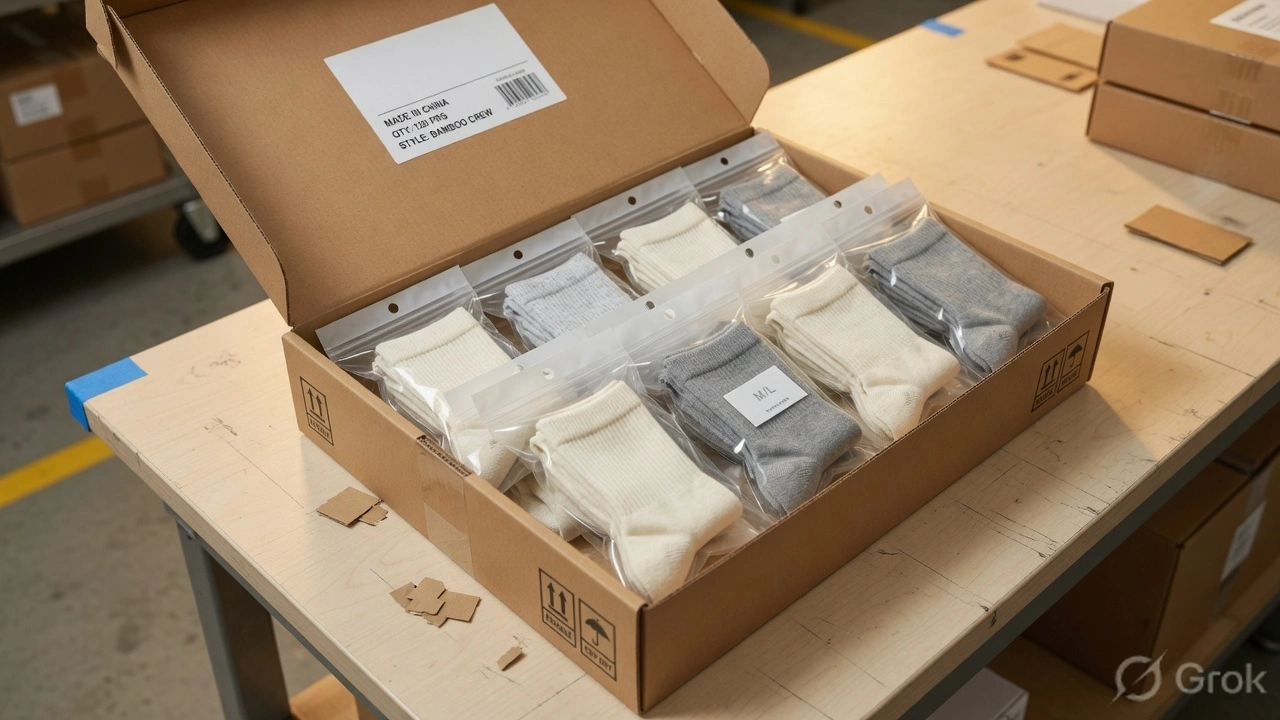
What retail and private-label buyers sourcing bamboo summer sock ranges are specifying:
- 65% bamboo, 30% nylon, 5% elastane — The standard wholesale blend that balances bamboo performance with durability. Most buyers specify this for everyday and casual lines.
- 72% bamboo, 25% nylon, 3% elastane — Higher bamboo content for premium positioning. Softer, more breathable, slightly lower durability at high-friction points.
- No-show, ankle, and crew in one range — Most buyers source all three cuts simultaneously for a complete seasonal offering.
- Natural and neutral color palettes — White, off-white, grey, navy, and charcoal are available. Natural bamboo tones and soft accent colors for premium positioning.
- OEKO-TEX certified bamboo yarn — OEKO-TEX Standard 100 certification is increasingly required by USA and EU retail buyers sourcing bamboo lines — verifying that yarn is free from harmful substances.
Bamboo Summer Sock MOQ and Lead Times at Hilton Enterprises
| Order Quantity | Pricing | Lead Time | Included |
| 1,000–4,999 pairs | Standard rate | 22–28 days | Custom label + basic packaging |
| 5,000–9,999 pairs | 5% reduction | 20–25 days | Jacquard knit + custom label |
| 10,000–24,999 pairs | 10% reduction | 18–22 days | Jacquard knit + label + packaging |
| 25,000+ pairs | Contact for a quote | 16–20 days | Full custom — dedicated QC |
We produce men’s and women’s sizing across no-show, ankle, and crew cuts at our Faisalabad manufacturing facility, with OEKO-TEX-compliant bamboo yarn available on request and direct shipping to USA warehouses in 18–25 days.
- Browse bamboo and summer sock styles on our full sock range page.
- Learn about Hilton’s manufacturing background on our About page.
- Submit your inquiry via our Contact page. We respond within 1 business day.
Also in this series:
Best Socks for Summer: A Complete Guide by Material and Use Case
Are Merino Wool Socks Good for Summer? What the Material Actually Does
Men’s Summer Socks: Best Styles, Materials, and Where to Source Wholesale
Women’s Summer Socks: From Compression to Hiking — Full Buyer Guide
Can You Wear Compression Socks in Summer? Yes — Here’s How