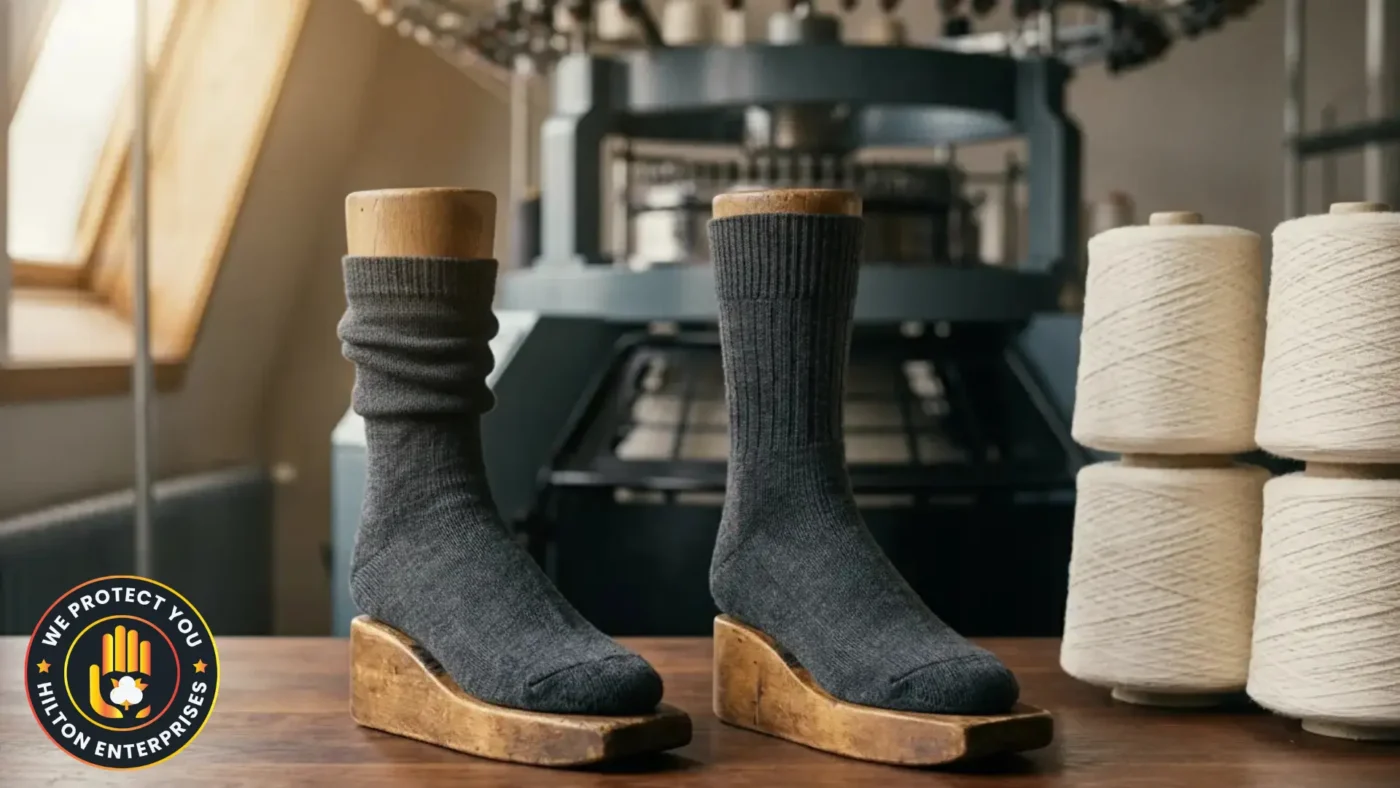
Quick answer: In the diabetic socks vs compression socks comparison, diabetic socks are built non-binding to protect circulation, while compression socks are built to apply graduated pressure and actively improve it. The two serve different jobs, so a manufacturer building either one makes different decisions on the knitting machine to get there.
Diabetic socks feature a loose, low-tension top band and a seamless toe to prevent injury and irritation in sensitive feet. Compression socks use elastic yarn engineered into the knit, so the sock squeezes tighter at the ankle and looser toward the knee. That gradient pushes blood back toward the heart.
This guide explains what separates them at the construction level. It also covers when a hybrid version makes sense. And it covers what buyers sourcing either style should know before placing an order.
What Are Diabetic Socks?
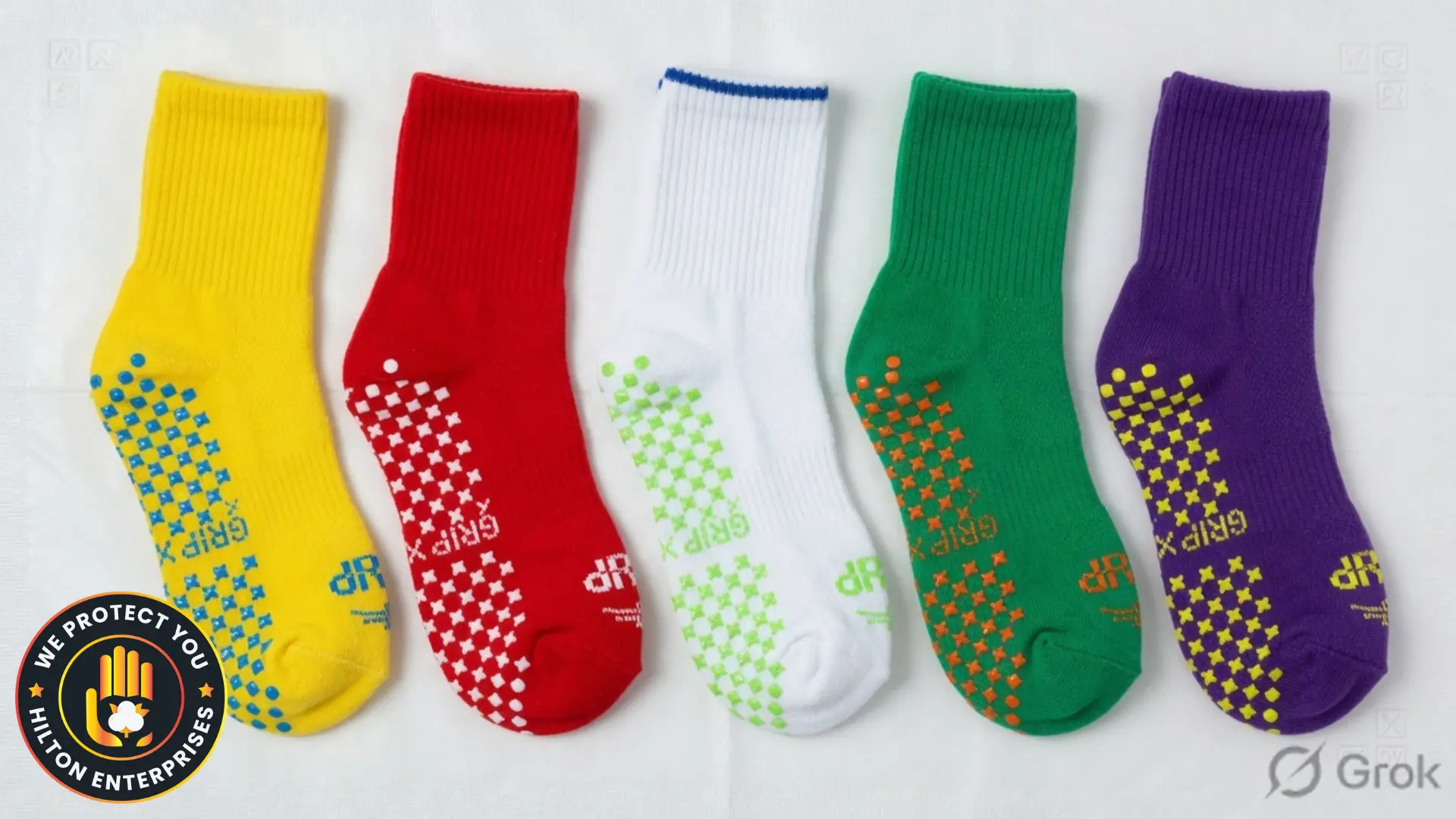
Diabetic socks are non-binding socks designed to protect the feet of people with reduced sensation or circulation, which are common complications of diabetes. In short, the goal is injury prevention, not pressure.
Three construction choices define a diabetic sock:
- A non-elastic or low-tension welt. The welt is the technical term for a sock’s top band. Standard socks use a tight 1×1 ribbed cuff with 3–7% spandex to grip the leg. Diabetic socks skip that ribbed structure entirely. Instead, they use a single-jersey welt with minimal or no elastic. So the band can’t dig into the leg or restrict blood flow.
- A seamless or low-profile toe closure. This reduces friction at the one spot most likely to blister on a foot that may not register early warning pain.
- Moisture-wicking, often antimicrobial yarn. This keeps feet dry, since damp skin breaks down faster and heals more slowly in diabetic feet.
What Are Compression Socks?
Compression socks apply graduated pressure to the leg. They’re tightest at the ankle and gradually looser toward the knee. That gradient supports blood flow back toward the heart.
Where the Pressure Actually Comes From
That pressure isn’t created by a tight cuff. Rather, it comes from an elastomeric inlay yarn knitted directly into the fabric. The machine is programmed to vary the yarn’s tension and density course by course. More tension at the ankle, less further up — that’s what produces the graduated effect, not a single elastic band.
Compression socks are commonly used for varicose veins, swelling, long shifts on your feet, travel, and athletic recovery. Our guide to wearing compression socks covers fit, mmHg levels, and when to wear them in more detail.
Diabetic Socks vs Compression Socks: Side-by-Side Comparison
| Comparison | Diabetic Socks | Compression Socks |
| Primary goal | Protect feet, prevent injury | Improve circulation, reduce swelling |
| Top-band (welt) | Non-elastic or low-tension, single-jersey | Often firmer, but not the source of compression |
| Pressure | None — designed to avoid constriction | Graduated, strongest at the ankle |
| Toe construction | Seamless or linked, to reduce friction | Standard, friction not the primary concern |
| Built for | People with diabetes, neuropathy, and sensitive feet | Anyone needing circulation support |
| Can restrict blood flow | No — that’s the point | Intentionally, in a controlled, graduated way |
How Diabetic Sock Construction Actually Differs From a Regular Sock
Why a Regular Sock Cuff Grips
A regular sock cuff stays up because of mechanical grip. It uses a 1×1 rib structure, knitted on a double-cylinder machine, with spandex content that snaps back into shape after every step.
Why a Diabetic Sock’s Welt Doesn’t
A diabetic sock’s welt is built to avoid exactly that grip. It’s typically a single-jersey structure — minimal or no rib, low or no elastic content. Instead of circumferential tension, it holds its position through fabric friction spread over a wider area.
According to CottonWorks, the welt is the foundation of a sock’s structure and directly affects fit. That’s why this one construction choice matters more than any fabric or color decision. It’s what makes a sock “diabetic” rather than just “loose-fitting.”
The Toe Seam Most Buyers Never Think About
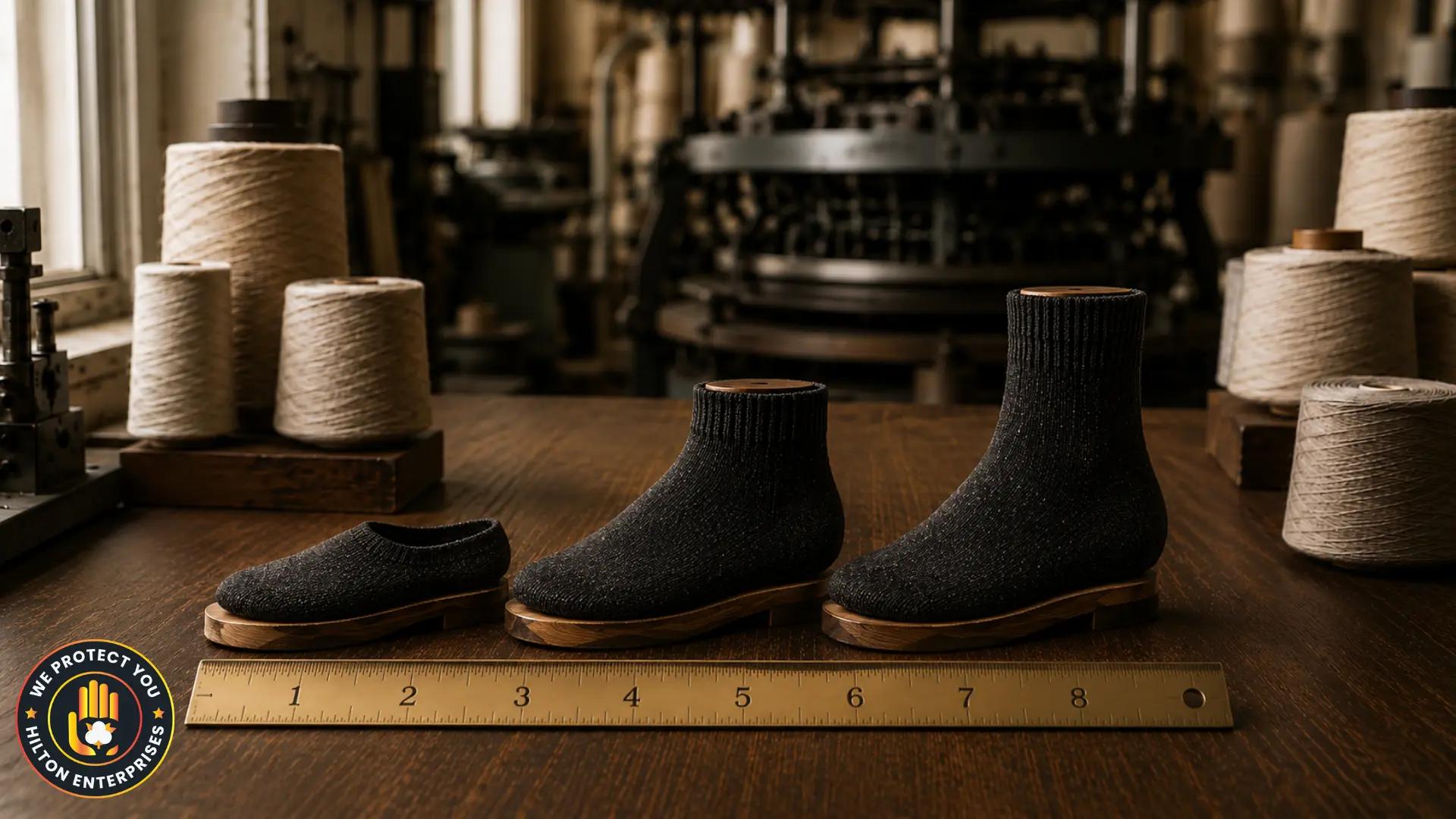
Toe construction is the second place where diabetic socks diverge from standard production. It’s worth knowing the actual options, since the difference is easy to feel and hard to see.

A linked toe seam lies flat against the skin; an overlock seam leaves a ridge — the difference that matters most on sensitive feet.
Three Ways a Toe Gets Closed
- Hand-linked (Rosso linking): stitches are transferred loop by loop onto a linking machine. Flat, virtually undetectable seam. Highest cost, slowest to produce.
- Machine-linked, true-linking systems: automated linking devices — Lonati’s SbyS system is the industry reference point — that closes the toe with the same loop-to-loop logic at production speed. Very flat, scalable.
- Rosso/overlock stitching: the default for most commercial sock production. Fast and cheap, but it leaves a raised ridge exactly where the toe bends inside a shoe. That ridge is the most common cause of toe-area blistering.
Why This Matters More on Diabetic Feet
For a diabetic sock, that ridge isn’t a minor comfort issue. It’s the friction point that matters most on feet with reduced sensation. A forming blister can go unnoticed there until it’s already a real problem.
Can a Sock Be Both Diabetic and Compression?
Why the Two Goals Pull Against Each Other
Yes, but it has to reconcile two construction goals that pull in opposite directions. On one hand, graduated pressure needs controlled elastic tension. On the other hand, non-binding wear needs the opposite.
How Manufacturers Solve It With Zone Construction
Manufacturers solve this with zone-specific construction rather than a single compromise setting. Specifically, compression is engineered through the ankle and lower calf. There, the elastomeric inlay yarn is knitted at a higher density, which decreases as you move up the leg.
Meanwhile, the calf opening features a non-binding welt rather than a ribbed cuff. And in most clinically designed versions, the foot itself is built compression-free. Instead, it gets padding and a seamless toe.
The One Medical Caveat Worth Knowing
One distinction worth understanding before combining the two: compression isn’t automatically safe for everyone with diabetes. People with significant peripheral arterial disease need a clinical check first. That’s reduced arterial blood flow, distinct from the venous issues compression normally targets.
That’s because when arterial pressure is already very low, additional compression can further reduce blood flow rather than help it. Sigvaris builds diabetic-specific compression products. As a compression-garment manufacturer, it recommends a vascular assessment before fitting anyone with diabetes for compression hosiery.
This is a clinical question between a patient and their doctor, not a sourcing decision. Still, it’s worth knowing if you’re stocking or recommending either product.
What This Means for Sourcing a Sock Line
If you’re building a private-label or wholesale sock program, the diabetic-vs-compression question usually isn’t either-or. Rather, it’s which one matches your buyer.
- Medical supply, podiatry, and senior care distributors typically want diabetic socks first: non-binding welt, seamless toe, moisture control.
- Pharmacy, travel retail, and athletic recovery buyers typically want compression socks with graduated pressure and defined mmHg levels, often with shorter MOQs per colorway since fewer SKUs are needed.
- Buyers serving an older or at-risk demographic — assisted living suppliers, diabetic-care retailers — are the ones who actually ask about the hybrid version, and it’s worth stocking if that’s your audience.
Our private label sourcing guide covers MOQs, sampling, and lead times in more depth if you’re scoping a new program. Also, see how we manufacture both constructions
Frequently Asked Questions
Are diabetic socks the same as compression socks?
No. Diabetic socks are built with a non-binding, no-pressure design to protect sensitive feet. Compression socks, however, are built to apply graduated pressure and actively support circulation. So they solve different problems.
Can a diabetic wear compression socks?
Often yes, but not automatically. People with diabetes and healthy arterial circulation generally tolerate compression well. Anyone with significant arterial insufficiency should get a vascular check before wearing graduated compression.
Why don’t diabetic socks have elastic tops?
A tight elastic band can press into a leg with already-reduced circulation. Diabetic sock construction is built specifically to avoid that. The welt uses minimal elastic and a wider contact area instead of a gripping band.
Is a seamless toe actually necessary, or is it marketing?
It’s a real difference in construction, not just a label. Standard overlock toe closing leaves a ridge at the exact point where the toe bends in a shoe. That friction is a known cause of blistering, and a meaningful risk on feet with reduced sensation.
Sourcing Diabetic or Compression Socks for Your Brand
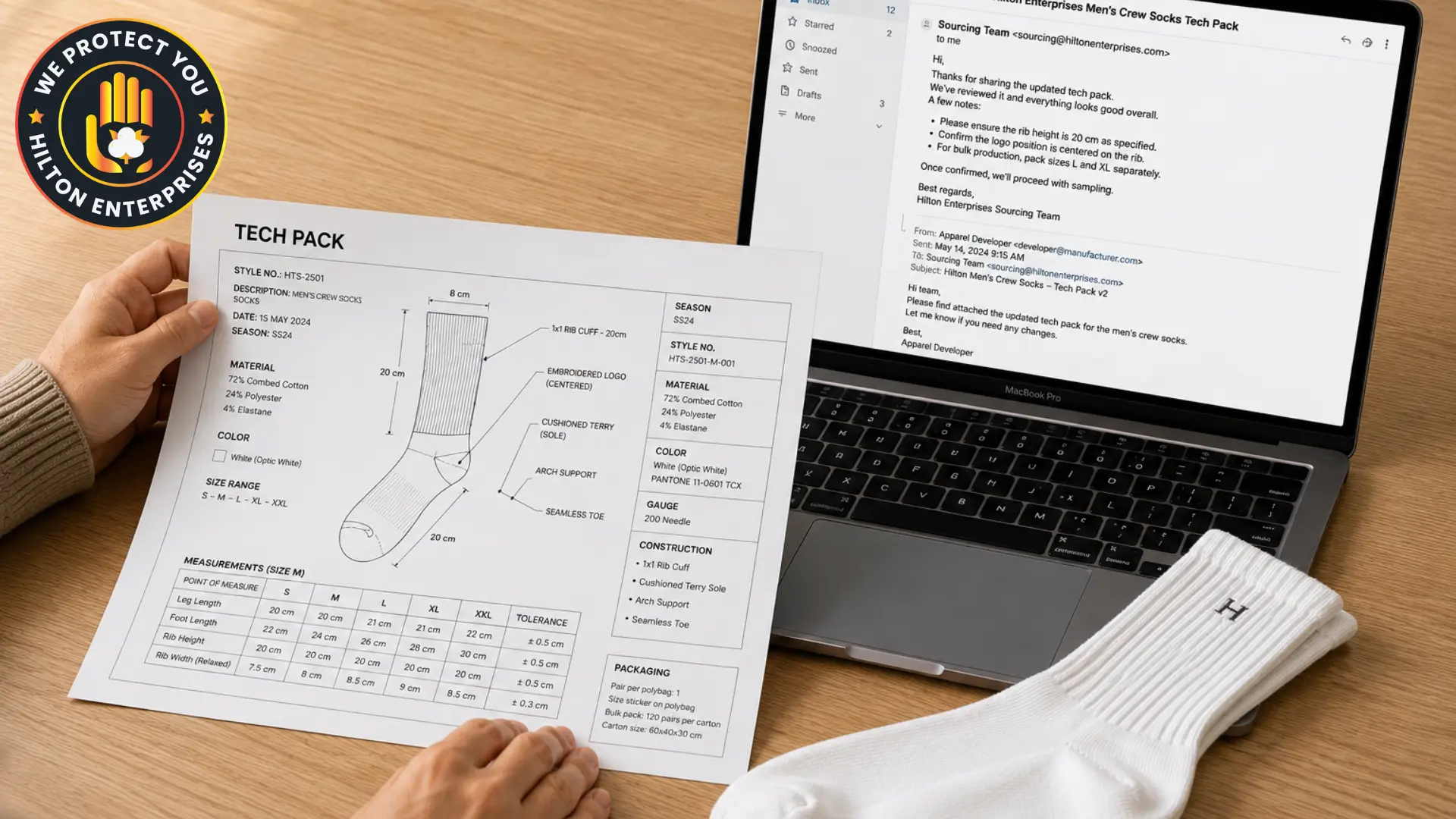
Hilton Enterprises manufactures both diabetic and compression socks for wholesale and private-label brands across the USA, Canada, Europe, and the Gulf. Construction is built to spec throughout — welt tension, toe closure method, and compression zoning are all configurable per program, starting at 5,000 pairs per style.
- Browse diabetic compression sock specifications
- Read more on how socks are made, covering knitting, toe closing, and finishing in full
- See our compression socks guide for mmHg levels and fit
- Request a wholesale quote
Hilton Enterprises — Manufacturers and Exporters of Premium Socks Since 1970. Faisalabad, Pakistan. Serving wholesale and private-label brands in the USA, Canada, Europe, and the Gulf.