Yes, you can wear compression socks in summer. The material makes the difference — not the compression level.
Most people who find compression socks unbearable in heat are wearing thick nylon stockings designed for cool conditions. Switch to a breathable merino or bamboo construction, and the problem disappears. The graduated pressure still works. The heat trap does not.
This guide covers exactly how to wear compression socks in summer without overheating — including when to put them on, how long to wear them, what to pair them with, and how to style them so they look intentional rather than medical.
Quick Answer — How to Wear Compression Socks in Summer
To wear compression socks in summer without overheating: choose a lightweight merino or bamboo construction, put them on first thing in the morning before swelling starts, wear 15–20 mmHg for most everyday use, and remove them after 8–12 hours.
The six-step process below covers every detail. But if you only change one thing — change the material. That single switch eliminates 90% of the discomfort that makes summer compression socks feel unbearable.
For the complete guide on summer compression socks — including material comparison, mmHg levels by use case, and who needs them — see: Can You Wear Compression Socks in Summer? Yes — Here’s How
Step 1 — Choose the Right Material
The material determines whether your compression sock works with your body in summer or against it.
Standard nylon compression socks are built for pressure, not breathability. In summer heat, they trap warmth, block airflow, and cause the sweating that makes the sock shift and lose its compression gradient.
The fix is a breathable construction. Here is how the main options compare:
| Material | Summer Performance | Best For |
| Merino Wool ★ | Regulates temperature + wicks vapor before it becomes sweat | Travel, hiking, long shifts, multi-day wear |
| Bamboo Blend | Breathable hollow fiber + natural antibacterial | Every day work, casual standing, office use |
| CoolMax® Polyester | Fastest moisture wicking — sport-specific | Running, sport, high-output activity |
| Standard Nylon ✗ | Traps heat, blocks airflow, causes sweating | Avoid in summer — designed for cool conditions |
Choose merino or bamboo for most summer compression sock use. Both deliver graduated pressure without the heat trap. Standard nylon is the material causing most people’s bad experience with summer compression, not the compression itself.
Step 2 — Put Them On at the Right Time
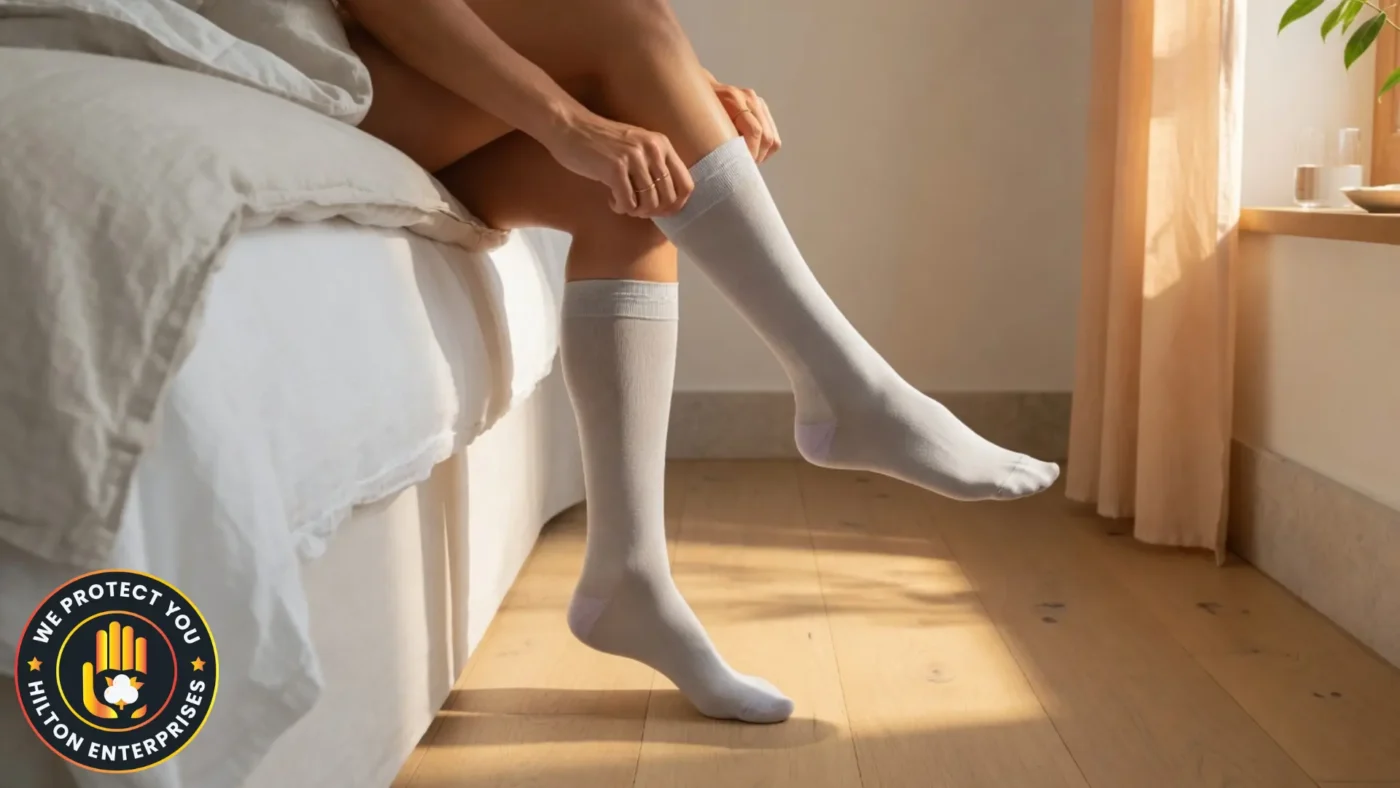
Put compression socks on first thing in the morning — before your legs swell, before the heat builds, and before you put your shoes on.
This is the single most impactful habit change for anyone struggling with summer compression socks. Here is why it matters:
- Legs are least swollen in the morning. Overnight, the elevation drains pooled blood. A compression sock goes on most easily — and fits most accurately — at this point.
- The compression gradient is based on a neutral baseline. Putting compression socks on already-swollen legs in the afternoon is like trying to drain a full bath with the tap running. Morning application works with your circulation, not against it.
- Dry skin grips better. Heat and morning shower moisture aside, skin that has not perspired for hours accepts the sock more smoothly, reducing the bunching that causes heat buildup.
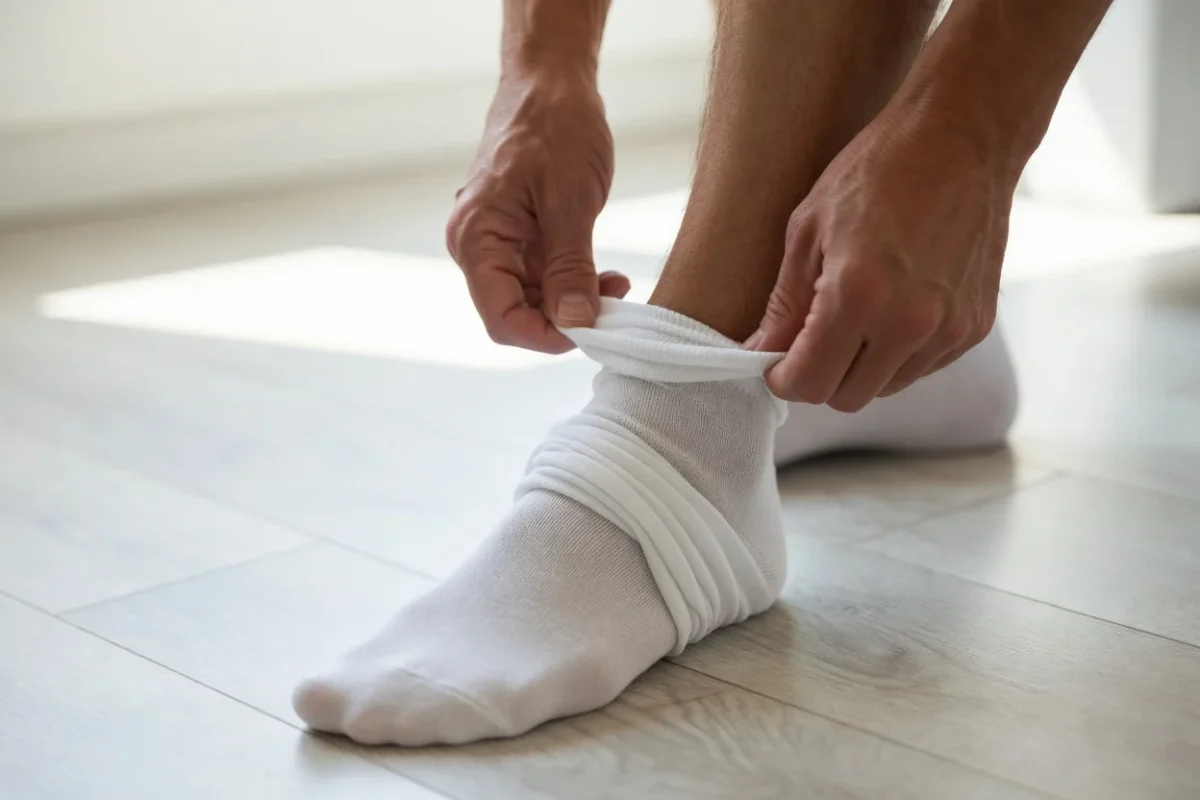
Gather the sock from the toe and unroll it upward — never pull from the top. This technique prevents runs, preserves the compression gradient, and reduces the effort that makes morning application frustrating.
The morning routine in three steps:
- Sit on the edge of the bed — legs slightly elevated on the floor
- Gather the sock from the toe, turning it inside out to the heel
- Pull over the foot and unroll upward — do not yank from the top
Step 3 — Choose the Right Compression Level
In summer, the right compression level is the lowest that still addresses your specific need — not the highest available.
Higher mmHg does not mean better results in heat. It means more material, more pressure, and more warmth. For summer, work from the bottom of the appropriate range upward.
- 8–15 mmHg — Travel, desk work, mild prevention. Lightest effective option. Feels close to a regular sock. Start here if you are new to compression in summer.
- 15–20 mmHg — Long-standing shifts, moderate swelling, post-exercise recovery, frequent travel. The most commonly recommended level for everyday summer compression use.
- 20–30 mmHg — Varicose veins, significant swelling, medical conditions. Use a breathable merino or bamboo construction at this level in summer. Consult a doctor if unsure.
- 30+ mmHg — Prescription-only. Not general summer wear.
Most people reading this guide need 15–20 mmHg. If your primary concern is travel swelling or end-of-day leg fatigue, start at 15 mmHg in a merino or bamboo construction and adjust from there.
Step 4 — Know How Long to Wear Them
Wear compression socks for 6–12 hours in summer. Take a 30-minute break mid-day if conditions allow. Remove them before sleeping.
Duration guidance for common summer situations:
- Long-haul flight — Wear from departure to arrival. Remove at the hotel, elevate legs for 20 minutes.
- Full work shift (8–12 hours) — Wear throughout the shift. Remove when you get home. Elevate legs for 15–20 minutes.
- Summer day hike (4–8 hours) — Wear for the full hike. Remove at camp or after the day’s activity.
- Desk work in summer heat — Wear for the duration of the workday. A mid-afternoon 30-minute break helps in very hot conditions.
Do not sleep in compression socks unless a doctor has specifically recommended this. When horizontal, your circulation does not need assistance, and overnight compression in heat adds warmth without benefit.
Step 5 — How to Style Compression Socks in Summer
Styling compression socks in summer is simpler than most people think — modern lightweight compression socks in breathable materials look identical to regular crew socks when worn correctly.
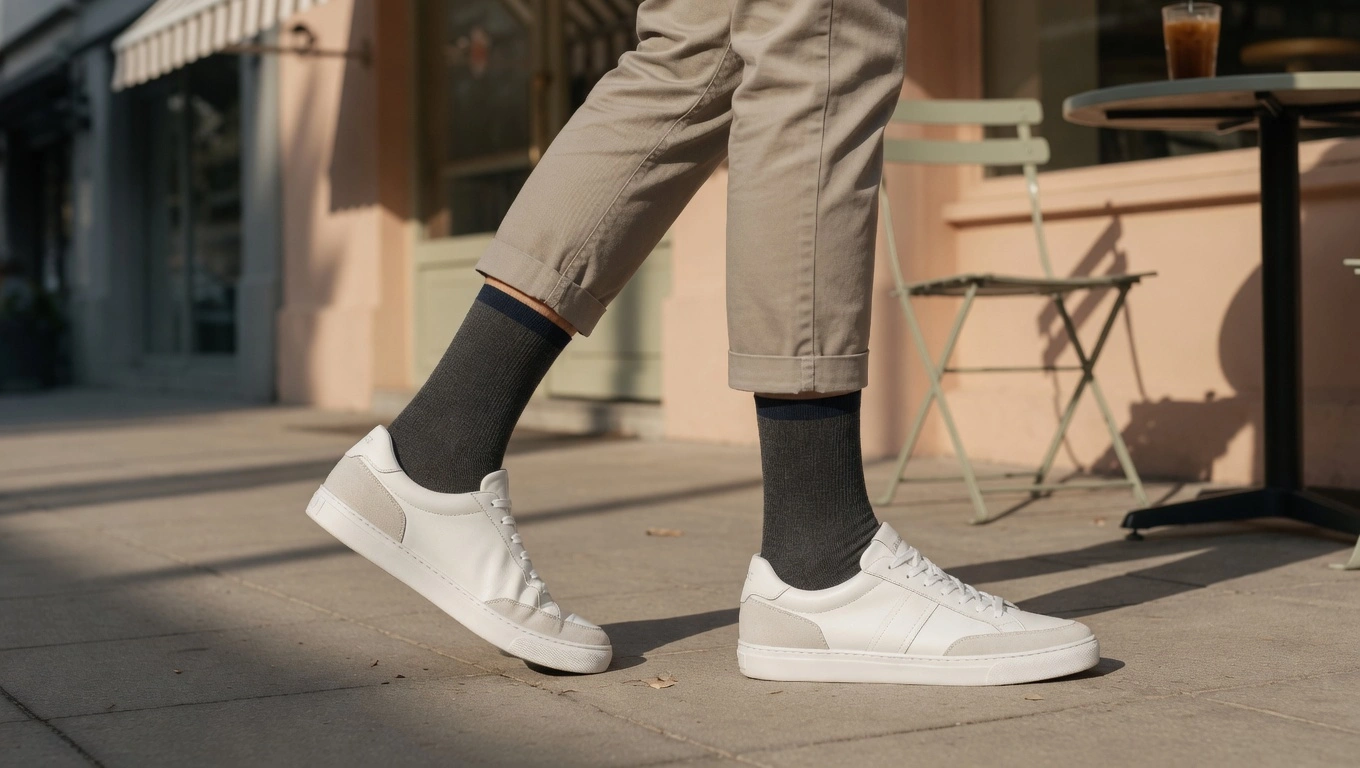
Modern summer compression socks in merino or bamboo look like regular crew or knee-high socks — visible with shorts or chinos, invisible under trousers. The medical aesthetic is a nylon problem, not a compression problem.
The “medical stocking” look comes from thick nylon in beige or white. A lightweight merino or bamboo compression sock in charcoal, navy, white, or grey looks like any quality crew sock. Nobody knows you are wearing compression.
Styling by occasion:
- With shorts — Knee-high compression socks worn with shorts is a legitimate athletic and outdoor aesthetic. Choose a technical or merino style in a neutral or muted color. This is standard wear for runners, hikers, and cyclists — it reads as performance gear, not medical wear.
- With chinos or trousers — Compression socks are completely invisible under full-length trousers: any color, any height. Nobody sees them.
- With a summer suit or formal wear — Lightweight merino compression in black or charcoal at 15–20 mmHg looks and feels identical to a standard dress sock. The compression is invisible. The benefit is not.
- With casual summer footwear, Low-cut compression ankle socks work with trainers and casual shoes for everyday wear, where knee-high socks are unnecessary. 8–15 mmHg in a bamboo ankle cut is the most discreet option.
Color guidance: White, grey, charcoal, and navy work universally. Avoid beige — it reads as medical. Black is formal. Muted colors (olive, slate, dusty blue) work well for outdoor and casual contexts.
Step 6 — Care Routine That Preserves Compression in Summer
Summer sweat breaks down compression elasticity faster than any other factor — washing after every wear is not optional, it is the maintenance that keeps the sock working.
Sweat salts — particularly the sodium and urea in perspiration — degrade the spandex and nylon fibers that hold the compression gradient. A compression sock worn in summer without washing between sessions loses its elasticity significantly faster than one washed consistently.
The correct care routine:
- Wash after every single wear — No exceptions in summer. The sweat volume from a warm day is enough to begin degrading the compression fibers overnight if left unwashed.
- Machine wash gentle or hand wash — Cold or warm water, maximum 30–40°C. Hot water degrades both the compression fibers and the breathable yarn structure.
- Air dry—never tumble dry. Heat from a dryer shrinks the knit, hardens the compression band, and significantly reduces the sock’s elasticity.
- Never iron the sock — Direct heat melts spandex and permanently distorts the compression gradient.
- Store flat or loosely rolled — Folded or compressed storage flattens the knit structure over time.
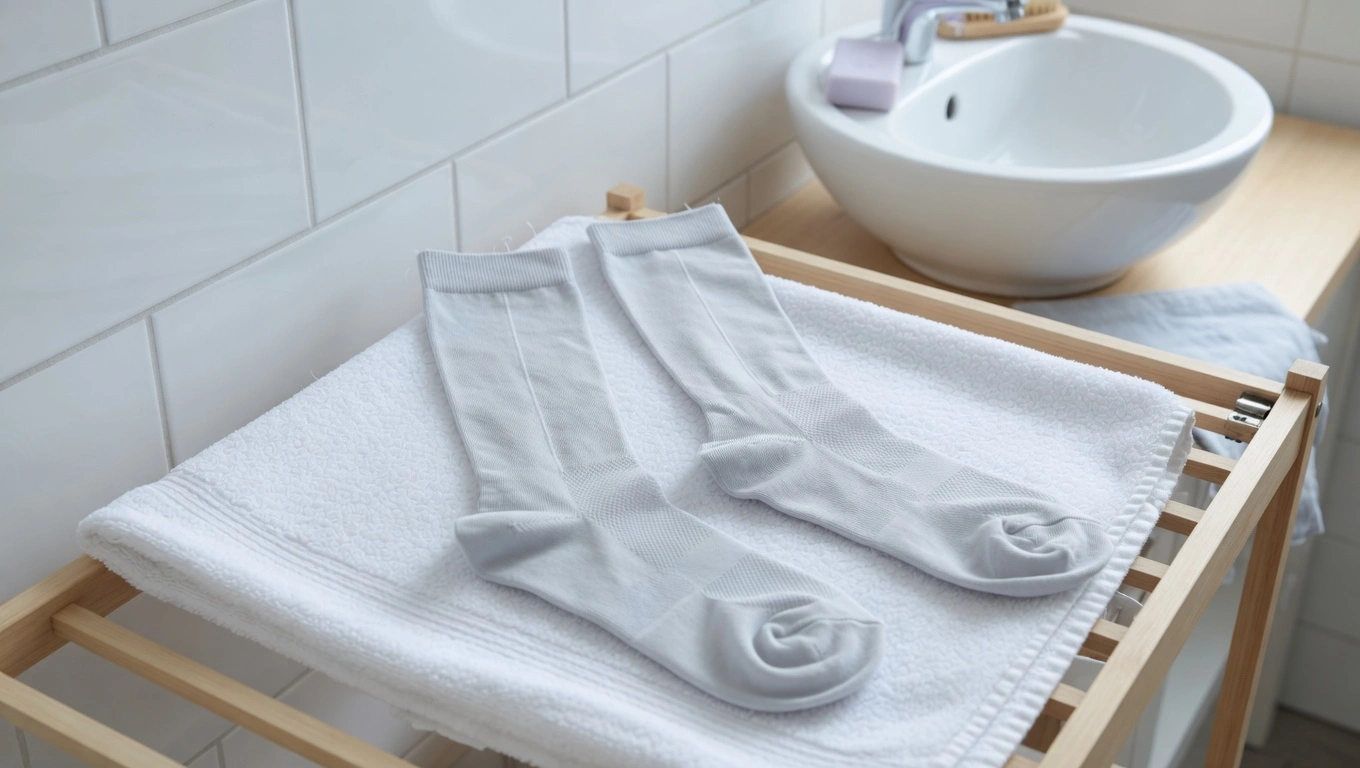
ash after every summer wear; air-dry flat—never tumble-dry. Sweat salts degrade compression elasticity faster than any other factor. The right care routine doubles the lifespan of a high-quality compression sock.
A quality merino or bamboo compression sock properly cared for lasts 150–200+ wears. The same sock, washed in hot water and tumble-dried, regularly degrades after 30–40 wears.
Frequently Asked Questions (faq) :
Q: How do you wear compression socks in summer without overheating?
Q: Can you wear compression socks in hot weather?
Q: What is the best time to put on compression socks in summer?
Q: How long can you wear compression socks in summer?
Q: How do you style compression socks in summer?
Q: What mmHg level is best for compression socks in summer?
Source Summer Compression Socks Built for Heat — Hilton Enterprises
Hilton Enterprises manufactures summer compression socks in merino wool, bamboo, and CoolMax® performance blends — lightweight constructions that deliver graduated pressure without the heat trap of standard nylon compression.
We supply wholesale and private-label brands in the USA and Canada, with a minimum order of 5,000 pairs per style. Custom design, sampling, and direct shipping to USA warehouses in 18–25 days.
- Browse compression and summer sock styles on our full sock range page.
- Read the complete summer compression sock guide: Can You Wear Compression Socks in Summer?
- Submit your wholesale inquiry via our Contact page. We respond within 1 business day.
Also in this series:
Can You Wear Compression Socks in Summer? Yes — Here’s How
Best Socks for Summer: A Complete Guide by Material and Use Case
Are Merino Wool Socks Good for Summer? What the Material Actually Does
Best Summer Hiking Socks: What to Look for in Every Pair
Women’s Summer Socks: From Compression to Hiking — Full Buyer Guide