Merino wool and summer do not seem to belong in the same sentence. Most people associate wool with thick winter jumpers, heavy blankets, and cold weather gear. The idea of wearing a wool sock in July sounds like a mistake.
It is not. For most summer use cases — travel, hiking, long days on your feet — merino wool outperforms cotton and standard synthetics on every metric that matters in heat. As manufacturers who have worked with merino fiber directly since 1970, we can explain exactly what is happening at the material level — and why it changes everything about how the sock behaves on your foot.
Not sure which summer sock type is right for your situation yet?
Our Best Socks for Summer guide covers every material and use case from hiking to everyday wear — before narrowing down to merino specifically.
Quick Answer: Yes — merino wool socks are excellent for summer. Despite its association with winter, merino wool’s fine-fiber structure actively regulates temperature, wicks moisture before it becomes liquid sweat, and resists odor for 24–48 hours of continuous warm-weather wear. The key is choosing summer-weight merino — not the same sock you wear in winter. A lightweight merino sock performs better in summer heat than cotton, standard polyester, or nylon.
The Myth vs the Reality
The myth is that wool equals heat. The reality is that merino wool regulates temperature — it does not create it.
The myth:
Wool is a winter material. Wearing wool socks in summer will make your feet hot, sweaty, and uncomfortable.
The reality:
Merino wool regulates temperature in both directions. In summer heat, its fiber structure actively pulls moisture away from the skin and cools your foot, outperforming cotton and most synthetics on every metric that matters in warm conditions.
The confusion comes from conflating standard wool with merino. Standard wool fibers are thick, 30 microns or more in diameter, which is why they feel scratchy and trap heat. Merino fibers measure under 18.5 microns. That is roughly one-fifth the diameter of a human hair. That fineness changes everything about how the material behaves on your foot in summer.
What Merino Wool Actually Does in Summer Heat? The Fiber Science
Merino wool’s summer performance comes from three fiber properties working simultaneously: micron fineness, natural crimp structure, and hygroscopic moisture management. These are not marketing claims. They are measurable material properties that explain why a merino sock performs differently from cotton or polyester at a structural level.
Key numbers worth knowing before buying any merino sock for summer:
- Under 18.5 microns — merino fiber diameter, fine enough for year-round lightweight knitting. This is the superfine classification standard set by the International Wool Textile Organisation (IWTO) — the global body that certifies and grades wool fiber quality worldwide.
- 35% — the proportion of its own weight that merino can absorb as vapour before it becomes liquid sweat
- 27x — the multiple of its own weight that cotton can absorb and hold against the skin as liquid moisture
- 48 hours — typical odour-free continuous wear time for merino wool in warm conditions
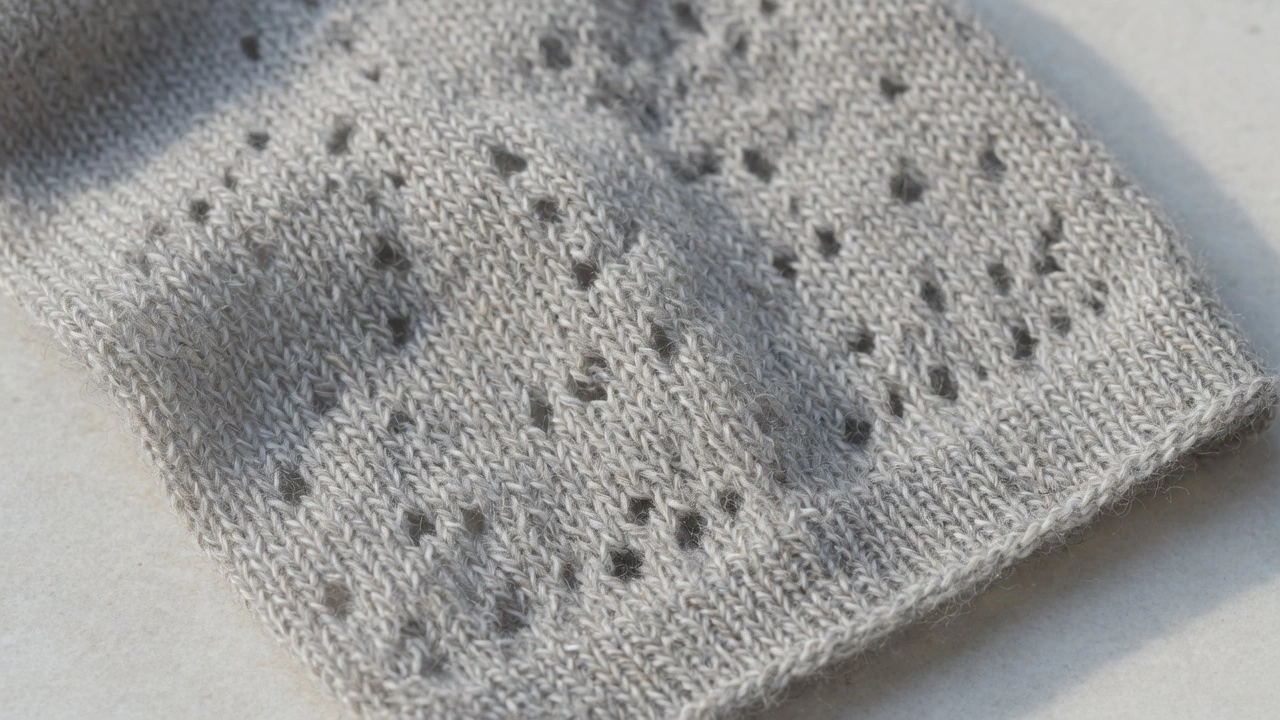
Merino wool fibers measure under 18.5 microns in diameter — fine enough to knit into open, breathable summer-weight structures that manage heat and moisture in both directions.
According to research published by The Woolmark Company — the global wool certification and research authority — merino wool fibers have a natural three-dimensional crimp structure that creates air pockets within the fabric. These air pockets insulate in cold conditions and allow heat to escape in warm ones, giving merino its bidirectional temperature management that no synthetic fiber replicates naturally.
The Hygroscopic Process: How Merino Manages Moisture Step by Step
Merino wool manages moisture through a hygroscopic process — absorbing sweat as vapour before it becomes liquid, moving it outward through the fiber, and releasing it through evaporation that actively cools the foot. This is why a merino sock feels dry even when you have been sweating. It is not that you sweat less — it is that the moisture never sits on your skin long enough to cause discomfort.
Here is the process in order:
Step 1 — Your foot begins to sweat:
Heat causes perspiration. In a cotton sock, liquid sweat immediately saturates the fabric and sits against the skin. In merino, the fiber intercepts moisture at the vapour stage — before it becomes liquid.
Step 2 — Merino absorbs the vapour internally
The keratin protein structure inside each merino fiber absorbs moisture vapour into the fiber core — up to 35% of the fiber’s own weight. The outer surface of the sock remains dry throughout this stage.
Step 3 — Moisture moves to the outer surface
The fiber’s natural crimp structure creates a wicking pathway. Moisture travels from the inner surface — against your skin — outward through the sock toward the outer surface where airflow can reach it.
Step 4 — Evaporation cools the foot
Once moisture reaches the outer surface, it evaporates. This evaporation process releases heat — actively cooling the foot. The more you sweat, the more cooling occurs. The foot stays dry, comfortable, and significantly cooler than in any cotton or standard synthetic sock.
Why Merino Resists Odour Naturally
Merino wool resists odour because its keratin protein structure inhibits the growth of odour-causing bacteria — without any chemical treatment or added antimicrobial finish.
Odour in socks comes from bacteria feeding on sweat. Cotton and synthetics provide a wet, warm environment where bacteria multiply rapidly. Merino does the opposite — by keeping the inner surface dry and releasing a natural antibacterial compound from its keratin protein structure, it prevents the bacterial growth that causes smell.
This is why merino socks can be worn for 48 hours or more in warm conditions without developing odour. For travel, hiking, or multi-day outdoor events, this property alone justifies the price premium over cotton.
Manufacturer’s note:
At Hilton Enterprises, we knit merino wool at different weights for different seasons. A summer-weight merino sock uses a finer gauge and open knit structure that increases airflow without reducing the fiber’s natural temperature and moisture management properties. The weight and knit structure determine summer suitability — not the fiber itself. You can browse our current merino sock range on the full sock range page.
Merino vs Cotton vs Synthetic: Summer Performance Comparison
In every metric that matters for summer sock performance, merino wool outperforms cotton and matches or exceeds most synthetics — with the additional advantage of natural odour resistance that no synthetic fiber delivers without chemical treatment. The table below reflects performance during 8+ hours of warm weather wear, based on unmodified fiber properties with no chemical treatments applied.
| Material | Temp Regulation | Moisture Wicking | Dries Quickly | Odour Resistance | Summer Rating |
| Merino Wool ★ | ★★★★★ | ★★★★★ | ★★★★☆ | ★★★★★ | ★★★★★ |
| Bamboo | ★★★★☆ | ★★★★☆ | ★★★★☆ | ★★★★☆ | ★★★★☆ |
| CoolMax® Polyester | ★★★☆☆ | ★★★★★ | ★★★★★ | ★★★☆☆ | ★★★★☆ |
| Standard Polyester | ★★☆☆☆ | ★★★☆☆ | ★★★★☆ | ★★☆☆☆ | ★★★☆☆ |
| Cotton ✗ | ★☆☆☆☆ | ★☆☆☆☆ | ★☆☆☆☆ | ★★☆☆☆ | ★★☆☆☆ |
★ Best performer for summer ✗ . Avoid it entirely in the summer heat
For a direct comparison of merino against bamboo and cotton across all summer metrics: Bamboo vs Cotton Socks for Summer: Are They Better?
Summary: Merino wool leads across every summer performance metric except drying speed, where CoolMax® polyester is faster. CoolMax® wicks faster during peak sport activity, but cannot match merino on temperature regulation or odour resistance. Cotton performs adequately on softness — and fails on everything else that matters in summer heat.
For a full comparison of all summer sock materials across use cases, budgets, and performance — including bamboo, compression, athletic, and formal options.
See: Best Socks for Summer: A Complete Guide by Material and Use Case.
Summer Weight vs Regular Merino: The Difference That Matters
The most common mistake people make with merino socks is buying regular or winter-weight merino for summer. The fiber is right, but the knit construction is wrong. If you have tried merino socks in summer and found them too warm, this is almost certainly what happened.
Merino socks are manufactured at different fabric weights for different conditions, measured in grams per square meter (g/m²). Here is how the weight categories break down:
| Weight Label | Fabric Weight | Best Season | Best Use Case |
| Ultralight / Liner ✓ | Under 150 g/m² | Summer | Hiking, travel, sport |
| Lightweight ✓ | 150–250 g/m² | Summer / All-season | Every day, office, casual |
| Midweight | 250–350 g/m² | Spring / Autumn | Hiking with cushioning |
| Heavyweight ✗ | 350 g/m²+ | Winter only | Cold weather, mountaineering |
✓ Right for summer ✗ . Too warm for summer — avoid
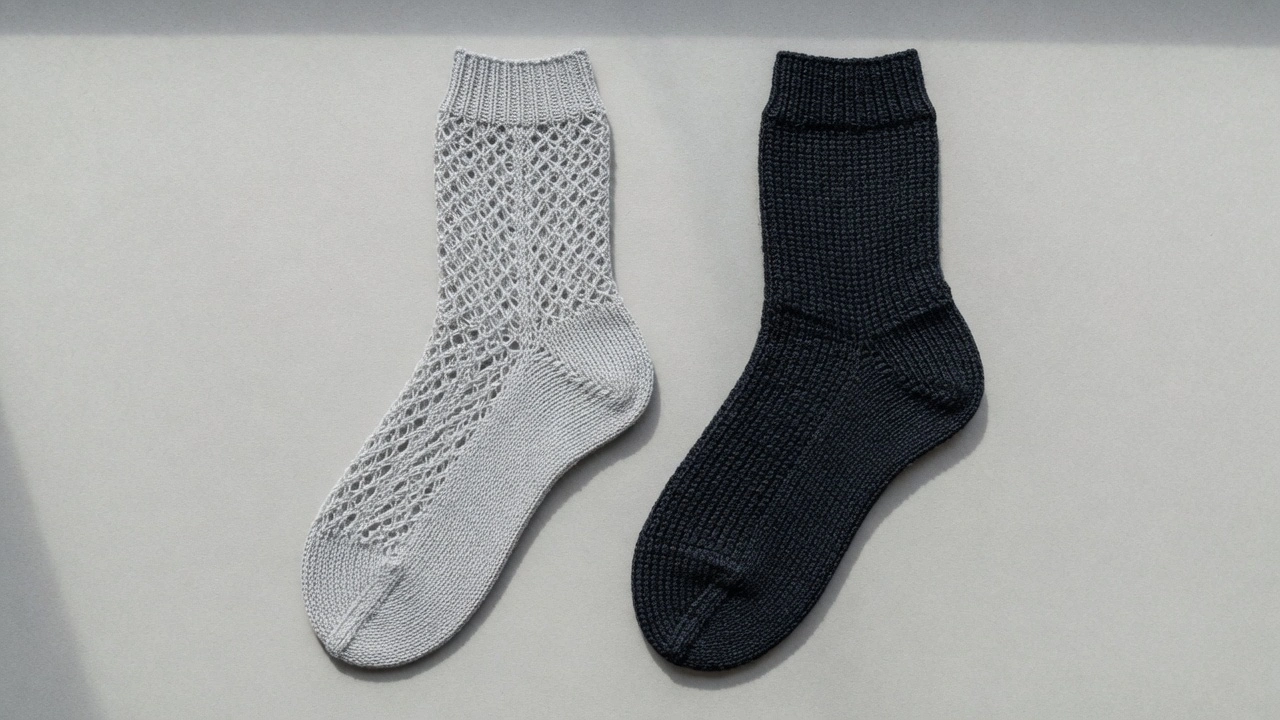
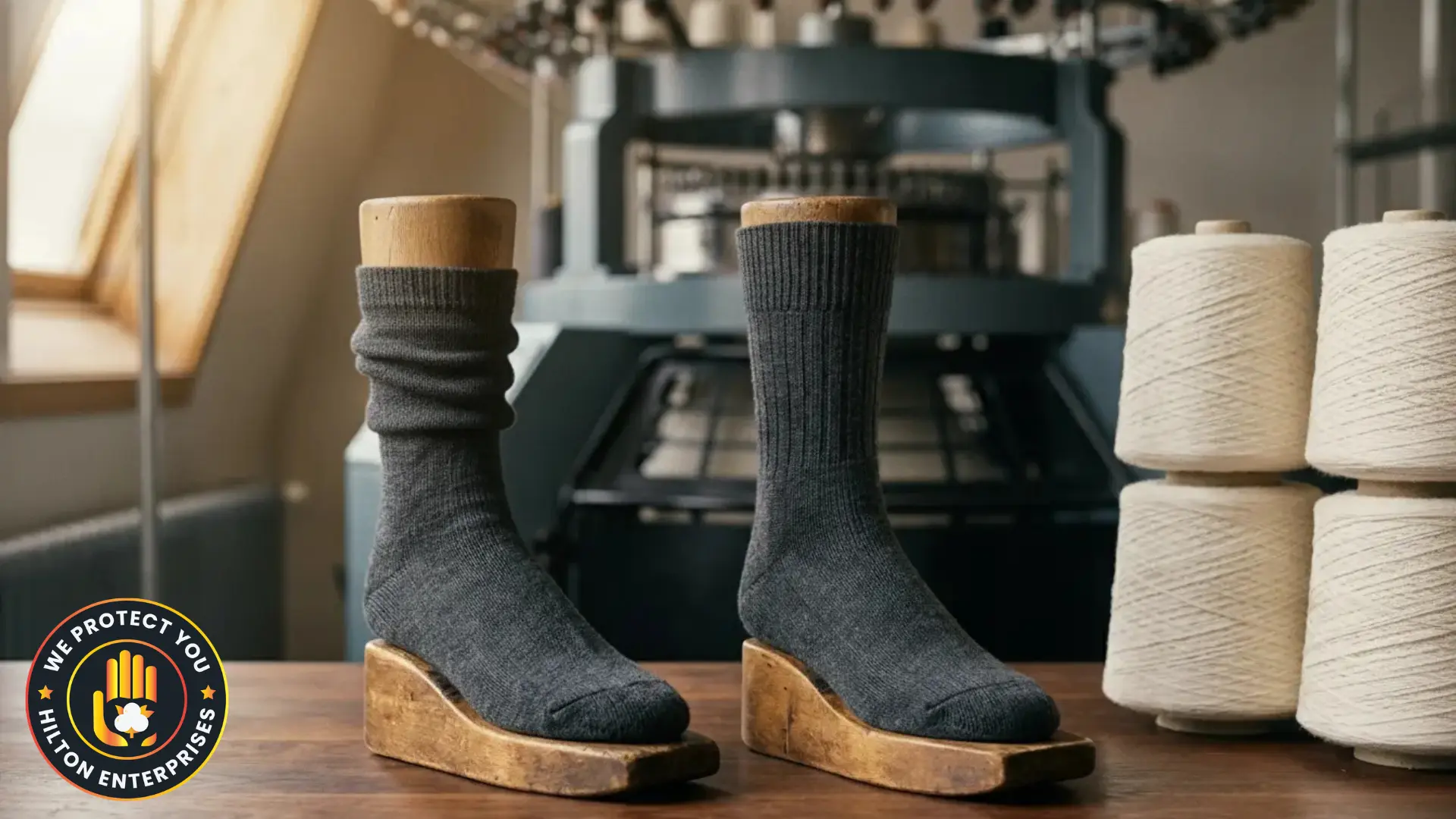
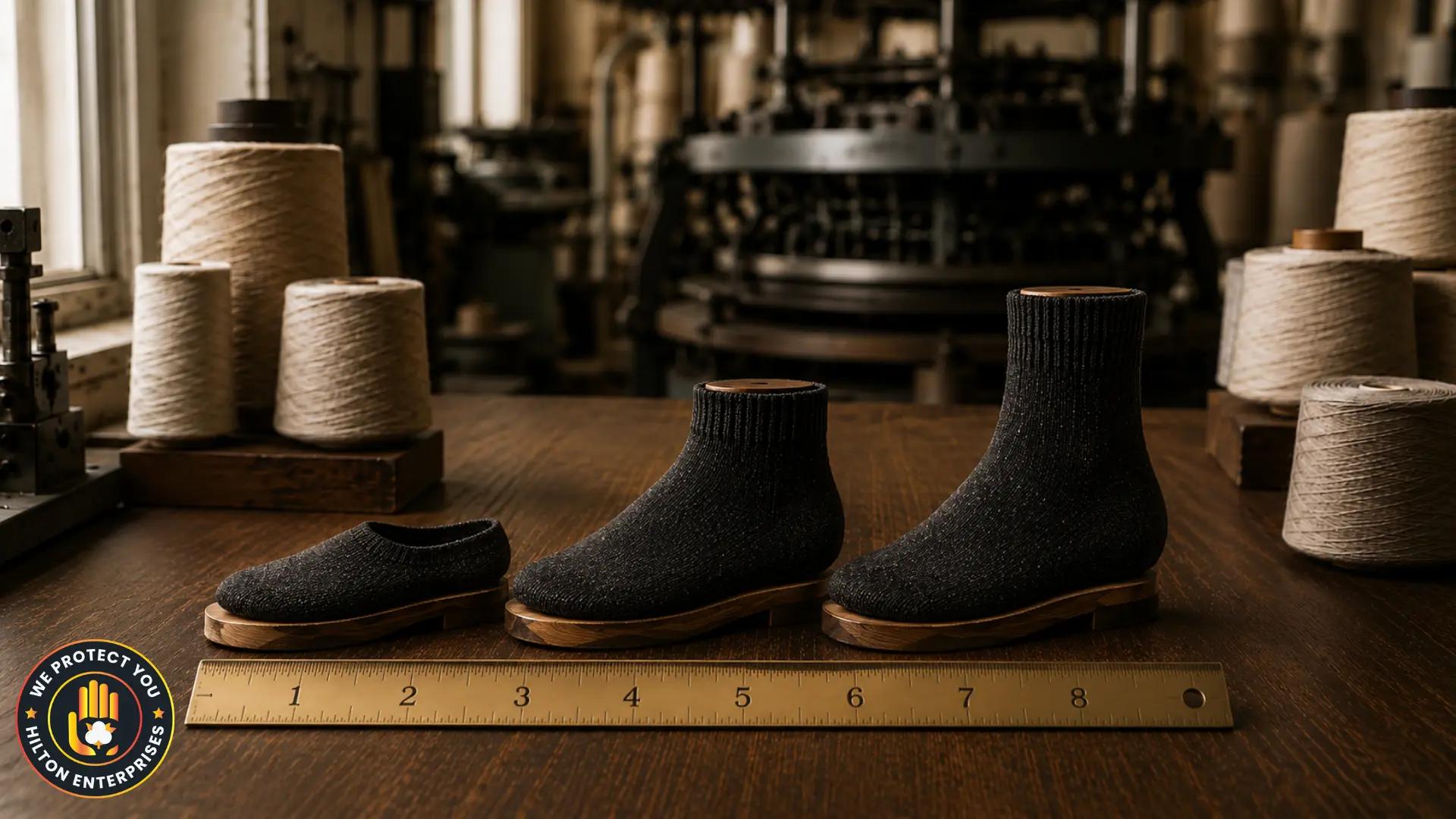
Left: ultralight summer-weight merino — open knit, maximum airflow, under 150 g/m². Right: heavyweight winter merino — dense knit, insulating, not suitable for summer heat.
For summer use, look specifically for labels that say ultralight, liner weight, or lightweight. An open-knit structure at these weights allows maximum airflow while keeping all of merino’s natural temperature and moisture management properties fully intact.
Hilton Enterprises manufactures summer-weight merino socks using a high-gauge open knit engineered specifically for warm weather performance — available for wholesale and private-label production from 1,000 pairs per style. Browse the full sock range to see available styles and request a sample.
When Merino Wool Socks Win in Summer
Merino wool socks perform best in summer situations that combine long duration, temperature variation, and odour management requirements — the conditions where cotton and standard synthetics fail fastest.
- Multi-day hiking and backpacking — Merino handles moisture, odour, and temperature variation across consecutive days without performance degradation. No synthetic alternative manages all three simultaneously. For a dedicated guide on summer hiking sock selection, see our Best Socks for Summer guide and Best Summer Hiking Socks
- Long-haul summer travel — Airport to flight to outdoor destination involves wide temperature swings. Merino regulates across all of them. One pair lasts 2–3 days of travel without odour. If circulation support alongside temperature management is your priority, read our guide on compression socks in summer.
- All-day standing at work in summer — Medical professionals, teachers, and service workers need a sock that stays comfortable at hour 10. Merino’s moisture management and natural cushioning outperform synthetics at long duration in a closed work shoe.
- Business and formal summer wear — A lightweight merino dress sock looks identical to standard nylon inside a suit, but manages heat completely differently through a full summer business day—no visible difference. Significant comfort difference. For a full men ‘s-specific breakdown of merino in formal, casual, travel, and work contexts, read: Men’s Summer Socks: Best Styles, Materials and Where to Source Wholesale.
- Outdoor summer events and festivals — Full days on your feet in varying conditions. Merino’s natural odour resistance means the same pair works through a two-day outdoor event comfortably — something no cotton or standard polyester sock can match.
When Merino Is Not the Right Choice
Merino wool is not the best summer sock for peak-intensity sport, where maximum wicking speed matters more than temperature regulation — and it is not the right choice when budget is the primary constraint.
Merino loses to CoolMax® and technical polyester blends in two specific situations:
- High-output running and racing — CoolMax® moves liquid sweat off the skin faster during peak effort. In a marathon or intense trail run in summer, raw wicking speed matters more than temperature regulation. Performance polyester wins here.
- Budget-sensitive wholesale sourcing — Merino sits at a higher price point than bamboo or cotton-blend alternatives. For retail lines where price is the primary constraint, bamboo delivers approximately 80% of merino’s summer performance at significantly lower cost per pair.
For a full side-by-side comparison of every summer sock material across use case, performance, and budget — see: Best Socks for Summer: A Complete Guide by Material and Use Case.
How to Choose the Right Merino Sock for Summer
When buying merino wool socks for summer, four factors determine whether the sock will actually perform well in heat: fiber weight, blend composition, micron count, and cut length.
- Fiber weight — ultralight or lightweight only
Look for labels saying ultralight, liner weight, or lightweight. Any merino sock above 250 g/m² is designed for cooler conditions. Summer needs open-knit construction at under 200 g/m² for best airflow and temperature management. - Merino percentage — 60% or higher
Blended socks often mix merino with nylon for durability or spandex for compression. A blend of 60–80% merino retains the full temperature and odour management benefits while adding durability. Below 50% merino, the performance advantages reduce significantly — you are effectively buying a synthetic sock with a merino label. - Micron count — under 18.5 microns for comfort
Some merino socks label their micron count. Under 18.5 microns is the threshold for softness against bare skin without itch — the same classification the International Wool Textile Organisation (IWTO) uses to define superfine merino. This is especially important for sensitive skin that reacts to standard wool. - Cut length — match to your use case
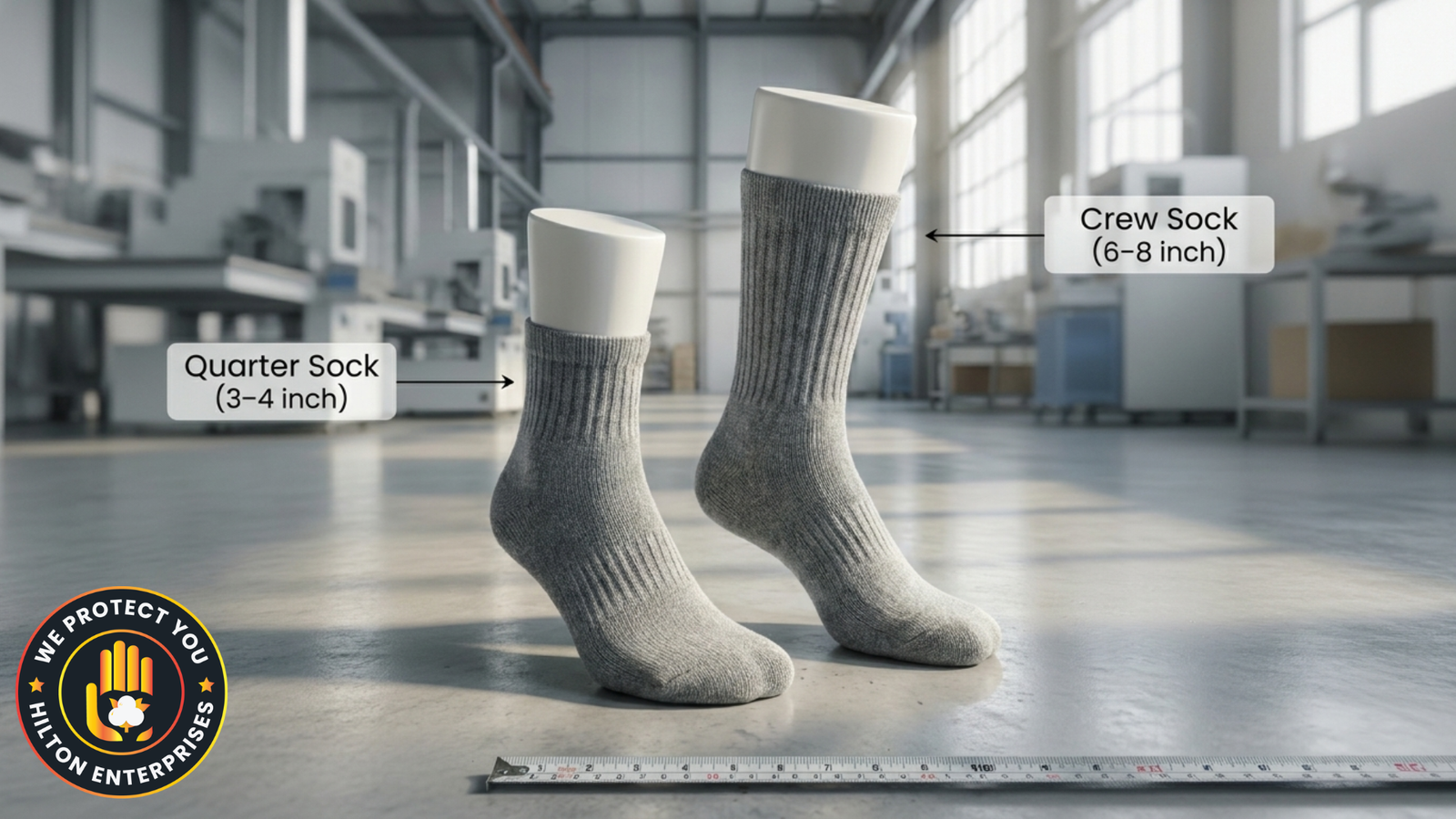
- Ankle cut → everyday and casual summer use
- Crew cut → hiking, sports, and boot wear
- Knee-high → travel and standing shifts where circulation support is needed alongside temperature management
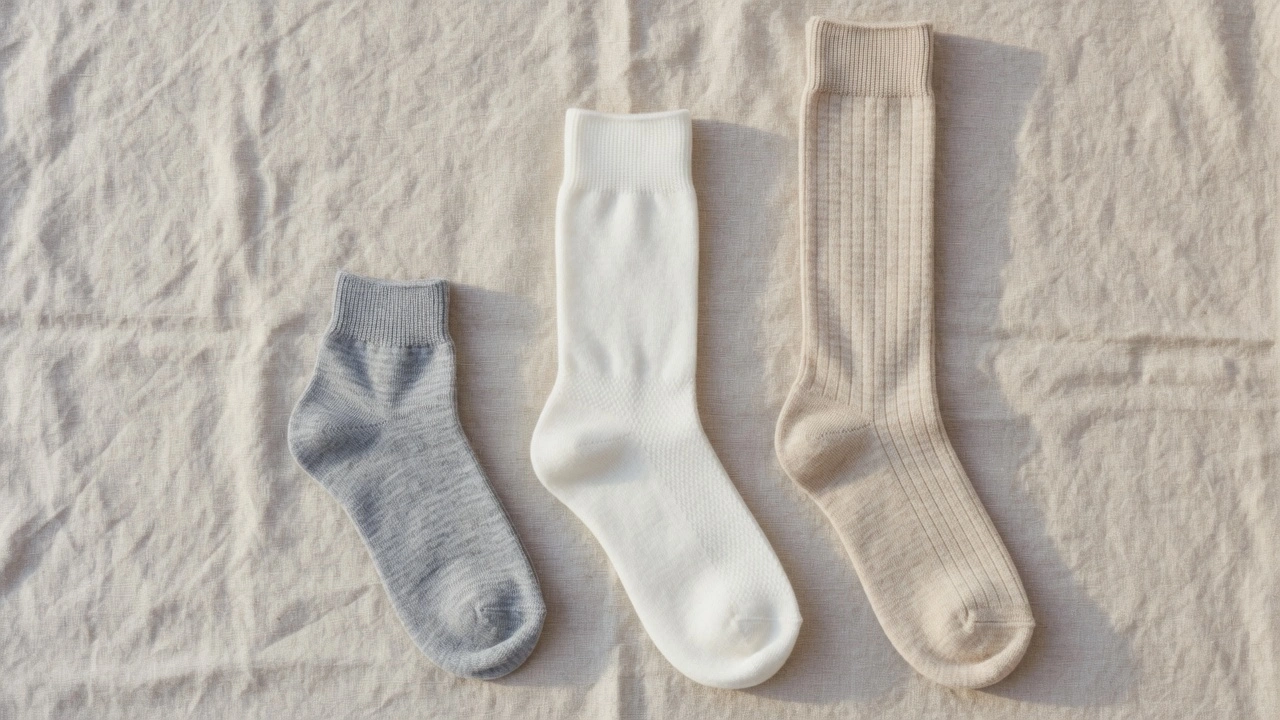
Merino sock cut determines use case — ankle for everyday summer wear, crew for hiking and sport, knee-high for travel and long standing shifts where circulation support is also needed.
Source Summer-Weight Merino Socks at Wholesale: Hilton Enterprises
Hilton Enterprises manufactures summer-weight merino wool socks for wholesale and private-label brands — in ultralight and lightweight constructions engineered specifically for warm weather performance. Our facility in Faisalabad, Pakistan, has produced premium merino sock styles for USA and Canada retail brands since 1970.
Custom design, sampling, and production available from 1,000 pairs per style. Direct shipping to USA warehouses in 18–25 days.
- Browse available merino and summer sock styles on our full sock range page.
- Learn about Hilton’s 50-year manufacturing background on our About page.
- Submit your enquiry — quantity, delivery date, and design brief — via our Contact page. We respond within 1 business day.
Also in this series:
Can You Wear Compression Socks in Summer? Yes — Here’s How
Best Socks for Summer: A Complete Guide by Material and Use Case
Frequently Asked Questions
Q: Are merino wool socks good for summer?
A: Yes — merino wool socks are excellent for summer when chosen in the right weight. Summer-weight or ultralight merino uses a fine-gauge open knit that allows full airflow while the fiber’s hygroscopic structure wicks moisture away from the skin, regulates temperature in both directions, and resists odour for 24–48 hours of continuous wear. Avoid winter-weight or heavyweight merino — the fiber is right, but the knit construction is too dense for warm weather.
Q: Can you wear wool socks in summer?
A: Yes — specifically merino wool socks in a summer-weight or lightweight construction. Standard wool socks are too dense for warm weather. Merino wool uses finer fibers under 18.5 microns that allow lightweight open-knit construction while retaining full temperature regulation and moisture management. The fiber manages heat actively rather than trapping it.
Q: Do merino wool socks make your feet hot in summer?
A: Summer-weight merino wool socks do not make your feet hot. Merino’s hygroscopic fiber structure absorbs sweat vapour, moves it outward through the sock, and releases it through evaporation — which actively cools the foot. The key is choosing a sock labelled “summer weight,” “ultralight,” or “lightweight.” A winter-weight merino sock will trap heat. The weight and knit construction determine summer suitability — not the fiber itself.
Q: Are merino wool socks better than cotton for summer?
A: Yes — merino wool significantly outperforms cotton in summer across every performance metric. Cotton absorbs moisture and holds it against the skin, causing heat buildup, odour, and blisters. Merino absorbs moisture at the vapour stage, moves it away from the skin, and releases it through evaporation that cools the foot. Merino also resists odour for 24–48 hours of wear. Cotton loses odour resistance within 2–3 hours in warm conditions.
Q: How long can you wear merino wool socks in summer?
A: Most people can wear a merino wool sock for 24–48 hours of active summer use before it develops any odour — significantly longer than cotton or synthetic alternatives. For hiking and travel, many outdoor enthusiasts wear merino socks for multiple consecutive days. After washing, the performance properties fully restore. Merino does not degrade with repeated washing the way cotton does.
Q: Are merino wool socks good for summer hiking?
A: Yes — merino wool is widely considered the best material for summer hiking socks. It manages moisture over 6–10 hours of activity, resists odour across multi-day hikes, and regulates temperature through the swings between forest shade and open sun. The only situation where a synthetic beats merino on a summer hike is peak-output racing, where CoolMax® blends wick liquid sweat faster. For distance hiking and backpacking, merino is the clear choice.
Q: How do you wash merino wool socks?
A: Wash merino wool socks inside-out on a gentle or wool cycle in cold water — 30°C maximum. Use a mild detergent without enzymes or bleach. Do not tumble dry — lay flat or hang to air dry. Avoid wringing while wet, as this distorts the fiber crimp structure. With proper care, a quality merino sock retains its performance properties for 200+ wash cycles.