Quick answer:
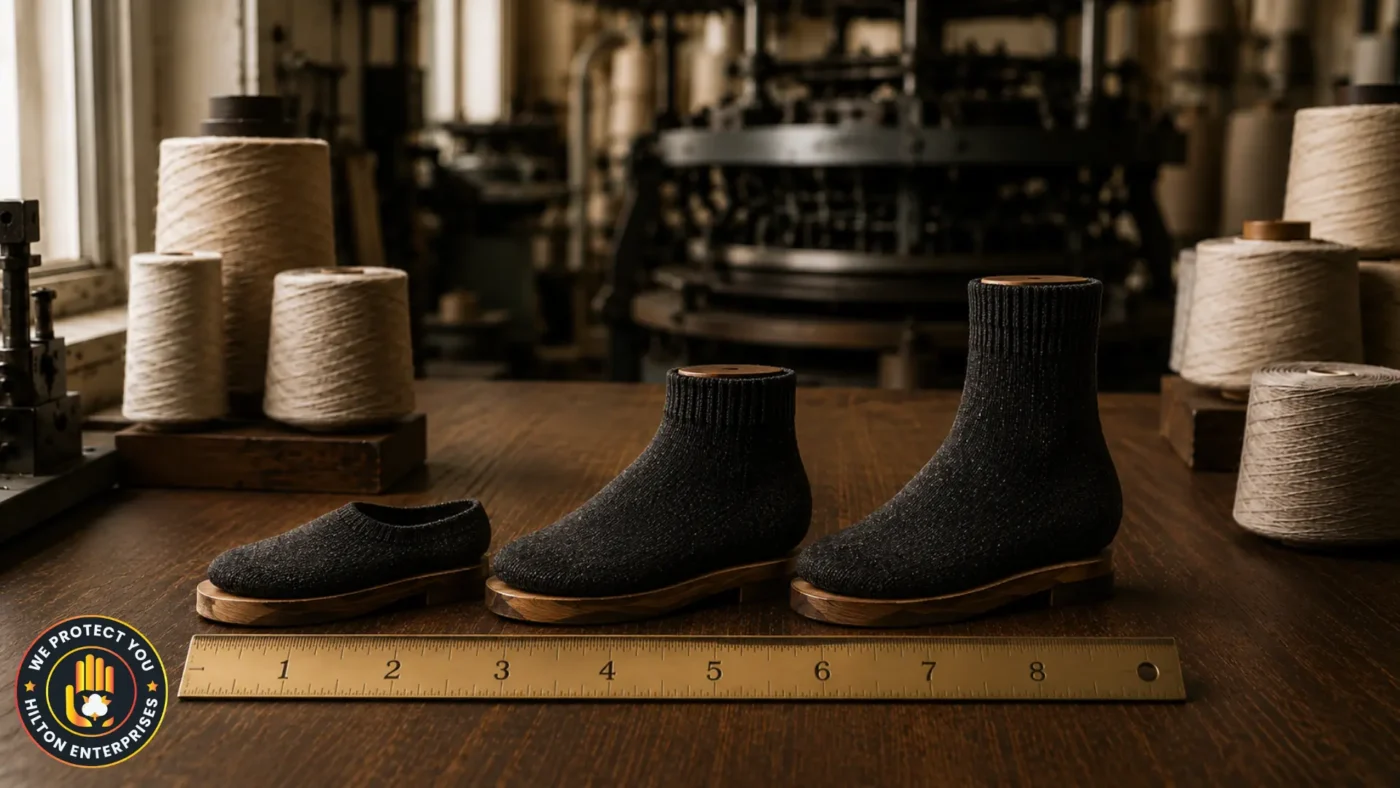
In the ankle vs no show socks comparison, ankle socks sit 1–4 inches above the ankle bone and stay visible, while no show socks sit about a quarter inch below the shoe collar so the foot looks bare.
Low-cut socks sit 1–2 inches above the shoe collar, in between the two. The difference isn’t just height — it’s how the cuff is built. No show socks rely on silicone grip strips to stay hidden inside the shoe. Ankle and low-cut socks skip that grip, because the cuff stays visible and holds its position above the shoe line.
This guide breaks down the height bands, the construction difference that actually matters for fit, and which one to choose for a given shoe — whether you’re buying socks or sourcing a line of them.
What Is an Ankle Sock?
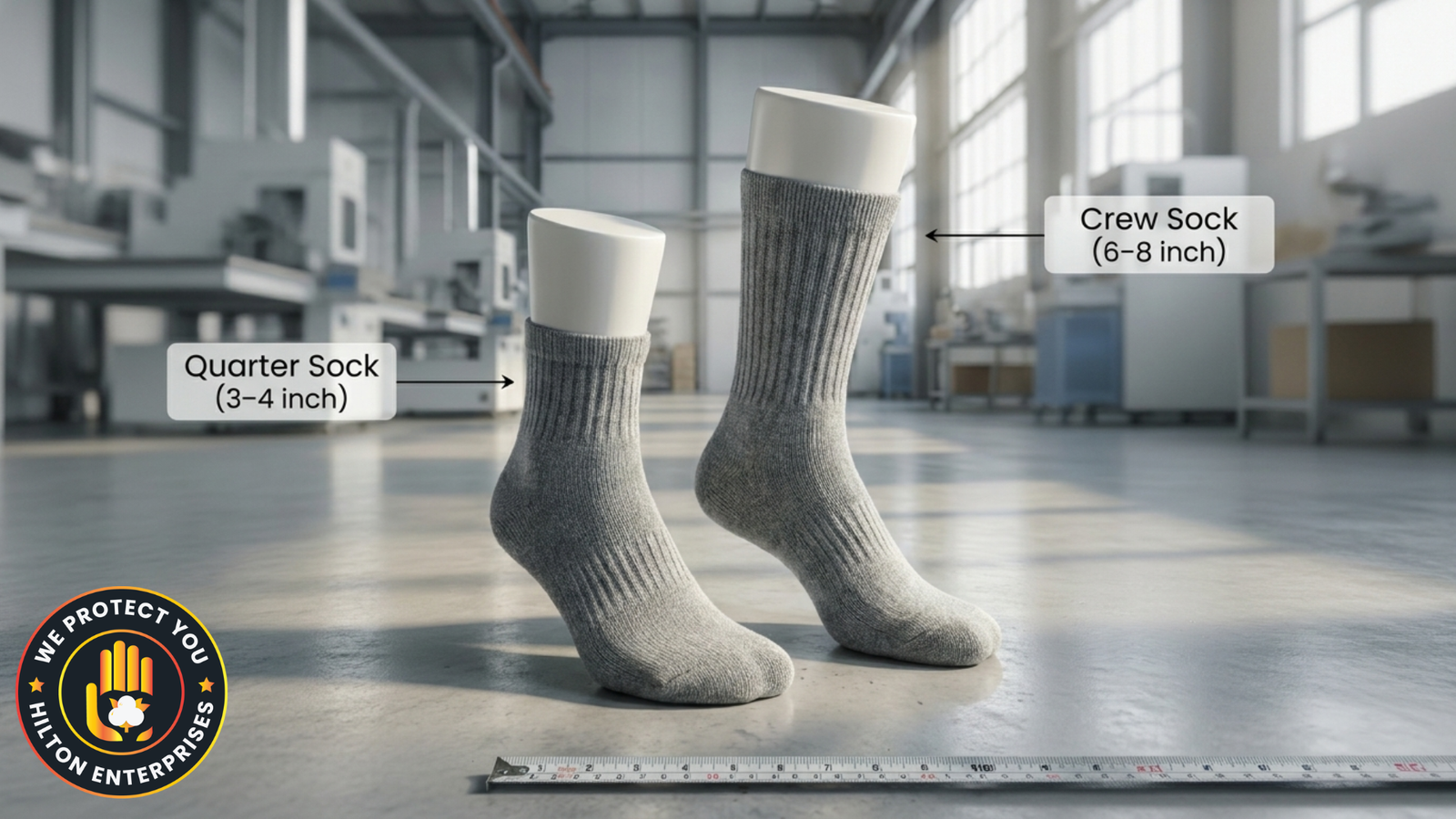
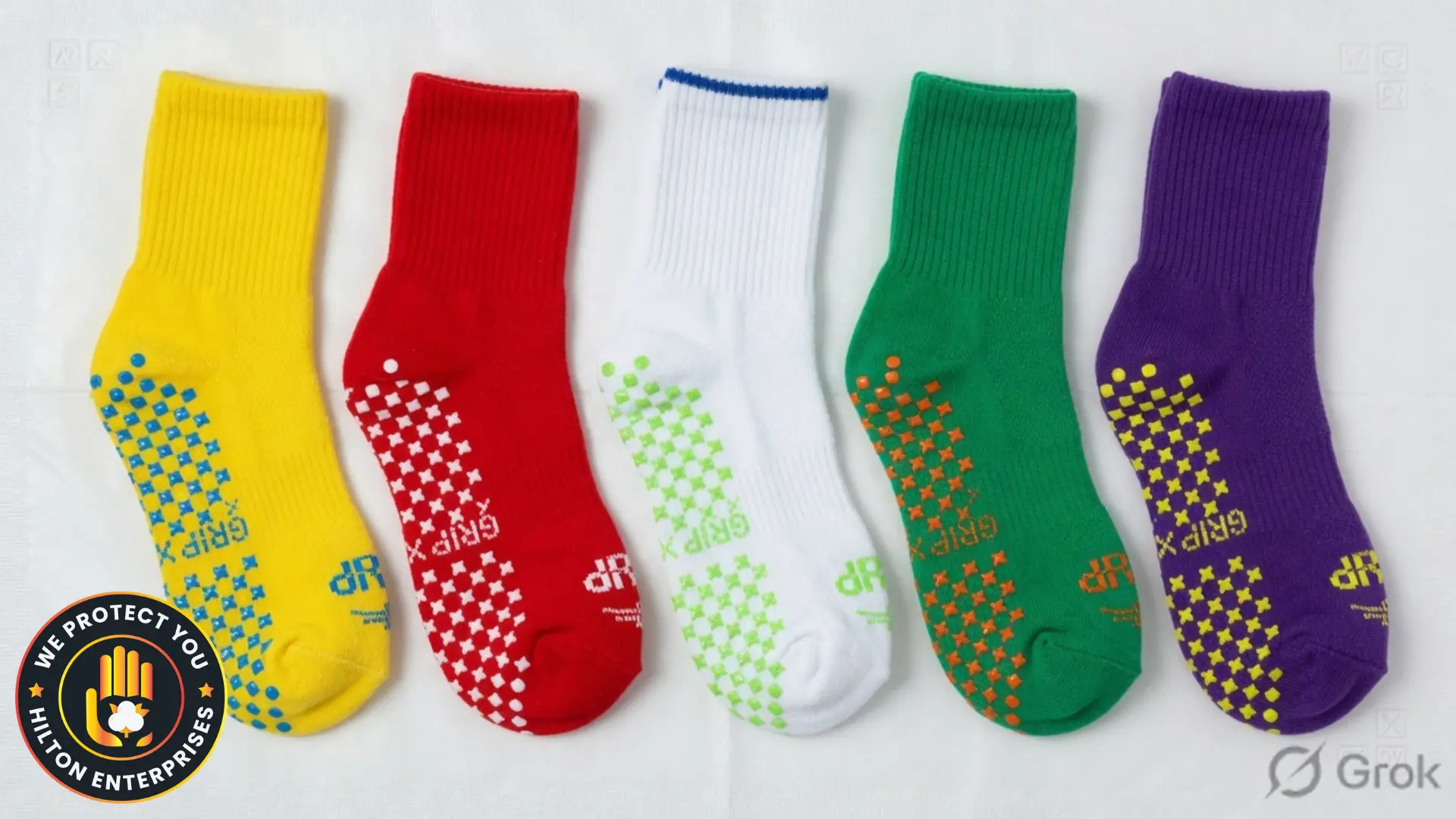
An ankle sock rises 1 to 4 inches above the ankle bone. It’s meant to show above the shoe. Accordingly, Hilton Enterprises manufactures ankle socks in three height bands: low ankle (1–2 inches, popular for summer running and cycling), mid ankle (2–3 inches, the most common US specification), and quarter length (3–4 inches, preferred for basketball and court sports).
Because the cuff is meant to show, ankle socks use a standard ribbed or banded top. So they don’t need a silicone grip. The visible portion sits above the shoe collar by design, which means the sock can’t ride down into the shoe.
What Is a No Show Sock?
A no show sock sits roughly a quarter inch below the shoe collar, so the foot appears bare. In fact, it exists to disappear — concealment is the entire construction goal, not visible coverage.
To stay in place, a silicone grip strip runs along the inner heel — usually a dot, strip, or full-coverage pattern. It keeps the sock from slipping off the heel and into the shoe. Without that grip, a sock this short would work its way down with every step. As a result, this is the one height band where the cuff hardware matters more than the cuff height.
What Is a Low-Cut Sock?
A low-cut sock sits 1 to 2 inches above the shoe collar. That’s shorter than an ankle sock, but still tall enough to stay visible — unlike a no show sock. In other words, it’s the middle ground: more coverage and cushioning than a no show, less bulk and visibility than a full ankle sock.
Since part of the cuff sits above the shoe line, low-cut socks usually skip the aggressive silicone grip that no show styles need. Instead, the visible portion above the collar holds the sock in position.
Ankle vs No Show vs Low-Cut: Height and Construction Compared
| Comparison | No show | Low-cut | Ankle |
|---|---|---|---|
| Position relative to the shoe | ~1/4 inch below collar | 1–2 inches above the collar | 1–4 inches above the ankle bone |
| Visibility | Invisible | Partly visible | Fully visible |
| Grip needed to stay in place | Silicone heel grip required | Rarely needed | Not needed |
| Cushioning room | Minimal | Moderate | Most |
| Best shoe match | Loafers, boat shoes, low sneakers | Low-top sneakers, casual shoes | Running shoes, training shoes, court shoes |
| Best use case | Concealment, dress, warm weather | Everyday athletic and casual wear | Sports needing visible branding or support |
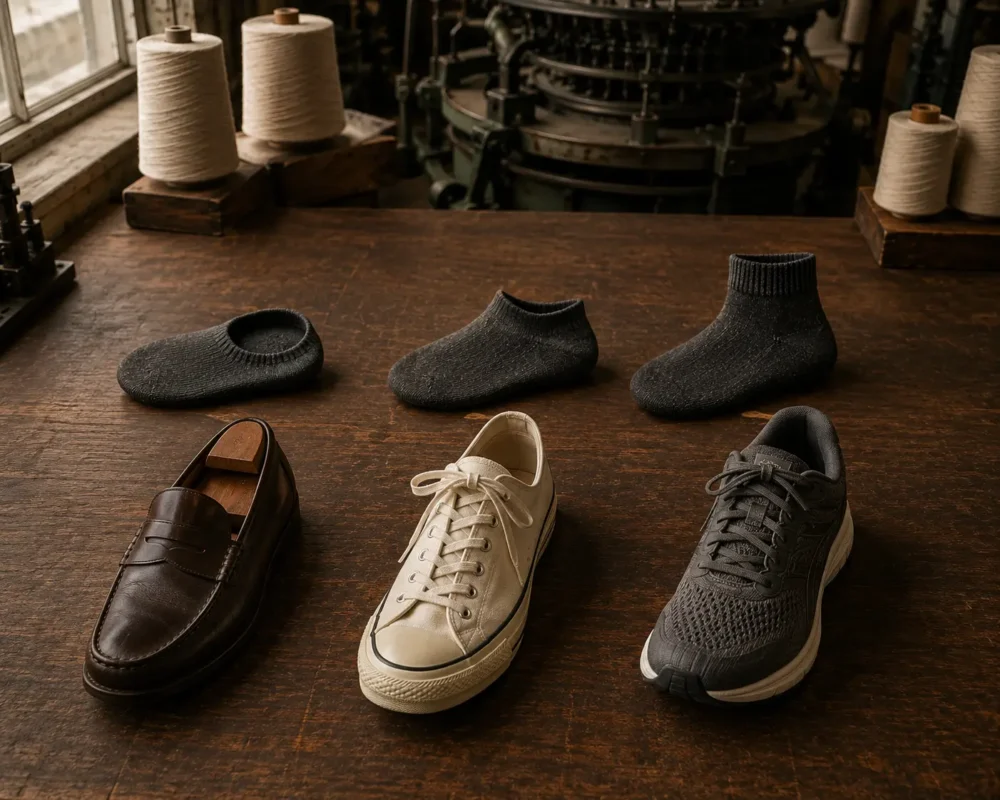
The right height depends on the shoe: no-show for loafers, low-cut for sneakers, ankle for running shoes.
Which One Should You Choose?
Choose no show socks if you want the socks to disappear. Loafers, boat shoes, and dress shoes are the classic match. So, anywhere a visible sock line looks unintentional or too casual, no show is the right call. The trade-off: less cushioning, plus a reliance on the silicone grip to hold its position over a full day.
Choose low-cut socks if you want some coverage without much bulk. This is the default for everyday sneakers and casual training. A no show sock would feel too minimal here, while an ankle sock would look unnecessarily tall.
Choose ankle socks if you want visible coverage, more cushioning, or team branding. Anywhere a logo, color block, or name needs to be seen — race day socks, team uniforms, retail branding — ankle height is the practical minimum. After all, it keeps the design visible above the shoe.
No Show vs Ankle Socks: The Sneaker Question
This is the most common point of confusion. For example, put all three on the same pair of low-top sneakers. A no show sock disappears entirely, a low-cut sock peeks out slightly, and an ankle sock stays fully visible above the shoe collar. None of the three is “correct” — it comes down to whether the wearer wants the sock seen. In fact, brands selling direct to consumers often stock all three in the same colorway for this exact reason. The shoe doesn’t change, but the preference does.
Low-Cut vs No Show for Loafers
For loafers specifically, the grip requirement decides it. A low-cut sock has just enough cuff above the shoe line to stay anchored without slipping. Meanwhile, a no show sock sits entirely inside the shoe, so it depends entirely on its silicone heel grip. Skip the grip strip, and a no show sock tends to migrate down and bunch at the toe by midday. By contrast, a properly gripped pair holds position through a full shift.
How the Cuff Is Actually Built Differently:
The height difference between these three styles isn’t just where the fabric ends. Rather, it changes what the cuff has to do.
Why Ankle Socks Don’t Need a Grip?
An ankle sock’s cuff sits well above the shoe line, so a standard knitted-in elastic band holds it in place. After that, gravity and the natural taper of the leg do most of the remaining work.
Why Low-Cut Socks Depend on Cuff Quality?
A low-cut sock has less margin. Only an inch or two of cuff sits above the collar. So a cheaply crimped elastic band will stretch out within a few dozen washes and let the sock slide into the shoe. By contrast, a properly knitted rib-stretch cuff avoids this because the elasticity comes from the knit structure itself, not from a separate strip added on top.
Why No Show Socks Need a Silicone Grip?
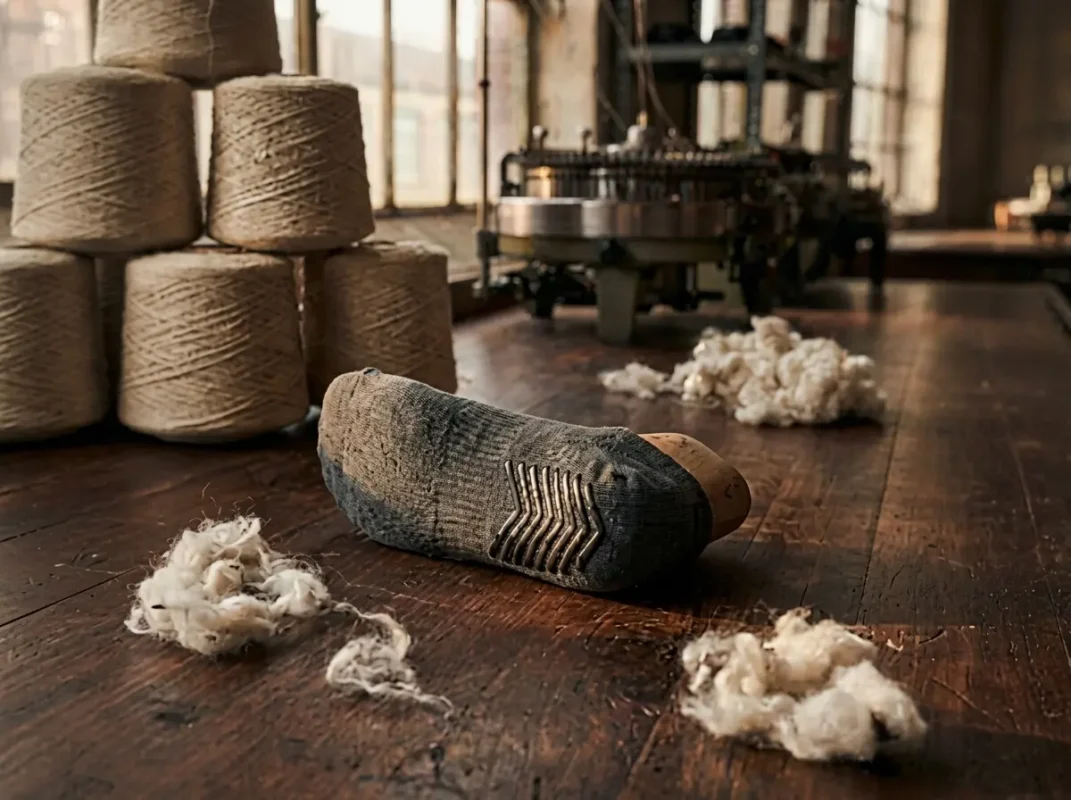
The silicone grip strip is added to the heel pocket after the toe is closed — a finishing step ankle and low-cut socks don’t need.
A no show sock removes the margin entirely. The cuff sits below the shoe line, against the inner heel. So it can’t rely on visibility or leg taper to stay put. That’s why manufacturers add a silicone grip strip to the heel pocket after closing the toe — a separate finishing step that the taller two heights skip.
As a result, each height fails differently when built cheaply. A poorly built low-cut sock bunches at the shoe opening, while a poorly built no show sock disappears into the shoe entirely. Either way, the root cause is the same — a weak cuff, just a different symptom depending on how much cuff existed to begin with.
A Care Detail That Affects Grip Performance
Fabric softener works against silicone grip. In fact, manufacturers of silicone-banded medical compression garments explicitly warn against it. Sigvaris’s own care guidance tells users to skip fabric softener and clean the silicone grip surface separately for better hold. Similarly, Medi’s garment maintenance guidance advises against fabric softener, too, and recommends air-drying silicone-top-band products instead of machine drying them.
The mechanism matters here: softener residue leaves a film on the silicone, and that film works against grip — even though it won’t damage the silicone outright. Therefore, a no show sock’s heel grip runs into the same problem. For brands shipping no show socks at volume, this is worth a line on the care label. A well-built grip can still underperform if the wearer uses the wrong product to wash it.
For brands ordering a mixed sock line, test grip performance at the sampling stage. Specifically, walk in the actual shoe the sock is meant for. Grip performance varies by shoe material, so you can’t judge it from the sock alone.
Frequently Asked Questions
Q. Is a low-cut sock the same as a no show sock?
No. Low-cut socks sit 1–2 inches above the shoe collar and stay partly visible. No show socks sit below the shoe collar and rely on a silicone heel grip to stay invisible and in place.
Q. Do no show socks need silicone grips?
Effectively yes. Without a heel grip, a no show sock has nothing holding it in position below the shoe collar. So it will slide down inside the shoe during normal walking.
Q. Are ankle socks too tall for sneakers?
Not necessarily — it depends on whether you want visibility. Ankle socks are designed to show above the shoe, which some wearers prefer for branding or a retro athletic look. Others, however, choose low-cut or no show specifically to avoid it.
Q. Which option is best for running?
Low-cut and no show are both common in running. No show wins for road racing, where minimal weight matters most. Low-cut works better for training shoes with a higher collar, since a no show sock might not clear it.
Sourcing Ankle, No Show, or Low-Cut Socks for Your Brand
Hilton Enterprises manufactures all three heights — ankle, low-cut, and no show — for wholesale and private-label brands across the USA, Canada, Europe, and the Gulf, in cotton, bamboo, merino wool, and performance synthetic blends, with silicone grip integration available on no show and low-cut styles from 5,000 pairs per design.
In practice, most of our retail and athletic clients carry at least two of these three heights in a single line. Shoe style and customer preference drive the choice — not material or price.
- Browse ankle socks manufacturing specifications
- Browse no show socks manufacturing specifications
- Browse low-cut socks manufacturing specifications
- Compare against crew and quarter socks for taller coverage
- Request a wholesale quote
Hilton Enterprises — Manufacturers and Exporters of Premium Custom Socks Since 1970. Faisalabad, Pakistan. Serving wholesale and private-label brands in the USA, Canada, Europe, and the Gulf.