Procurement managers and linen services directors sourcing fitted sheets hospital beds will find most online guides written for home carers. buying a single set at retail. This guide is written for the other buyer — the professional sourcing fitted sheets and hospital beds in bulk across multiple SKUs for a healthcare facility, distribution network, or private label brand.
Below is a complete procurement reference: precise size specifications across all bed types, fabric and thread count selection criteria, the certifications your supplier must hold, and how to evaluate a manufacturer’s production capacity before committing to a bulk order. The final section covers the supply chain case for sourcing directly from a Faisalabad-based, ISO-certified manufacturer.
Why Hospital Bed Fitted Sheets Are Not Standard Bedding
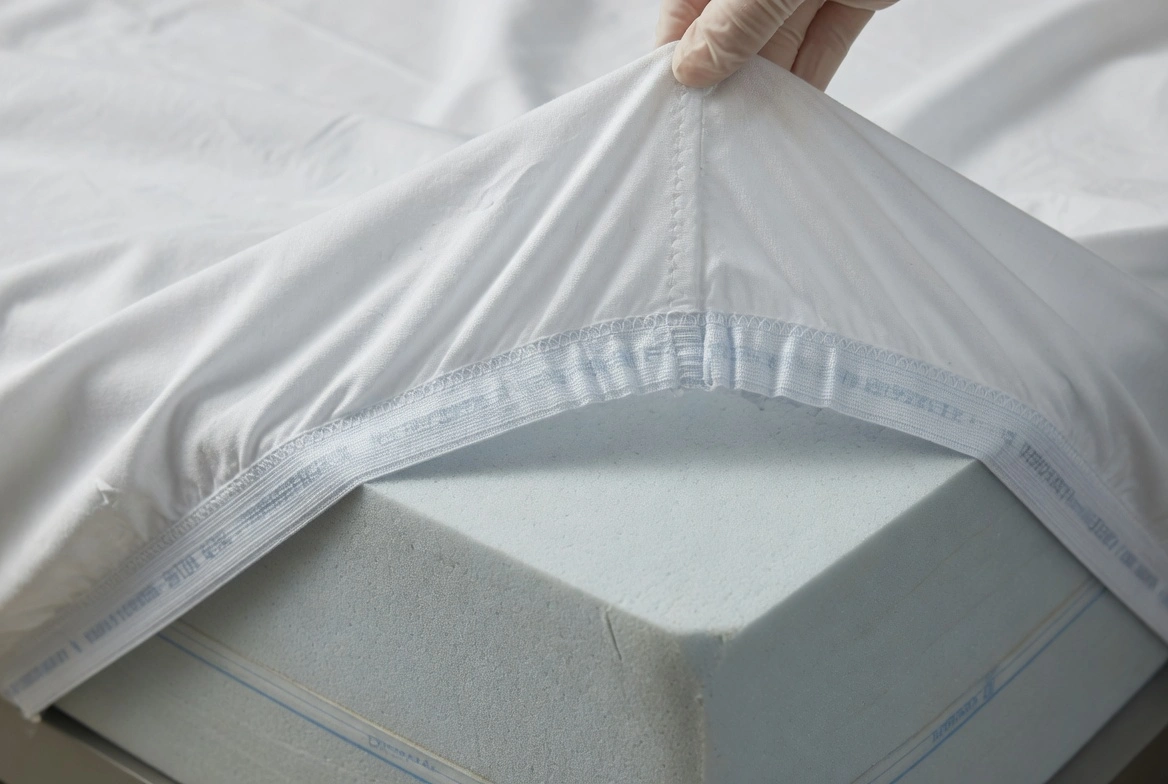
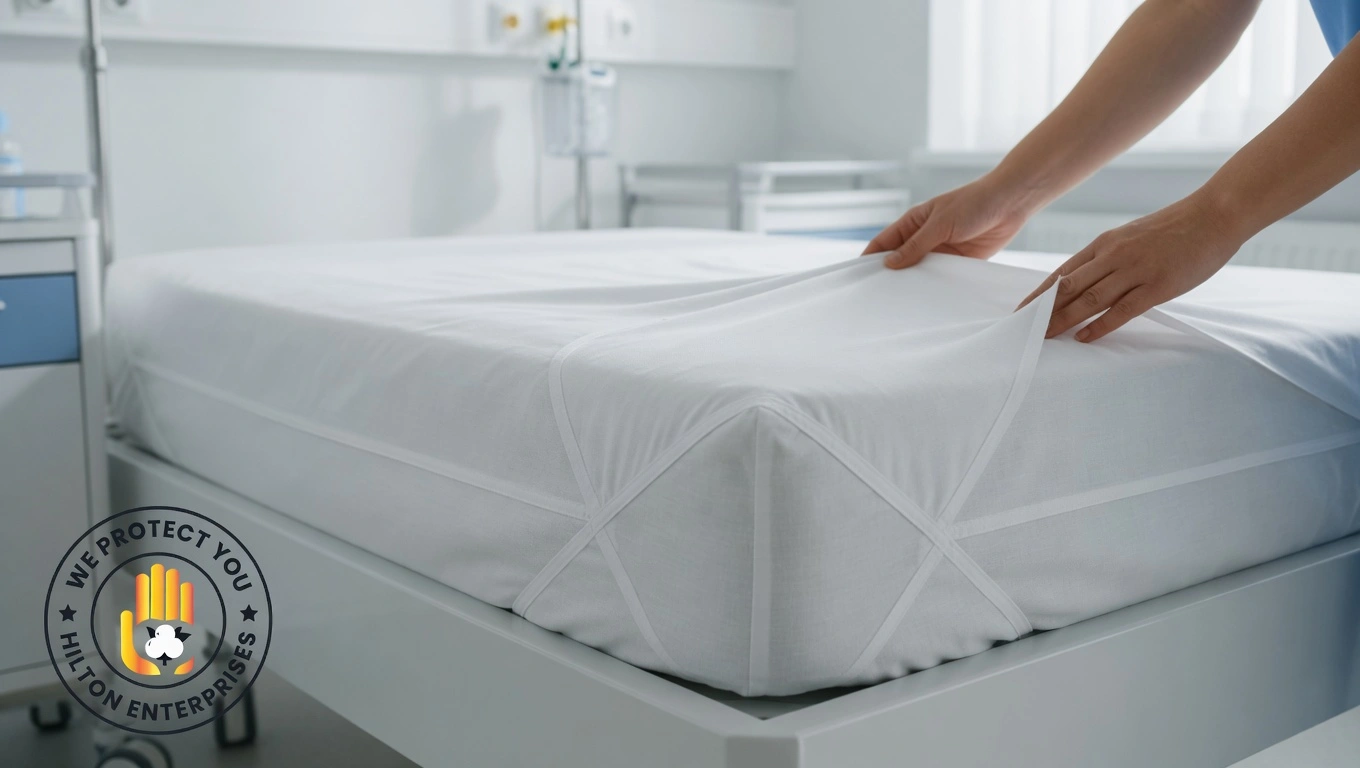
Hospital beds are engineered differently from domestic beds. They are narrower, longer in many configurations, designed to articulate at the head and foot, and built with thicker, firmer mattresses than home mattresses. A standard twin sheet will not fit a hospital bed correctly — not just because of width, but because of how pocket depth, elastic retention, and constant mechanical movement interact with the mattress surface.
Three specific demands separate hospital bed fitted sheets from anything in the retail linen market:
- Elastic retention under motion. When a bed’s head section rises to 45 degrees, a poorly elasticated fitted sheet will pull free at the corners. Correctly specified hospital fitted sheets use full-perimeter elastic or reinforced corner pockets rated for repeated mechanical stress.
- Industrial laundering durability. Healthcare linen is typically washed at 60–71°C with commercial detergents and may complete 200-300 wash cycles during its useful life. Fabric blends and thread counts must be selected for industrial laundry performance, not domestic aesthetics.
- Surface integrity for infection control. Sheets that pill, tear, or develop surface breaks create entry points for pathogens. Fabric integrity over time is a hygiene issue, not just a comfort issue — and it directly affects how a linen program is assessed in a clinical audit.
For facilities operating under formal infection prevention programs, the WHO infection control guidelines for healthcare facilities provide the clinical framework for evaluating linen specifications.
Hospital Bed Sheet Size: What Size Sheets Fit a Hospital Bed?
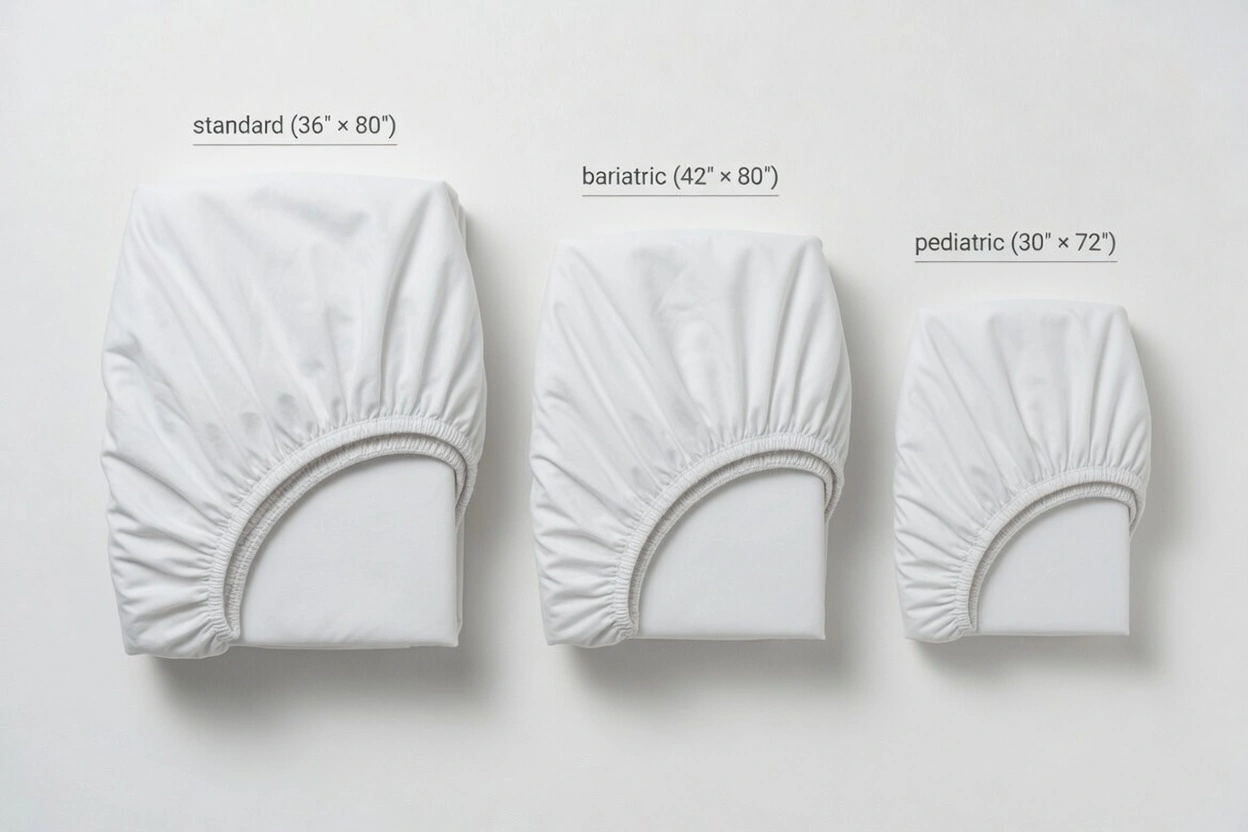 A standard hospital bed fitted sheet measures 36 inches wide by 80 inches long with a pocket depth of 6 to 9 inches. Hospital bed sheets are not the same size as domestic twin XL sheets — hospital bed sheets are narrower (36″ vs 38″) and have a deeper elasticated pocket designed to wrap under thicker clinical mattresses. Bariatric hospital beds require wider sheets: 42 inches for standard bariatric frames and 48 inches for extra-wide configurations.
Sizing mismatches are one of the most common causes of linen returns and operational complaints in healthcare settings. The chart below covers the full range of hospital bed fitted sheet sizes across every bed category your supplier should accommodate. Pocket depth — the gusset that wraps under the mattress — is as critical as the flat dimensions.
| Bed type | Sheet size (W × L) | Pocket depth | Equivalent | Typical application |
| Standard hospital bed | 36″ × 80″ | 6–8″ | Twin XL | General wards, rehab, home care |
| Extra-long hospital bed | 36″ × 84″ | 7–9″ | Twin XL+ | Taller patients, extended-length beds |
| Bariatric (standard) | 42″ × 80″ | 9–14″ | Custom | Wider frames for larger patients |
| Bariatric (wide) | 48″ × 80″ | 9–14″ | Custom | Heavy-duty bariatric beds |
| ICU / stretcher | 30–36″ × 80.” | 9–11″ | Varies | Intensive care & emergency transport |
| Pediatric | 30″ × 72″ | 6″ | Custom | Children’s wards, safety-rail beds |
| Full / specialty | 54″ × 80″ | 8–10″ | Full | Long-term care, larger adult patients |
Buyer note: Always verify the actual mattress depth at your facility before specifying the pocket depth. Mattresses fitted with pressure-relief toppers or foam overlays can add 2 to 3 inches above the stated specification, requiring a deeper pocket than the bed frame category suggests.
For facilities managing beds across multiple configurations (standard, bariatric, and pediatric), specify all SKUs in a single order run to maintain consistent fabric lots, colors, and finishes across the full inventory. Browse Hilton Enterprises’ fitted bedsheet catalog to confirm available sizes and constructions before finalizing your specification.
Woven vs Knitted Construction: Choosing the Right Type
Manufacturers produce hospital fitted sheets in two fundamentally different constructions, and specifying the wrong one for a given bed type creates operational problems regardless of whether the dimensions are accurate.
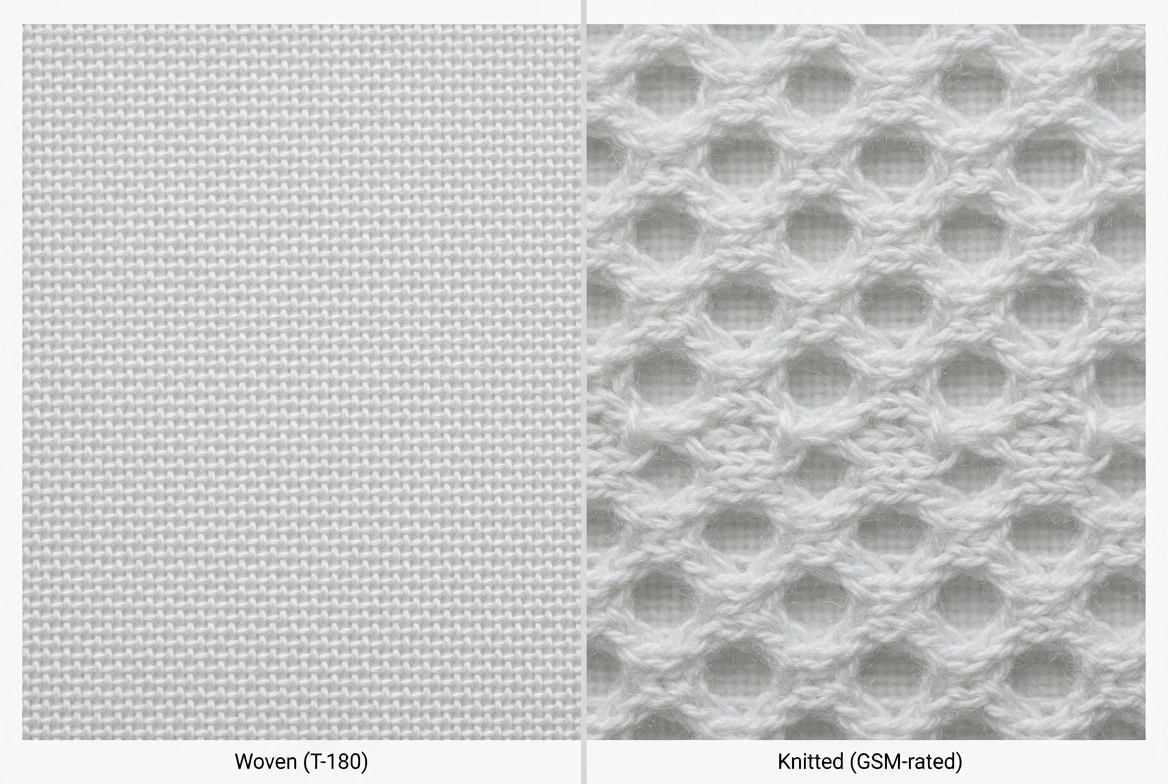
Woven fitted sheets
Manufacturers produce woven fabrics on shuttle or rapier looms and measure them by thread count (T-number). They dominate standard ward beds, long-term care facilities, and hospitality applications where a crisp, flat surface presentation is required.
Thread count determines both hand feel and laundering durability. The most widely specified range for healthcare is T-180 to T-200 in a 55% polyester / 45% cotton blend, which balances cost, wash performance, and patient comfort across high-turnover linen programs.
Knitted fitted sheets
Manufacturers produce knitted fabrics by knitting a continuous yarn into interlocking loops. They are inherently elastic, making them the correct specification for adjustable frames, articulating ICU beds, and bariatric beds where constant mattress movement would cause a woven sheet to pull free at the corners.
Buyers measure knitted sheets in GSM (grams per square meter) rather than thread count — a heavier GSM indicates a thicker, more durable fabric suited for higher-stress applications.
Fabric and Thread Count Specification Guide
The table below provides a practical decision framework for procurement teams specifying fitted sheets across different facility requirements and budget constraints.
| Fabric/thread count | Best for | Wash durability | Buyer note |
| T-180 (55/45 poly-cotton) | Everyday ward use, economy linen programs | High — handles 200+ wash cycles | Cost-effective; most widely specified |
| T-200 (60/40 poly-cotton) | Step-up comfort; hotels & care homes | Very high | Balance of softness and durability |
| T-250 (100% cotton) | Private patient rooms, premium hospitality | Moderate — needs lower wash temp | Softest hand feel; higher replacement cost |
| Knitted fitted (GSM-rated) | ICU, bariatric, adjustable-frame beds | Excellent — stretch absorbs motion | Best grip on articulating mattresses |
| Microfibre (100% polyester) | Allergy-sensitive or fast-dry programs | Very high | Wrinkle-free; lightweight; fast laundry |
Cost-per-wash vs unit cost: A T-200 sheet at a slightly higher unit price will typically outperform a T-130 sheet by 80 to 120 additional wash cycles. For high-turnover facilities running daily laundry, the total cost of ownership of a correctly specified sheet is consistently lower than replacing an underspecified one.
Bariatric Hospital Bed Fitted Sheets
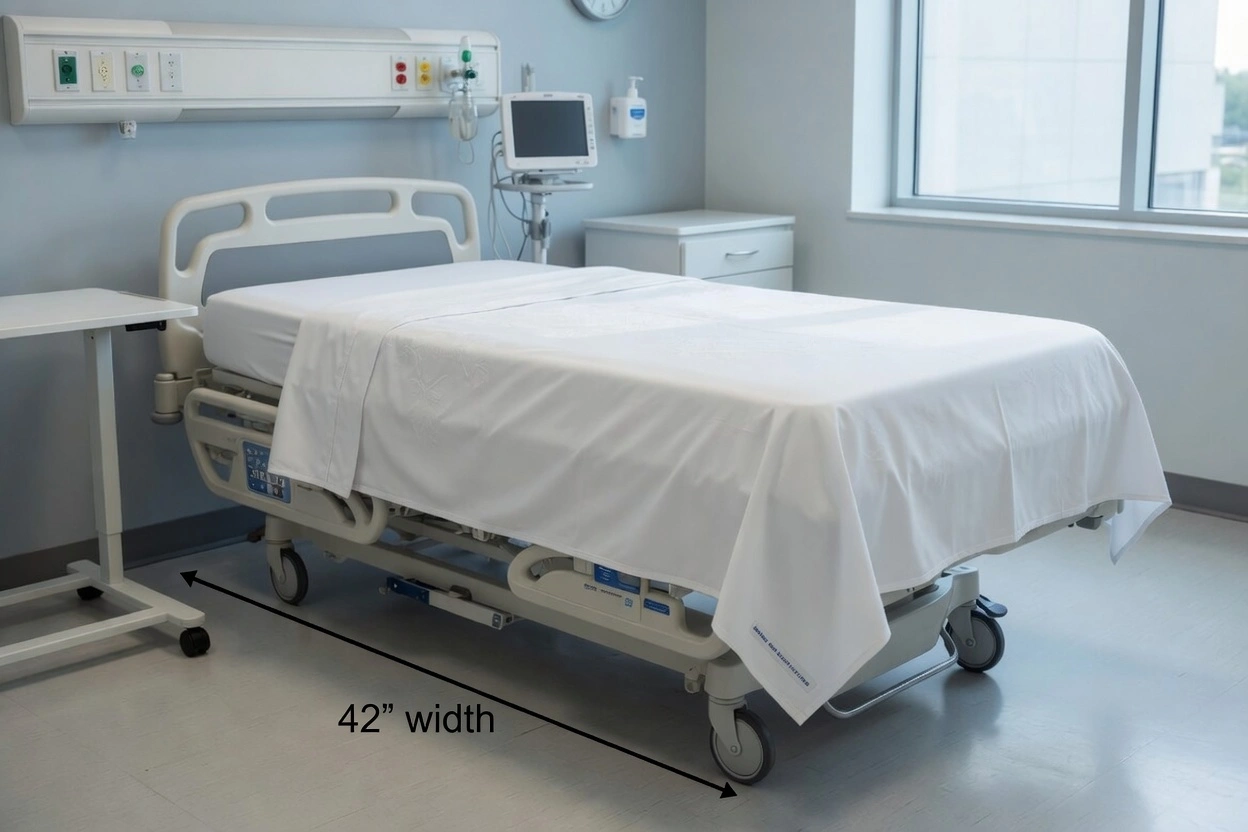
Our Bariatric hospital bed fitted sheets are among the most underserved SKUs in the wholesale linen market, particularly for buyers sourcing outside the US domestic supply chain. Bariatric beds accommodate patients whose weight or body dimensions exceed the capacity of standard equipment, and they require wider, deeper, and structurally reinforced sheets to function correctly.
The specification differences that matter for procurement:
- Width. Standard bariatric beds measure 42 inches wide; extra-wide bariatric beds measure up to 48 inches wide. Both require fitted sheets built to these exact widths. Stretching a 36-inch sheet over a wider frame is not a workaround — it creates a hygiene and safety risk as the sheet will pull free under any lateral patient movement.
- Pocket depth. Bariatric mattresses typically run 9 to 14 inches thick, well above standard hospital mattress depth. Pocket depth must be specified to the actual mattress measurement, not the nominal bed frame category.
- Seam and elastic strength. Patients with higher BMI exert greater lateral and downward tension on sheet corners. The elastic reinforcement at the seam must withstand sustained loads above the standard specification.
- Knitted construction preferred. For articulating bariatric beds, knitted fabric’s inherent stretch absorbs continuous head and foot movement more effectively than woven fabric, reducing corner pull-out frequency and the associated nursing interruptions for sheet replacement.
Hilton Enterprises manufactures standard (42″) and wide (48″) bariatric and standard hospital fitted sheets in both knitted and woven constructions, with pocket depth configurable to your mattress specification at the point of order. Custom sizing outside the standard range is available from 5,000 units per SKU.
Certifications: What Healthcare Buyers Must Require from a Supplier
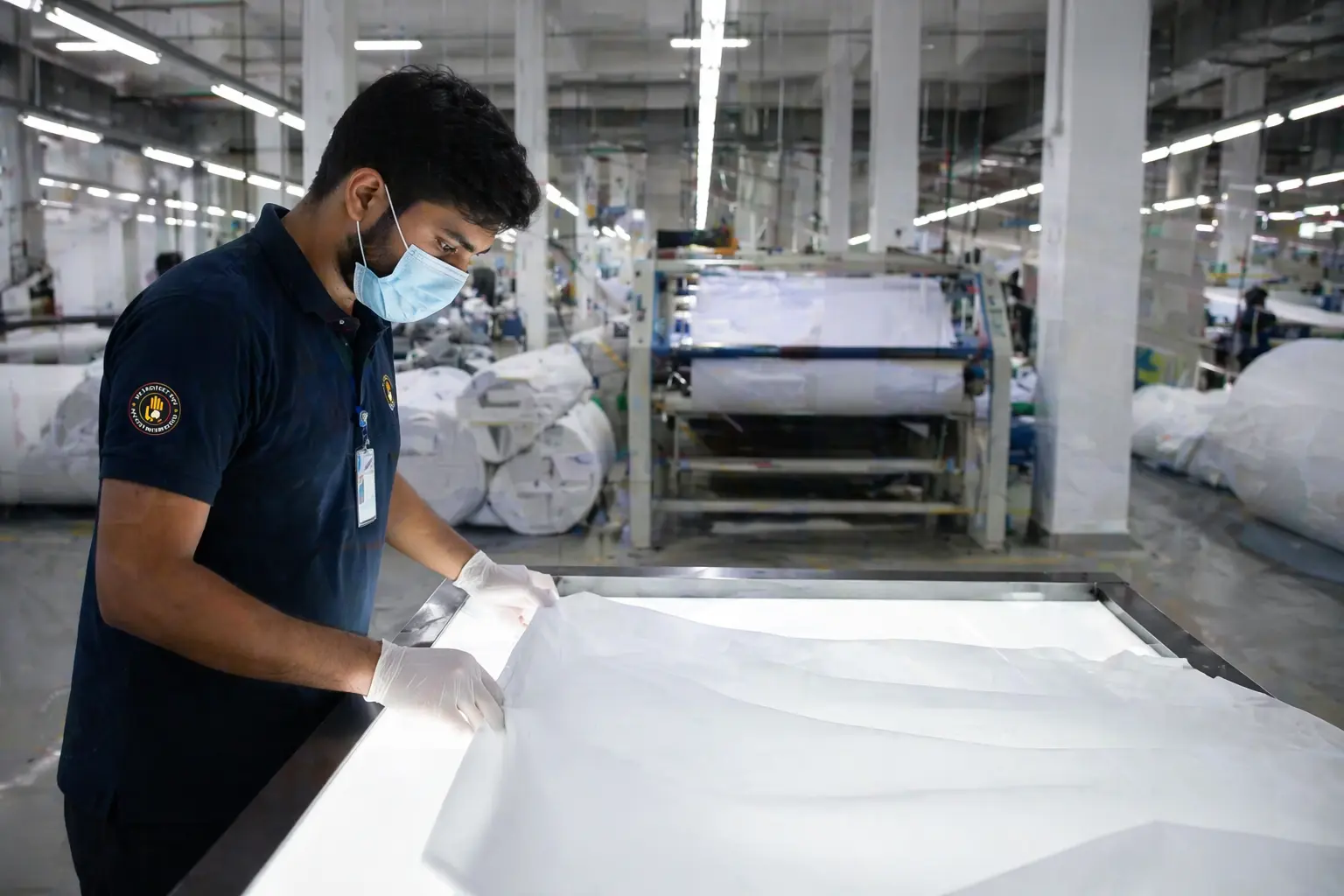
When sourcing hospital linen internationally, certification is not a formality. It is the primary mechanism through which a procurement team verifies that a manufacturer’s quality systems, environmental practices, and labor conditions meet the standards their institution must demonstrate to clinical regulators, social auditors, and patients.
ISO 9001:2015 — Quality Management System
ISO 9001 is a process standard: it certifies that the manufacturer has documented, audited, and continuously improved quality management procedures covering production, inspection, and delivery. For linen procurement, this means consistent batch quality, documented handling of non-conformances, and traceable production records. Hilton Enterprises is ISO 9001 certified.
ISO 14001:2015 — Environmental Management System
ISO 14001 certifies that the manufacturer operates an environmental management system covering water use, chemical discharge, waste handling, and energy consumption. For buyers with ESG commitments or supplier code requirements, ISO 14001 is increasingly a mandatory supplier qualification condition, particularly for US and European institutional buyers. Hilton Enterprises is ISO 14001 certified.
Sedex / SMETA Audit
Sedex membership and an SMETA audit provide third-party verification of labor practices, health and safety conditions, business ethics, and environmental performance. For buyers operating under ethical sourcing policies or subject to modern slavery reporting requirements, Sedex is the accepted international standard. Hilton Enterprises is Sedex registered.
CTPAT — Customs-Trade Partnership Against Terrorism
For buyers importing into the United States, CTPAT certification confirms that the supplier operates within a verified supply chain security program recognized by US Customs and Border Protection. This certification can materially reduce customs examination delays and support faster port clearance for US-bound shipments. Hilton Enterprises holds CTPAT certification.
Verification tip: Request the registration number and expiry date for every certification a supplier claims. ISO, Sedex, and CTPAT certifications are all searchable in their respective registries. A supplier unable to provide these details on request does not hold the certification. ISO certifications can be verified directly through the ISO’s official certification registry. Review our full certification details on our certifications page.
Sourcing Hospital Linen from Pakistan (Cost, MOQ, and Lead Time):

Pakistan is the world’s fourth-largest exporter of cotton-based textiles and the third-largest exporter of cotton yarn. Faisalabad — where Hilton Enterprises is headquartered — produces over 30% of Pakistan’s total textile exports and houses the country’s highest concentration of vertically integrated spinning, weaving, and finishing capacity.
For procurement managers evaluating international sourcing options for hospital linen, this geographic concentration creates a structural cost and lead time advantage that US domestic and most European suppliers cannot match.
Pakistan’s Textile Manufacturing Advantage:
The cost differential is not a quality trade-off. Pakistan’s healthcare-grade linen manufacturers holding ISO 9001, ISO 14001, Sedex, and CTPAT certifications produce to the same technical specifications as their US and European counterparts. The price difference reflects labor economics, proximity to raw cotton, and the absence of multiple supply chain intermediaries — not a reduction in material or process quality.
MOQ and Lead Times:
MOQ and lead time reference for Hilton Enterprises hospital fitted sheets:
| Product type | Minimum order (MOQ) | Lead time |
| Standard sizes (36 × 80) | 5,000 units per size | 4–6 weeks ex-factory |
| Bariatric sizes (42 × 80 / 48 × 80) | 5,000 units per size | 5–7 weeks ex-factory |
| Custom size/fabric | 5,000 units per SKU | 6–8 weeks ex-factory |
| Private label (custom brand) | 5,000 units per size | +1–2 weeks for branding setup |
All orders include: pre-production sample approval, an inline quality inspection at 50% of production completion, a final inspection before container loading, and full documentation — packing list, certificate of compliance, and test reports, on request. Private label branding (woven labels, printed labels, custom retail packaging) is available with a standard MOQ of 5,000 units per size with no additional minimums.
Lead times above are ex-factory from Faisalabad. Sea freight to US East Coast ports typically adds 21-28 transit days. Air freight is available for urgent initial orders or sampling programs.
Buyers requiring end-to-end manufacturing solutions — from fabric development through to finished private label linen programs — can enquire about Hilton’s Custom Manufacturing and Private Label Manufacturing services. Dedicated pages for both services are in development. Contact the team directly to discuss program requirements before those pages launch.
Buyers interested in the broader bedsheet program — including our printed bedsheet range and plain bedsheet ranges — can explore the full Home Textile catalog while the dedicated service pages are in development.
Frequently Asked Questions:
Q. What size is a hospital bed fitted sheet?
A standard hospital bed fitted sheet measures 36 inches wide by 80 inches long, with a pocket depth of 6 to 9 inches. This is narrower than a domestic twin XL sheet — which runs 38 × 80 inches — and has a deeper elasticated pocket to wrap securely around thicker clinical mattresses. Bariatric hospital beds require wider sheets: 42 inches for standard bariatric frames and 48 inches for extra-wide configurations.
Q. What size sheets do hospital beds take?
Standard hospital beds take fitted sheets measuring 36 × 80 inches with a pocket depth of 6 to 9 inches. Extra-long hospital beds take 36 × 84-inch sheets. Bariatric frames take 42 to 48-inch-wide sheets, depending on frame width. Always confirm the actual mattress depth — including any toppers or pressure-relief overlays — before specifying pocket depth, as these can add 2 to 3 inches above the bare mattress measurement.
Q. Are hospital bed sheets the same size as twin sheets?
No. A standard hospital bed fitted sheet measures 36 inches wide by 80 inches long — narrower than a domestic twin (39 × 75 inches) and longer, making it closest to a twin XL in length but not identical in width or pocket depth. Hospital fitted sheets also have a deeper pocket (6 to 9 inches) than most domestic twin sheets, which typically run 4 to 6 inches. A domestic twin XL sheet will not fit a hospital mattress correctly — the narrower hospital sheet width and deeper pocket are specific to clinical mattress dimensions.
Q. What is the standard hospital bed sheet size?
The standard hospital bed sheet size for a fitted sheet is 36 × 80 inches with a 6 to 9 inch pocket depth. Flat sheets used in hospital settings typically measure 66 × 104 inches. Pediatric hospital beds take sheets measuring approximately 30 × 72 inches. Bariatric hospital bed sheets run 42 to 48 inches wide, depending on frame specification. In all cases, pocket depth should be confirmed against the actual mattress — not the bed frame category — before placing a bulk order.
Q. What size sheets fit a hospital bed?
A standard hospital bed fitted sheet measures 36 inches wide by 80 inches long, with a pocket depth of 6 to 8 inches — slightly narrower and longer than a domestic twin XL (38″ × 80″). For extra-long beds, the correct size is 36″ × 84″. Always confirm the actual mattress depth before specifying pocket depth, as toppers can add 2 to 3 inches above the standard.
Q. What size fitted sheets do bariatric hospital beds require?
Standard bariatric hospital bed fitted sheets measure 42 inches wide. Extra-wide bariatric beds require 48-inch-wide sheets. Buyers should confirm pocket depth against the actual mattress — typically 9 to 14 inches. We recommend knitted construction for all bariatric fitted sheets used on adjustable or articulating frames.
Q. What thread count is best for hospital bed sheets?
T-180 in a 55% polyester / 45% cotton blend is the most widely specified thread count for general healthcare use. It delivers 200+ wash cycle durability at the lowest total cost of ownership across a high-turnover linen program. T-200 is the recommended step-up for private patient rooms, care homes, and hospitality settings that require a softer hand feel.
Q. What is the difference between woven and knitted hospital fitted sheets?
Thread count rates woven fitted sheets; they provide a flat, crisp surface appropriate for standard ward beds. GSM rates knitted fitted sheets, and elastic runs throughout the fabric — making them the correct specification for adjustable, bariatric, or articulating hospital beds where a woven sheet would repeatedly pull free at the corners.
Q. What certifications should a hospital linen manufacturer hold?
ISO 9001 for quality management and Sedex/SMETA for ethical sourcing verification. Buyers with ESG commitments increasingly require ISO 14001. For US importers, CTPAT reduces customs friction. Always verify certification registration numbers against the issuing registry rather than accepting supplier claims at face value — you can check ISO certifications directly through ISO’s official certification registry.
Q. What is the minimum order quantity for bulk hospital fitted sheets?
Hilton Enterprises accepts a minimum of 5,000 units per size for standard and bariatric hospital fitted sheets. Custom sizes and private label branding are available at the same MOQ. Contact our Home Textile team for a quote tailored to your size matrix and delivery program.
For questions on sampling policy, payment terms, and export documentation, visit the full Hilton Enterprises FAQ page.
Work With a Certified Hospital Linen Manufacturer
Hilton Enterprises manufactures and exports hospital-grade fitted sheets, flat sheets, draw sheets, and complete linen programs to healthcare facilities, distributors, and private label brands across the USA, Canada, UAE, and Europe. Our Home Textile division operates from an ISO 9001, ISO 14001, Sedex, and CTPAT-certified factory in Faisalabad, Pakistan, with 50+ years of B2B textile manufacturing experience.
- Browse our fitted bedsheet range — standard, extra-long, and bariatric sizes.
- Explore the complete bed sheet division — fitted, printed, and plain.
- Review our certifications and company background — ISO 9001, ISO 14001, Sedex, CTPAT.
- Request pricing, samples, or a specification sheet — our Home Textile team responds within one business day.