The wrong hiking sock in summer does not just cause discomfort — it causes blisters, hotspots, and foot fatigue that ends a hike early. The right pair disappears on your foot for the entire day, no matter the heat, the terrain, or the mileage.
Most guides tell you to “look for moisture-wicking material” and leave it there. That is not enough. Summer hiking creates a specific combination of sustained heat, prolonged sweat output, and foot friction that demands a sock built for all three simultaneously — not just one.
This guide covers every factor that actually matters in a summer hiking sock — material, cushioning, cut, fit, and gender-specific considerations — so you can make a decision that holds up over a full day on trail.
Not sure which type of summer sock you need yet?
Our Best Socks for Summer guide covers every material and use case — from hiking to everyday wear — before narrowing down to hiking specifically.
Quick Answer: The best summer hiking socks are made from merino wool or a merino-synthetic blend in a lightweight or ultralight construction. They feature cushioning at the heel and ball of the foot, a left-right anatomical fit that holds position without slipping, and a crew-height cut that protects the ankle inside a hiking boot. For shorter day walks and lighter terrain, lightweight bamboo crew socks are a strong budget alternative. Avoid cotton entirely — it holds moisture against the skin and causes blisters faster than any other material.
What Makes a Summer Hiking Sock Different from a Regular Hiking Sock
A summer hiking sock has to manage heat on top of everything a standard hiking sock already does — and standard hiking socks are already demanding.
Regular hiking socks prioritise cushioning, durability, and blister resistance. A summer hiking sock adds two further requirements: active moisture management that keeps pace with elevated sweat output in heat, and a lighter fabric weight that does not trap warmth inside a boot.
The problem with most standard hiking socks in summer:
- Midweight and heavyweight constructions insulate too well — your foot stays warm when warmth is the last thing you need
- Cotton-nylon blends saturate quickly in heat and hold moisture, softening the skin and multiplying friction
- Dense knit structures that work perfectly in cool conditions restrict airflow in summer and extend drying time between stream crossings
A properly specified summer hiking sock uses a lighter fabric weight, an open-knit structure in low-contact zones, and a moisture management fiber — most commonly merino wool or a technical polyester blend — that keeps the foot dry under sustained sweat output across a full hiking day.
Material: The Single Most Important Factor in Summer Hiking Socks
The best material for summer hiking socks is merino wool — it manages moisture, regulates temperature across changing trail conditions, resists odour on multi-day hikes, and cushions without adding unnecessary weight.
Here is how each material performs specifically in a summer hiking context:
Merino Wool: Best Overall for Summer Hiking
Merino wool is the best overall material for summer hiking socks for one reason: no synthetic matches: it manages moisture, temperature, and odour simultaneously — the three demands summer hiking makes above all others.
Its hygroscopic fiber structure absorbs sweat vapour before it becomes liquid, moves it to the outer surface, and releases it through evaporation that actively cools the foot. According to research by The Woolmark Company, merino fibers regulate thermal equilibrium during both activity and rest phases — meaning your foot stays at a stable temperature whether you are climbing hard or standing at a viewpoint.
For multi-day hikes, merino’s natural antibacterial keratin protein structure resists odour for 24–48 hours of continuous wear — a property no synthetic fiber delivers without a chemical treatment that washes out over time.
The one limitation is drying speed. Merino dries more slowly than CoolMax® polyester after a stream crossing or heavy rain. On a day hike, this is rarely significant. On a multi-day hike in wet conditions, a merino-nylon blend (60–80% merino) solves the drying speed issue while retaining the temperature and odour benefits.
For the full science behind Merino’s summer performance, including the hygroscopic process step by step, see our dedicated guide: Are Merino Wool Socks Good for Summer?
CoolMax® and Performance Polyester Blends — Best for High-Output Day Hikes
CoolMax® and technical polyester blends wick liquid sweat faster than merino during peak-output climbing sections. They also dry significantly faster after water crossings — a meaningful advantage on technical summer routes with river sections.
The trade-off is odour resistance. Synthetic fibers do not carry merino’s natural antibacterial properties. After 6–8 hours of summer hiking, a CoolMax® sock will develop odour that a merino sock will not. For single-day hikes, this is rarely a problem. For overnight and multi-day hikes — choose merino.
Bamboo Blends: Best Budget Alternative for Day Walks
Bamboo fiber delivers good breathability, natural moisture management, and reasonable odour resistance at a significantly lower price point than merino. For day walks, light trails, and casual summer hiking, bamboo is a strong budget alternative.
Bamboo’s limitation for serious hiking is durability. It does not hold up under the sustained friction of a heavy-mileage boot environment as well as merino-nylon blends. For serious summer hiking — merino. For light summer walks and day trails, bamboo works well.
Cotton: Never for Summer Hiking
Cotton is the worst possible choice for summer hiking socks and the most common cause of preventable trail blisters. It absorbs moisture readily and holds it against the skin — exactly the conditions that soften skin, reduce friction resistance, and create hotspots that turn into blisters within the first two hours of a summer hike.
The REI Expert Advice hiking sock guide puts it plainly: Cotton is the one material outdoor professionals consistently advise against for any active trail use. In summer heat, the advice is even more emphatic — cotton holds sweat, heats the foot, and causes blisters faster than any other fiber. Avoid it entirely for hiking.
Cushioning: How Much Do You Actually Need in Summer
The best summer hiking socks use targeted cushioning — padding concentrated at the heel and ball of the foot where impact occurs, with a lighter or mesh construction across the top and arch to allow airflow.
Full-sole uniform cushioning traps heat across the entire foot surface in summer. Targeted cushioning protects where it matters — the impact zones — while the open zones breathe.
Here is how cushioning levels map to summer hiking use cases:
| Cushioning Level | Construction | Best Summer Hiking Use Case |
| Ultralight / No cushion | Full mesh or open-knit sole | Trail running, ultralight backpacking, fast day hikes in light footwear |
| Lightweight / Targeted | Heel and ball pad, open arch, and top | Day hikes, moderate trails, warm-weather backpacking — most common summer choice |
| Midweight / Full | Full sole cushioning, standard knit upper | Heavy pack, rocky technical terrain — accept more heat for more protection |
| Heavyweight / Maximum | Dense full sole and upper | Not recommended for summer — too warm for sustained warm-weather use |
For most summer day hiking, a lightweight targeted cushion sock in merino or a merino-nylon blend is the correct specification. It protects impact zones, allows airflow across the top of the foot, and does not trap heat the way a midweight or heavyweight construction does.
Fit and Construction: What Stops Blisters Before They Start
A summer hiking sock can be made from the best material with the right cushioning weight — and still cause blisters if the fit is wrong. Fit is the most underrated factor in hiking sock selection.
The four construction features that prevent blisters in summer hiking socks:
- Left-right anatomical shaping — A sock shaped specifically for the left or right foot sits flush against the foot contours without bunching or gathering at the toe box or heel cup. Bunching creates friction points that cause blisters within the first mile. Anatomically shaped socks cost more and perform substantially better.
- Seamless or flat-knit toe closure — A raised seam at the toe box is the single most common cause of toe blisters on long summer hikes. Seamless toe closures or hand-linked flat-knit seams eliminate this contact point.
- Arch compression band — A structured band across the arch holds the sock in position inside the boot through a full hiking day. Without it, the sock migrates forward, the heel cup shifts, and the cushioning is no longer over the impact zones.
- Reinforced heel cup — A reinforced heel zone prevents the heel area from thinning under friction and holds the sock’s position inside the boot. In summer heat, when sweat reduces the sock’s grip slightly, a reinforced heel cup becomes more important — not less.
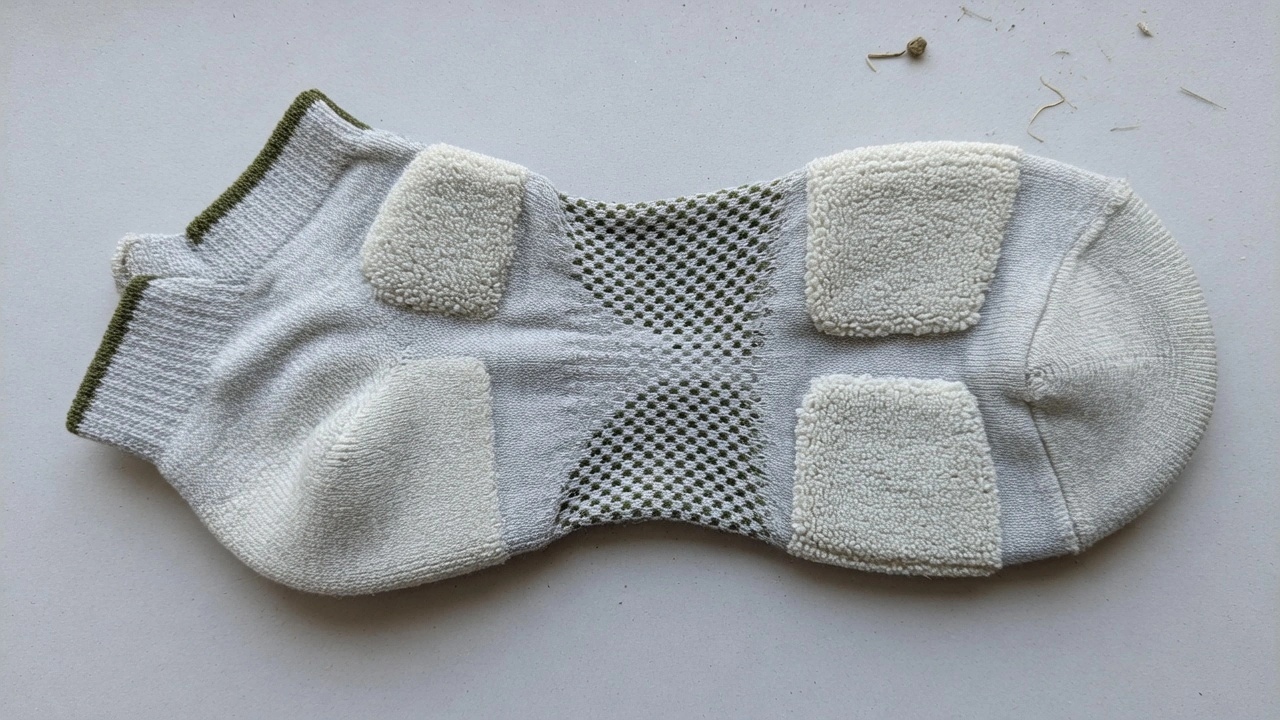
The anatomy of a well-constructed summer hiking sock — cushioning concentrated at heel and ball, open-mesh arch for airflow, anatomical shaping, and flat-knit toe seam to eliminate the most common blister source.
Cut and Height: Ankle vs Crew vs Knee-High for Summer Hiking
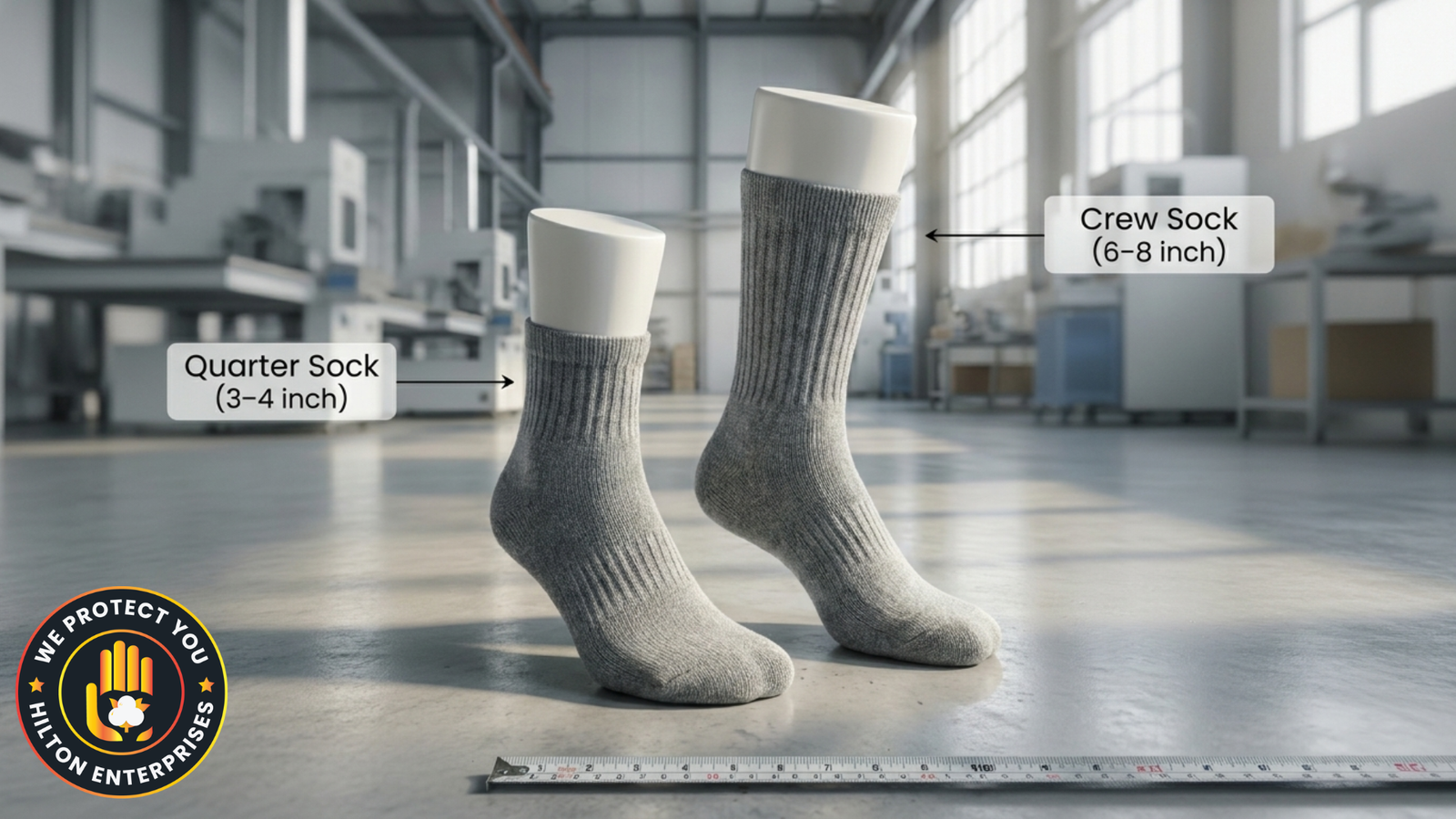
The right cut for summer hiking depends on your boot height and the terrain you are covering. Cut affects both comfort and protection — choosing the wrong height for your footwear creates friction at exactly the point where boot meets skin.
| Sock Cut | Boot Compatibility | Summer Advantage | Best For |
| No-show / Liner | Trail runners, low hiking shoes | Maximum ventilation, minimum weight | Trail running, ultralight day hikes in trail runners |
| Ankle | Low hiking shoes, trail runners | Good airflow to the lower leg | Day hikes on moderate terrain in low-cut footwear |
| Crew ✓ | Mid and high hiking boots | Covers boot collar — prevents friction and debris entry | Most summer hiking — the standard recommendation |
| Knee-High | All boot heights | Full leg protection, compression option | Multi-day hikes, heavy scrub terrain, compression support needed |
Crew height is the correct choice for most summer hiking. It sits above the boot collar — preventing the collar from rubbing directly on bare skin, keeping debris and trail dust out of the boot, and providing full coverage over the ankle where hiking boots create the most friction. Ankle socks worn with mid or high hiking boots leave the collar zone exposed, which is where the most serious blisters form on long summer hikes.
Women’s Summer Hiking Socks — What Is Actually Different
Women’s summer hiking socks are underserved in most buying guides — they are either treated identically to men’s options or described only in terms of colour and style. The functional differences are real and matter for performance.
Women’s feet are anatomically different from men’s feet in three ways that affect hiking sock specification:
- Narrower heel-to-ball ratio — Women’s feet typically have a narrower heel relative to the forefoot width. A sock sized for a man’s last will have excess material at the heel cup, which causes the sock to shift position during the toe-off phase of a hiking stride — the stage at which most heel blisters form. Women ‘s-specific lasts in hiking socks hold the heel cup tighter and more accurately.
- Lower volume instep — The arch compression band placement on a women ‘s-specific sock accounts for a lower instep profile. On a unisex sock, this band often sits slightly high on a woman’s foot — creating a pressure point rather than support.
- Narrower toe box in many foot types — Women’s anatomical toe closure shaping reduces the excess fabric at the toe box that can fold and create friction points in the first hour of a hike.
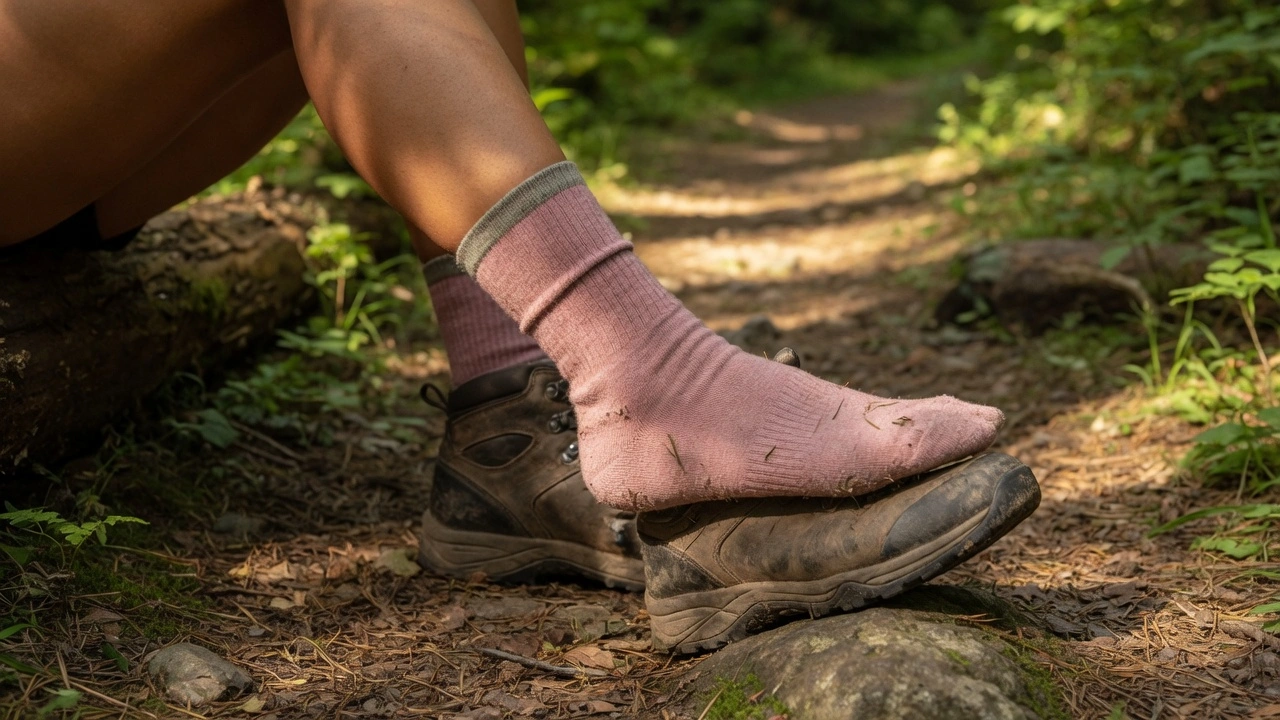
Women’s summer hiking socks require a narrower heel cup, adjusted arch band placement, and women’s-specific last shaping — not simply a smaller version of a unisex sock.
What to look for specifically in women’s summer hiking socks:
- Women ‘s-specific last construction — not just a unisex sock relabelled in a smaller size
- Merino wool or merino-nylon blend at lightweight or ultralight weight
- Crew height for mid and high boots — same recommendation as for men
- Targeted cushioning at heel and ball — women hiking on technical terrain benefit as much as men from impact zone padding
- Flat-knit or seamless toe — the same blister-prevention priority applies regardless of gender
Hilton Enterprises manufactures women ‘s specific summer hiking sock styles — with narrower heel cups, adjusted arch band placement, and women’s last shaping — available for wholesale and private-label production. Browse the athletic sock range for available styles or contact us with your specifications.
Summer Hiking Sock Comparison — Materials Side by Side
How to read this table: all ratings reflect performance during a 6–10-hour summer day hike in warm conditions. Multi-day performance rates how the material holds up across consecutive hiking days without washing. Drying speed matters specifically for hikes involving water crossings or rain.
| Material | Moisture Mgmt | Temp Regulation | Drying Speed | Odour Resistance | Durability | Best For |
| Merino Wool ★ | ★★★★★ | ★★★★★ | ★★★☆☆ | ★★★★★ | ★★★☆☆ | Multi-day hiking |
| Merino-Nylon Blend | ★★★★★ | ★★★★☆ | ★★★★☆ | ★★★★★ | ★★★★★ | All summer hiking |
| CoolMax® Polyester | ★★★★★ | ★★★☆☆ | ★★★★★ | ★★★☆☆ | ★★★★☆ | High-output day hikes |
| Bamboo Blend | ★★★★☆ | ★★★★☆ | ★★★★☆ | ★★★★☆ | ★★★☆☆ | Day walks, light trails |
| Cotton ✗ | ★☆☆☆☆ | ★☆☆☆☆ | ★☆☆☆☆ | ★★☆☆☆ | ★★★☆☆ | Never for hiking |
★ Best performer ✗ Avoid for all summer hiking
Summary: A merino-nylon blend (60–80% merino, balance nylon) is the most complete summer hiking sock for most people — it combines merino’s temperature and odour advantages with nylon’s durability and faster drying speed. Pure merino wins on temperature regulation and odour for multi-day hikes. CoolMax® wins on moisture removal speed for high-output single-day routes. Cotton has no place on a summer hiking trail under any conditions.
Walking Socks for Summer — Lighter Trail and Day-Walk Options
Not every summer outdoor sock needs to be built for a full-day technical hike. Walking socks for summer — used on easier trails, urban walks, light country paths, and casual day routes — can use a lighter specification without sacrificing the fundamentals.
The best walking socks for summer share three properties with hiking socks but differ on two:
Properties shared with hiking socks:
- Merino wool or bamboo material — never cotton
- Moisture-wicking construction — still essential in summer heat, even on easy terrain
- Flat-knit or seamless toe — blisters are not exclusive to technical hikes
Where walking socks differ:
- Less cushioning — lighter trails and walking shoes do not require the same heel and ball padding as a full hiking boot on rocky terrain. A lighter sole construction reduces weight and increases airflow.
- Lower cut acceptable — ankle height works well for summer walking in low-cut shoes or trail runners. The boot-collar friction concern that makes crew height essential for hiking boots is less relevant for walking shoes.
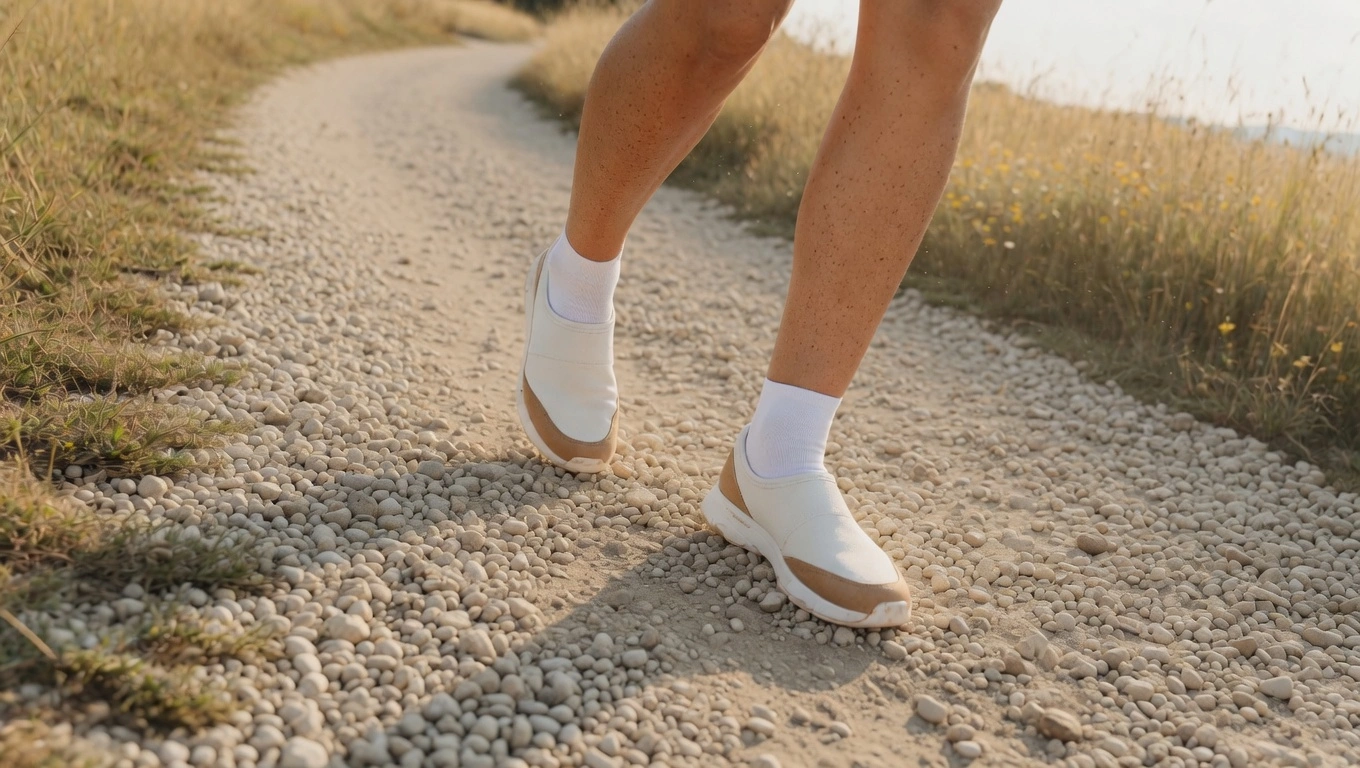
Walking socks for summer use the same material principles as hiking socks — merino or bamboo, never cotton — in a lighter construction and lower cut suited to easier terrain and walking shoes.
Hilton’s ankle sock range covers lightweight bamboo and merino styles suited to summer walking — available for wholesale and private-label production from 1,000 pairs per style. For compression walking options — especially for longer summer walks with swelling concerns — see our dedicated guide: Can You Wear Compression Socks in Summer?
Source Summer Hiking Socks at Wholesale — Hilton Enterprises
Hilton Enterprises manufactures summer hiking socks for wholesale and private-label brands — including merino-nylon blends, CoolMax® performance styles, bamboo day-walk socks, and women’s specific hiking constructions. Our facility in Faisalabad, Pakistan, has supplied outdoor and athletic sock styles to USA and Canada retail brands since 1970.
Custom design, sampling, and production available from 1,000 pairs per style. Direct shipping to USA warehouses in 18–25 days.
- Browse available hiking and athletic sock styles on our athletic sock range page.
- See the full range of sock categories — including crew, ankle, compression, and knee-high styles — on our main sock category page.
- Learn about Hilton’s 50-year manufacturing background on our About page.
- Submit your enquiry — quantity, target delivery date, and design brief — via our Contact page. We respond within 1 business day.
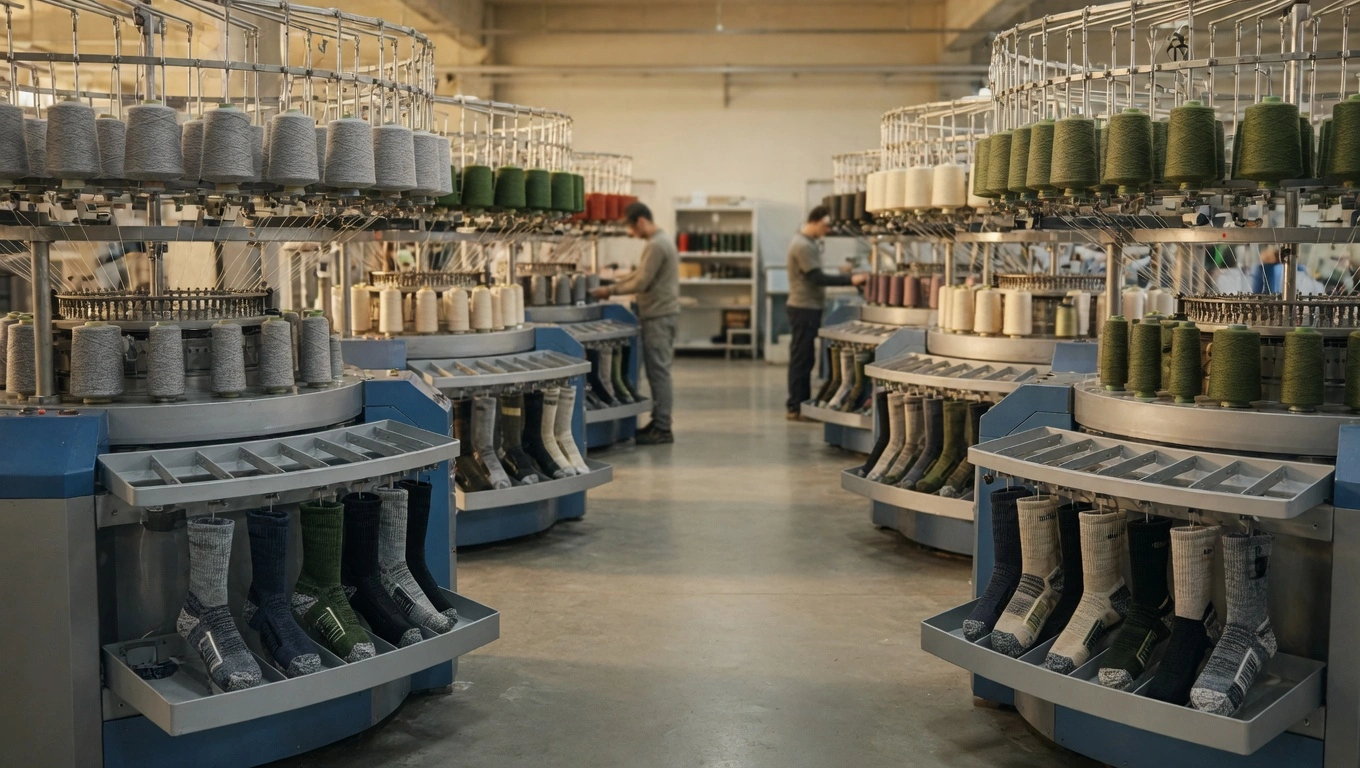
Hilton Enterprises manufactures summer hiking socks in merino-nylon blends, CoolMax® performance styles, and women’s-specific constructions — supplying wholesale and private-label brands in the USA and Canada since 1970.
Also in this series:
Best Socks for Summer: A Complete Guide by Material and Use Case
Are Merino Wool Socks Good for Summer? What the Material Actually Does
Can You Wear Compression Socks in Summer? Yes — Here’s How
Men’s Summer Socks: Best Styles, Materials and Where to Source Wholesale
Women’s Summer Socks: From Compression to Hiking — Full Buyer Guide
Frequently Asked Questions:
Q: What are the best socks for summer hiking?
A: The best socks for summer hiking are made from merino wool or a merino-nylon blend in a lightweight or ultralight construction. They feature targeted cushioning at the heel and ball of the foot, a left-right anatomical fit, a flat-knit seamless toe, and a crew-height cut that protects the ankle inside a hiking boot. For high-output day hikes, CoolMax® polyester blends are a strong alternative. Avoid cotton entirely — it holds moisture and causes blisters faster than any other material in summer heat.
Q: What are the best hiking socks for summer heat specifically?
A: For summer heat specifically, the key is a lightweight or ultralight fabric weight with an open-knit structure that allows airflow. Merino wool manages temperature actively — absorbing sweat vapour, moving it to the outer surface, and releasing it through evaporation that cools the foot. Standard midweight or heavyweight hiking socks trap heat in summer, even if made from good materials. Always check the weight label: look for ultralight or lightweight.
Q: Are merino wool socks good for summer hiking?
A: Yes — merino wool is widely considered the best material for summer hiking socks. It manages moisture over 6–10 hours of activity, regulates temperature through the swings between shaded forest and open exposed ridge, and resists odour across multi-day hikes where changing socks is not possible. The only situation where a synthetic alternative beats merino on a summer hike is peak-output racing, where CoolMax® polyester blends wick liquid sweat faster.
Q: What are the best women’s summer hiking socks?
A: The best women’s summer hiking socks use a women’s-specific last construction with a narrower heel cup, adjusted arch compression band placement, and women’s anatomical toe closure shaping — not simply a unisex sock in a smaller size. Material and cushioning recommendations are the same as for men: merino wool or merino-nylon blend, lightweight, targeted cushioning, crew height for hiking boots, flat-knit seamless toe.
Q: What socks should I wear for a summer day hike?
A: For a summer day hike, wear a lightweight merino wool or merino-nylon blend crew sock with targeted cushioning at the heel and ball of the foot. Crew height is the right choice for mid or high hiking boots. Ankle height works for low-cut hiking shoes or trail runners. Avoid cotton and standard midweight socks — both trap heat and moisture in summer conditions.
Q: What is the best sock height for summer hiking?
A: Crew height is the best sock height for most summer hiking. It covers the boot collar zone — where mid and high hiking boots create the most friction on bare skin — and keeps trail debris from entering the boot. Ankle socks are acceptable for low-cut hiking shoes and trail runners. Knee-high is the right choice for heavy scrub terrain, multi-day hikes with heavy packs, or when light compression support is also needed.
Q: Are walking socks different from hiking socks for summer?
A: Walking socks for summer use the same material principles as hiking socks — merino or bamboo, never cotton — but are typically lighter in cushioning and cut. A lighter sole construction and ankle or low-crew height suits summer walking shoes and easier terrain. For technical summer hiking in boots, a full hiking sock with targeted heel and ball cushioning, crew height, and anatomical shaping is the correct specification.