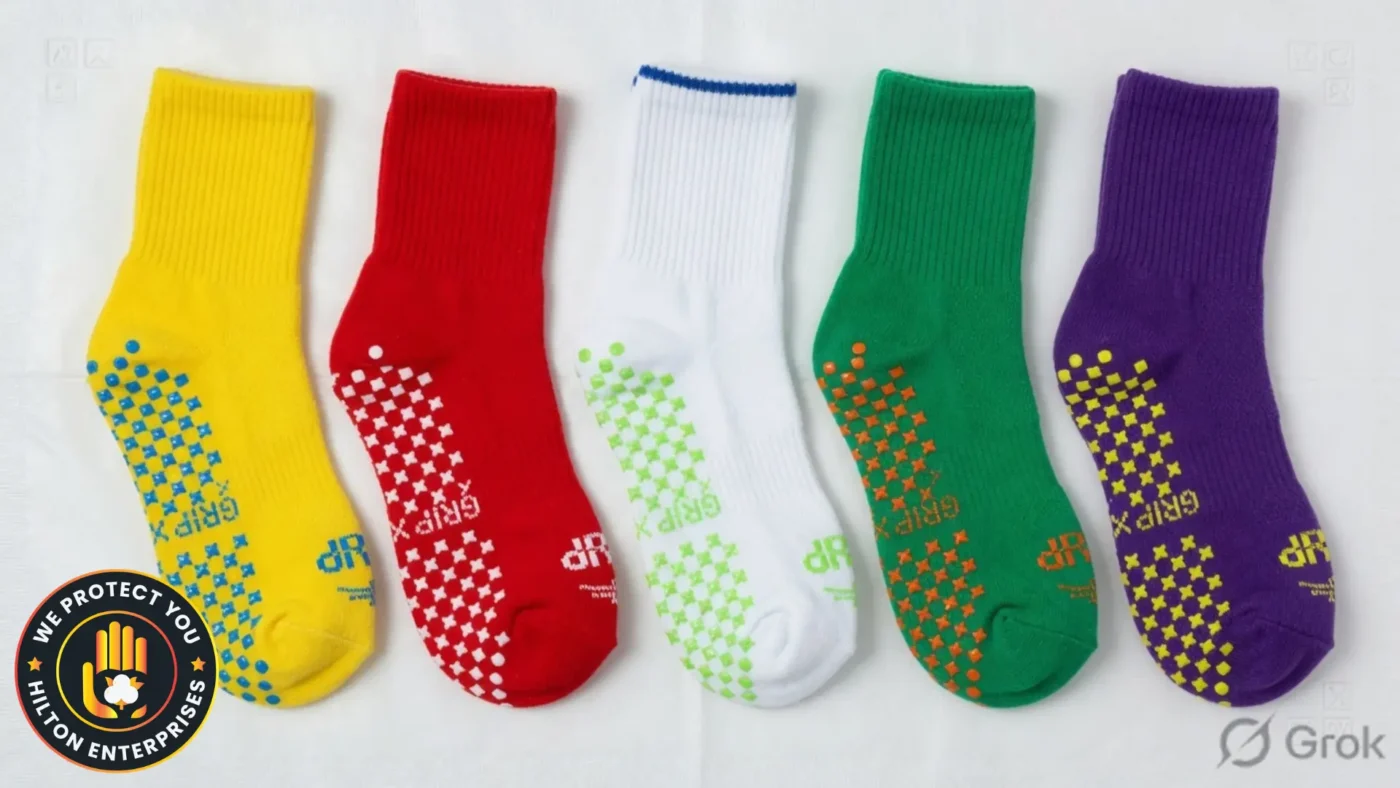
Understanding hospital socks color meanings is more important than it might seem for procurement teams. Color-coded socks are a practical patient-safety tool — but the system only works when everyone in the facility follows the same written protocol.
This guide explains the most commonly used color conventions, where the guidance comes from, how sizing systems can create conflict, and what to confirm before placing a bulk order.
1. Why Hospital Socks Are Color Coded
Hospital falls are among the most common preventable adverse events in inpatient settings. The Agency for Healthcare Research and Quality (AHRQ) estimates that between 700,000 and 1,000,000 patients fall in US hospitals each year — and a significant proportion of those falls can be prevented with the right interventions.
The AHRQ Fall TIPS toolkit — a structured fall prevention program used in more than 100 US hospitals — has been associated with a 25% reduction in falls in acute care settings. Color-coded socks are one visible component of that system, alongside wristbands, door signs, and bed markers.
The Joint Commission includes fall prevention in its National Patient Safety Goals (NPSG.09.02.01) for hospitals and nursing care centers. Color coding helps support that goal by giving any staff member an immediate visual cue — without needing to consult the chart.
Important: Sock color coding is facility-defined, not nationally mandated. Always obtain the specific facility’s written color protocol before placing any order.
2. Hospital Sock Color Meanings: Common Conventions
The AHA patient alert color framework
The American Hospital Association’s recommended patient alert color system was developed primarily for patient wristbands — not specifically for socks. As of 2023, at least 20 US states have adopted this framework for wristband standardization. Many facilities extend the same color logic to their sock programs, but this is a local decision, not a legal requirement.
The three core colors from the AHA framework most commonly carried over to sock programs are:
- Yellow — commonly associated with fall risk. The most consistently colored across US hospital systems. If a facility uses color-coded socks, yellow is most likely to mean elevated fall risk.
- Red — commonly associated with allergy alert. In some facilities, red also signals the highest fall risk tier. Always verify which meaning applies before ordering.
- Purple — commonly associated with DNR (do not resuscitate). Many facilities apply this only to wristbands. Confirm before including purple in any sock program.
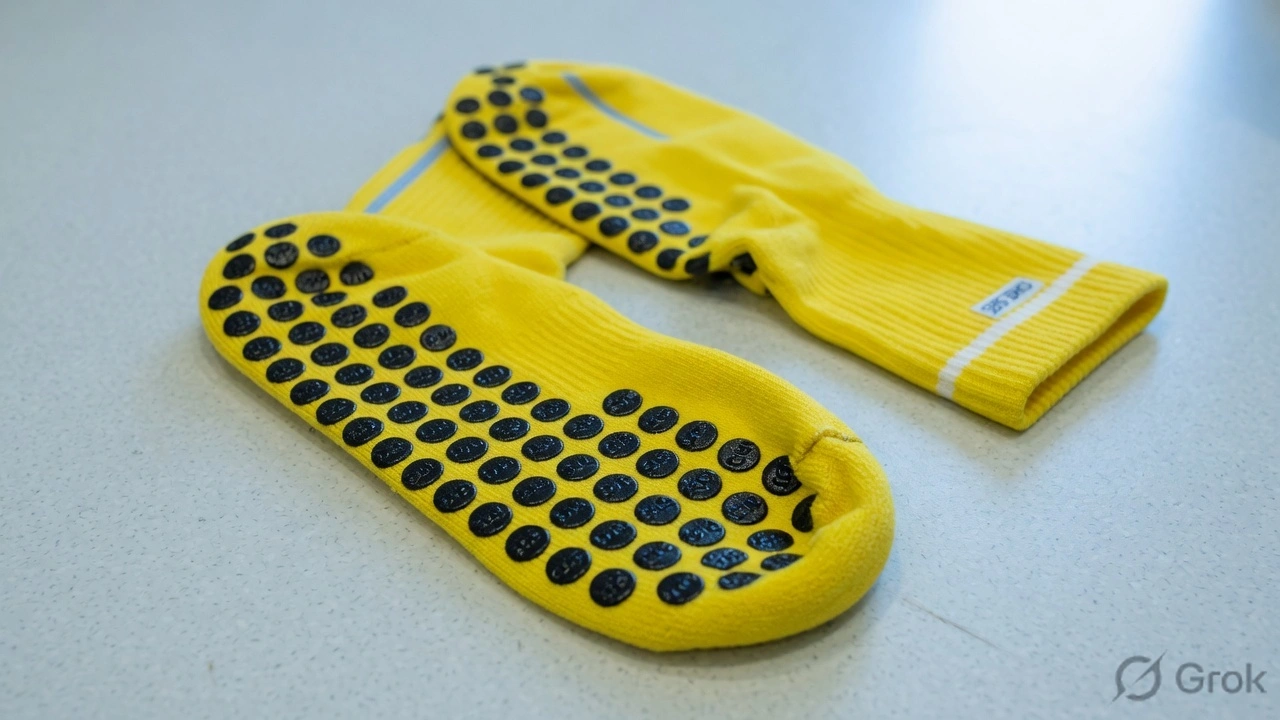
Yellow is the most broadly consistent color in hospital sock programs, commonly associated with fall risk. It aligns with the American Hospital Association’s patient alert framework — adopted by at least 20 US states for wristband standardization. Some facilities use yellow for sock sizing rather than clinical risk — always confirm the specific facility’s written protocol.
Full colour reference
The table below reflects the most common conventions used in US hospitals. These are typical practices — not universal rules. Facility protocols vary.
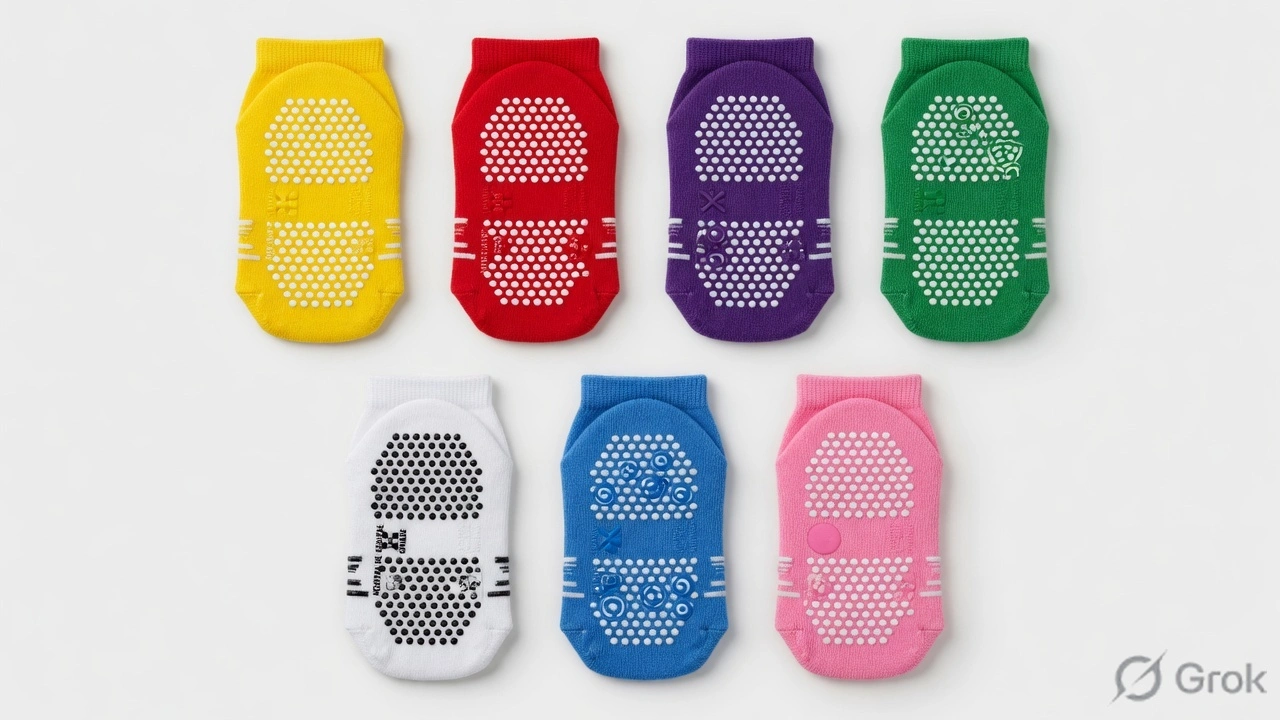
The seven most commonly referenced hospital sock colors are based on the American Hospital Association’s patient alert framework and facility-level conventions. There is no single national standard — yellow is the most consistent, while the others vary by facility. Always obtain the specific facility’s written color protocol before placing any bulk order.
| Colour | Common meaning on the ward | Procurement note |
| Yellow | Commonly used for fall risk. The most consistently colored across US hospital systems. | Typically, the highest-volume color in any program is 30–40% of the total. Always verify with the facility, as some use yellow for sock size. |
| Red | Commonly used for allergy alert. In some facilities, it also signals the highest fall risk tier. | Order in moderate volume. Confirm whether red = allergy, highest risk, or both before ordering. |
| Purple | Commonly associated with do not resuscitate (DNR). Often communicated via a wristband rather than a sock. | Low volume. Only include if the facility’s written protocol explicitly states that purple is applied to socks. |
| Green | Used for latex allergy in some facilities. Standard risk or size large in others. | Among the least consistent colors. Always obtain a written protocol before ordering green socks in bulk. |
| Pink | Associated with restricted extremity — limb not available for blood draws or IV lines. | Primarily a wristband convention. Confirm whether your facility applies this to socks. |
| White | Standard issue. No elevated risk or allergy flagged. The default across most programs. | Typically, the highest-volume color is yellow, accounting for 50–60% of the total program. |
| Blue | No consistent national meaning. Used for standard risk or sock size in some facilities. | Many facilities avoid using blue due to its potential confusion with Code Blue terminology. Use only with a documented protocol. |
Yellow is the most consistently colored. For all others, obtain the facility’s written protocol before ordering — the same color can mean different things in different buildings.
3. When Color Indicates Size, Not Risk
The dual-use conflict
Some facilities use sock color as a sizing system rather than a risk indicator. Yellow means ‘size medium.’ Green means ‘size large.’ This is a common operational shortcut — and a genuine safety concern when both systems operate in the same facility without clear documentation.
- A yellow sock meaning ‘size medium’ in one ward and ‘fall risk’ in the next is a direct patient safety risk.
- Agency or bank staff rotating between facilities may apply different color conventions without realizing it.
- Undocumented systems create the kind of ambiguity that fall prevention programs are designed to eliminate.
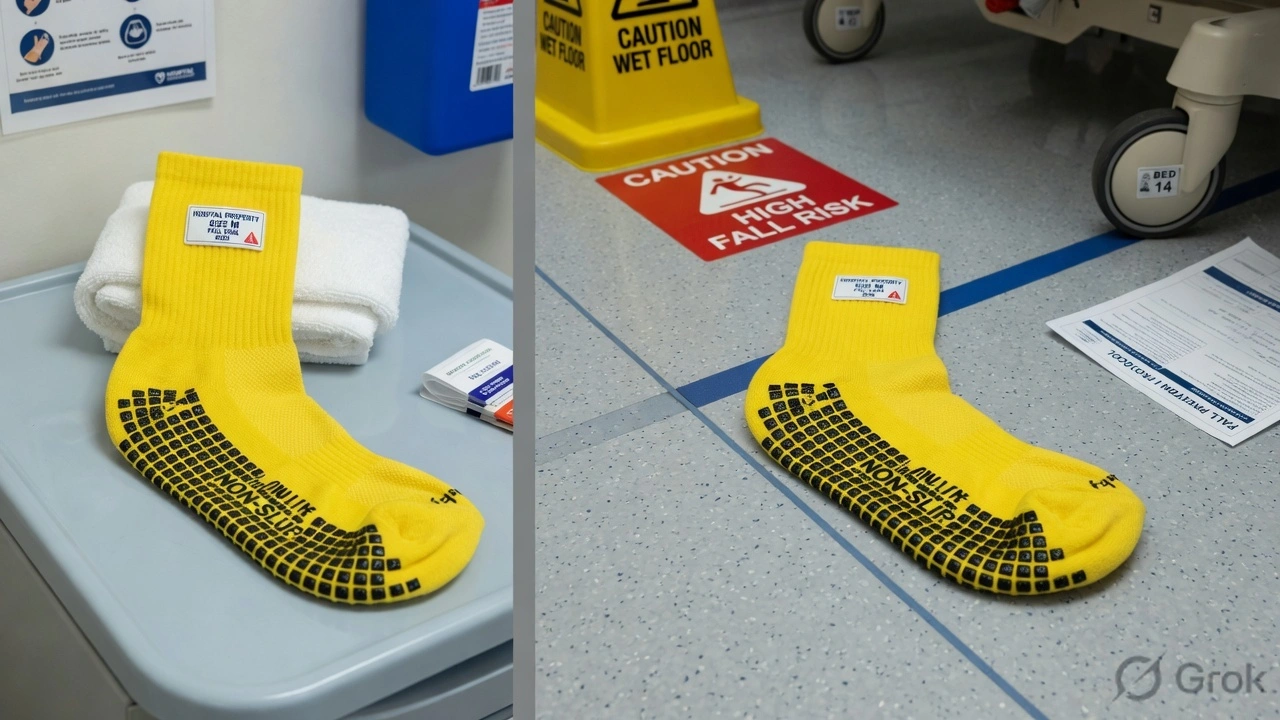
The dual-use problem: in some facilities yellow means ‘size medium’ in the sock sizing programme and ‘fall risk’ in the clinical risk programme — sometimes in the same building. When both systems run simultaneously without clear written documentation, the same sock color sends contradictory signals. Always document color meaning in writing before implementing any color-coded program.
If your facility uses color for sizing, those colors must be entirely separate from the risk coding system — documented in writing and included in every staff orientation.
Common sizing color convention
The table below shows a widely used sizing convention. It is not a national standard — treat it as a reference point only.
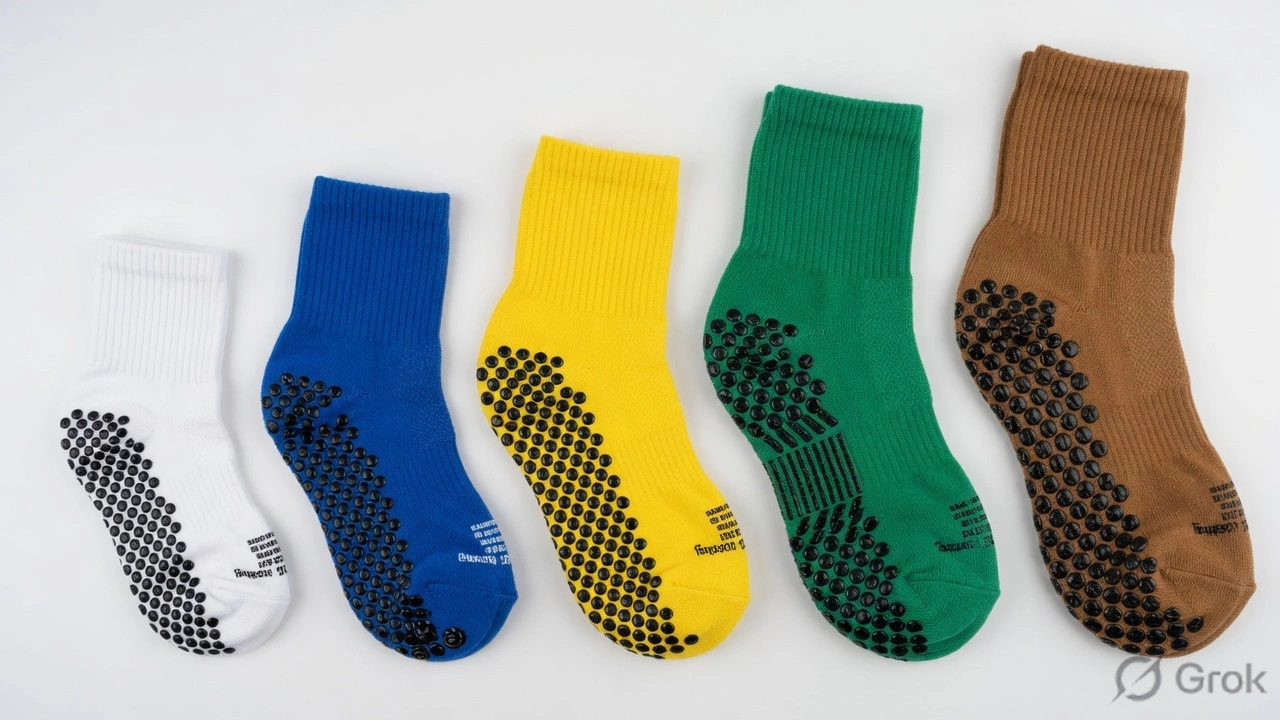
One common hospital sock sizing convention: white (XS), blue (S), yellow (M), green (L), brown-tan (XL). This is not a national standard — it is a widely used operational convention. If your facility uses color for sizing, ensure these colors do not conflict with your clinical risk coding system.
| Sock colour | Size | Application | Buyer note |
| White / Cream | XS | Pediatric wards, small-framed adults | Least commonly ordered in adult programs |
| Blue | S | General adult — narrow to medium foot | The most common adult size in many programs |
| Yellow | M | General adult — medium foot width | Can conflict with fall-risk yellow — document carefully |
| Green | L | General adult — wide foot width | Can conflict with latex allergy — verify before use |
| Brown / Tan | XL | Bariatric and wide-foot patients | Brown avoids conflict with risk-coding colors |
| Grey | XL (alt) | Alternative XL sizing colour | Neutral — no clinical meaning conflicts |
4. How to Specify a Color-Coded Bulk Sock Program
Step 1 — Get the written protocol first
Before specifying any color, obtain written confirmation from clinical governance or infection control. Confirm which colors carry clinical meaning, which are used for sizing, and which are avoided in that facility.
Do not rely on verbal confirmation from ward staff. Conventions change, staff rotate, and undocumented systems are the first thing to break down during a handover.
Step 2 — Estimate your color volume split
A practical starting framework for a mixed adult ward program:
- White: 50–60% of total volume — standard issue baseline.
- Yellow: 30–40% — fall risk. Higher for old or post-surgical wards.
- Red: 5–10% — allergy-flagged patients.
- Other colors: 5% or less each — only if explicitly required by the facility’s protocol.
These proportions shift significantly by ward type. Build from actual ward composition data rather than a generic template.
Step 3 — Confirm the technical specification
Color is a communication tool. The clinical performance of the sock comes from its construction. Confirm these four parameters for every color ordered:
- GSM weight: 150–165 GSM for general wards. 170–180 GSM for high-turnover programs with daily industrial laundry.
- Grip pattern: Full-foot for mobile patients. Solely for bed-bound. Double-sided for high fall-risk and care home residents.
- Latex or latex-free: Default to latex-free for ICU, pediatric, and care home programs.
- Wash durability: Request a test report confirming grip retention across 100+ industrial cycles at 60°C.
The full technical specification framework — GSM weight, grip pattern selection, and what documentation to request — is covered in our hospital socks procurement guide.
Step 4 — Order from the matched batch production
Socks from different production runs can vary in shade — even in the same nominal color. For a color-coded program to function as intended, every unit must match exactly across the order.
- Specify color-matched batch production in writing at the point of order.
- Request a pre-production sample in each color before confirming the full run.
- Provide a Pantone reference for each matched color—not a color name.
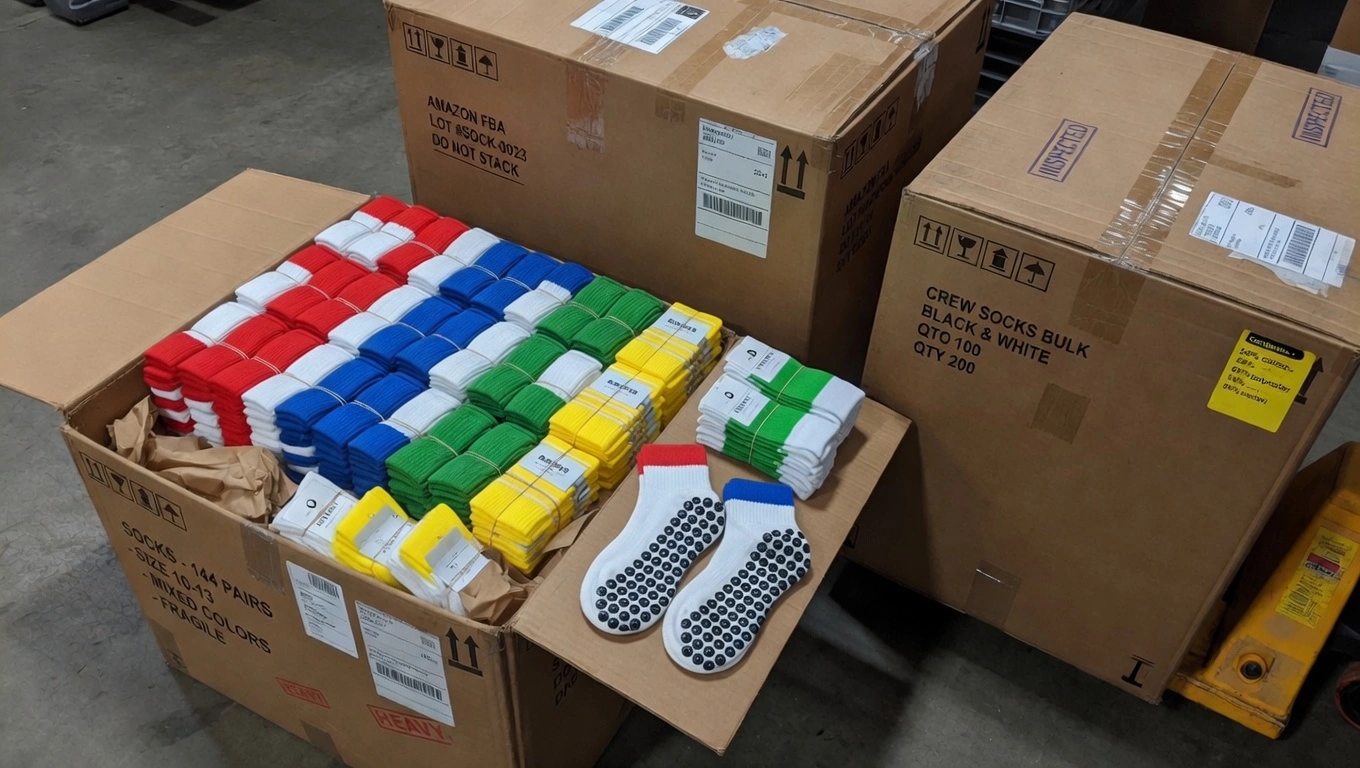
Batch-controlled dyeing ensures color consistency across multi-unit bulk orders. Socks from different production runs can vary visibly in shade — even in the same nominal color — which undermines the entire visual communication system. Hilton Enterprises produces color-coded hospital socks from matched batch production of 5,000 units per color per size.
ASTM F2913 is the US standard for footwear slip resistance. Request test results confirming a coefficient of friction of 0.5 or higher on wet and dry surfaces — for every color in the program.
5. Frequently Asked Questions
What do yellow hospital socks mean?
Yellow is the most commonly used color for fall risk in US hospital programs, consistent with the AHA’s patient alert framework. It is the closest thing to a broadly recognized convention across different facilities. That said, some hospitals use yellow to indicate sock size — always confirm the facility’s specific protocol before ordering.
What do red hospital socks mean?
Red is most commonly used for allergy alerts, in line with the AHA wristband framework. Some facilities use red for the highest fall risk tier — do not mobilize without staff. Because red has multiple common meanings, verify the specific protocol before including it in a bulk program.
Is there a national standard for hospital sock colors?
No. The AHA’s patient alert color framework (yellow = fall risk, red = allergy, purple = DNR) was designed for wristbands and has been adopted by at least 20 US states for that purpose. Many hospitals extend this to socks, but it is a facility-level decision — not a legal requirement. Always follow the specific facility’s written protocol.
What do green hospital socks mean?
Green is most commonly used for latex allergy, in accordance with the AHA’s wristband convention. In other facilities, it indicates standard risk or simply size large. Green is among the least consistent colors across hospital systems — always confirm the written protocol before ordering.
Why do hospitals use different colored socks?
Color-coded socks allow any staff member to assess a patient’s status at a glance without consulting the chart. They support structured fall-prevention programs, including those aligned with the Joint Commission’s NPSG 09.02.01 goal. Because there is no national standard, meanings vary — which is why a written facility protocol is essential before any bulk order.
What is the difference between single-tread and double-tread hospital socks?
Single-tread socks have grip on the sole only — suited to bed-bound or low-mobility patients. Double-tread socks grip on both the sole and the top of the foot, maintaining traction if the sock rotates during movement. For the full grip pattern and GSM weight framework, see our hospital socks procurement guide.
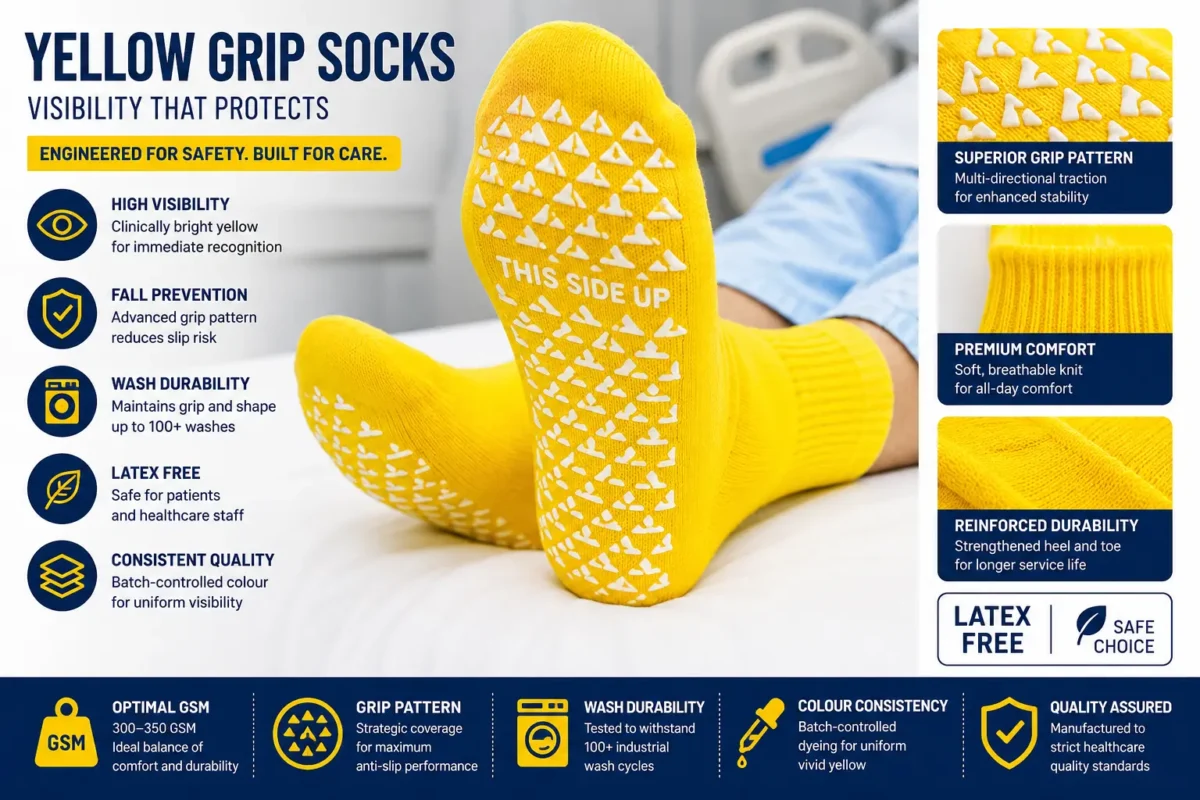
Yellow grip socks are the most visible element of a hospital fall prevention program. Getting the specification right — GSM weight, grip pattern, latex-free status, wash durability, and batch-controlled color matching — determines whether that visual safety signal translates into genuine clinical protection across the full service life of the sock.
Source Color-Coded Hospital Socks from a Certified Manufacturer
Hilton Enterprises manufactures hospital grip socks in any Pantone color — batch-controlled dyeing, full GSM and grip pattern control, and latex-free options. Our facility in Faisalabad, Pakistan, holds ISO 9001:2015, ISO 14001, OEKO-TEX Standard 100, and Sedex certification. Minimum order 5,000 units per size and color.
- Browse our hospital socks range — standard, bariatric, latex-free, and custom color variants.
- Request pricing, samples, or a color specification sheet — our Socks division team responds within one business day.