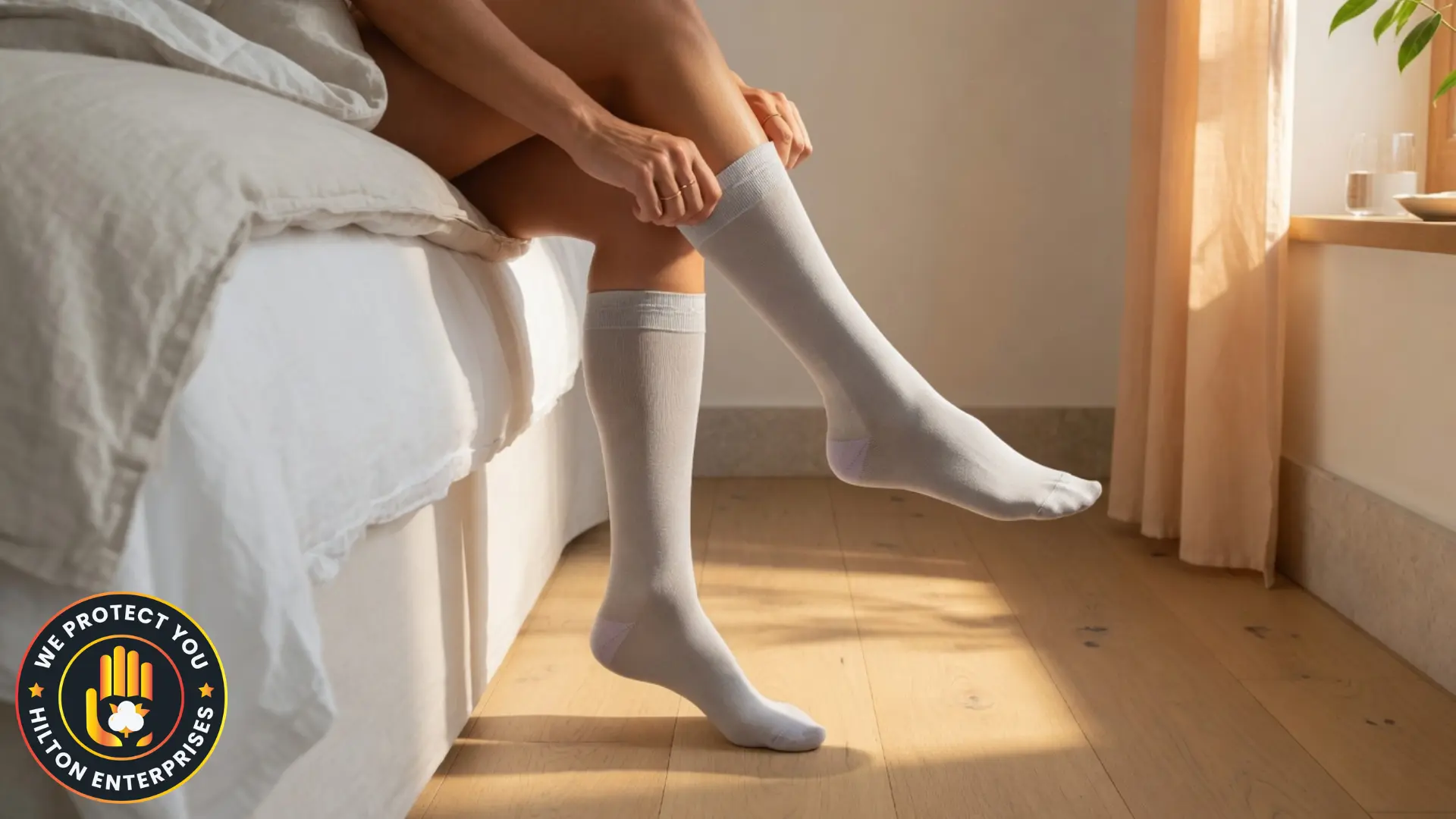
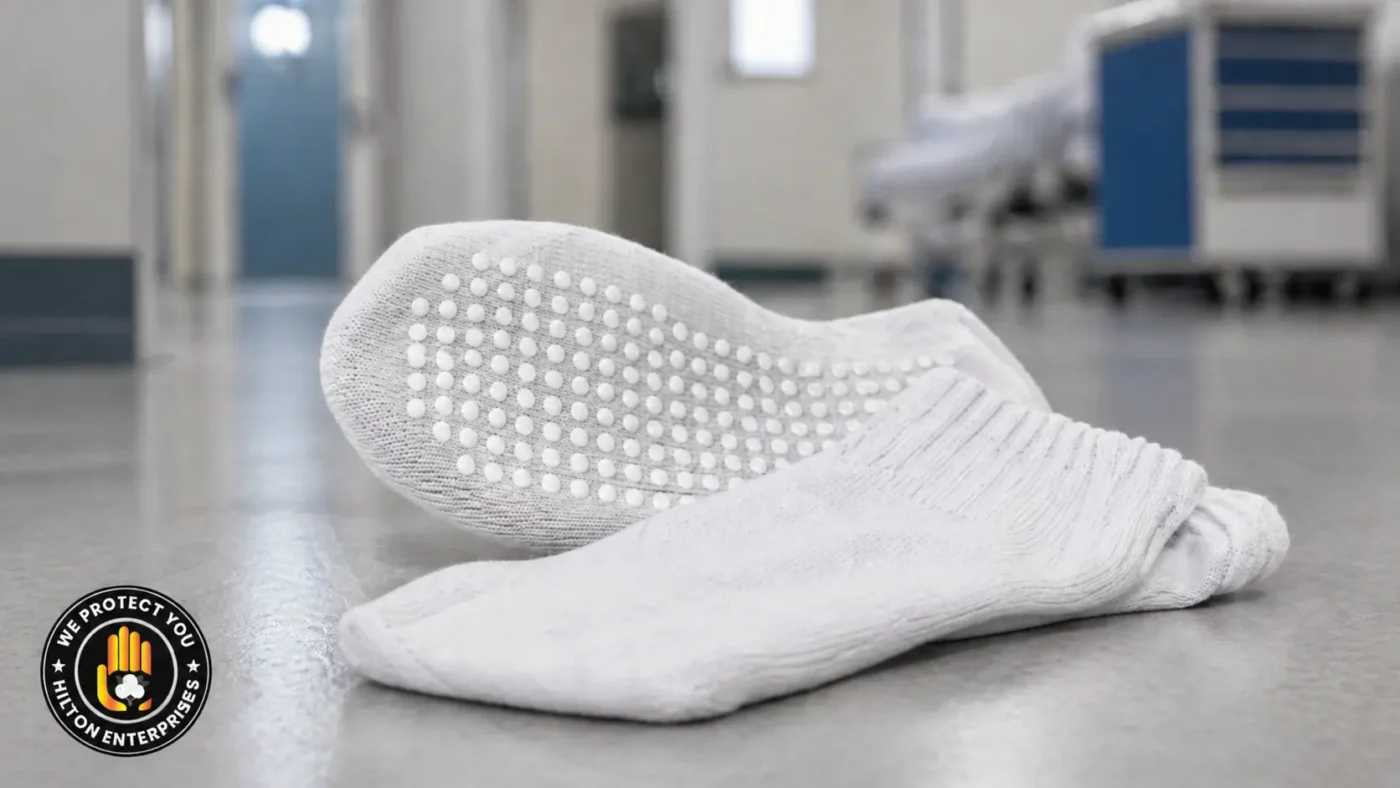
Most guides on hospital socks target patients or caregivers buying one or two pairs. This guide targets procurement managers, linen services directors, and care facility buyers who source grip socks in bulk, where specification errors, inadequate GSM weight, or the wrong grip pattern can create clinical risk and unnecessary replacement costs.
Below is a complete procurement reference: what hospital socks are, what the clinical evidence says about their role in fall prevention, how to specify the right construction and grip pattern for each care setting, and how to order in bulk from a certified manufacturer.
1. What Are Hospital Socks?
Definition and clinical purpose
Manufacturers produce hospital socks — also called grip socks, non-skid socks, or slipper socks — as specialised hosiery with a non-slip rubber or latex grip element applied to the sole, the full foot surface, or both sides of the sock. These socks primarily prevent falls: the grip surface maintains traction between the patient’s foot and floor or bed surfaces, reducing uncontrolled movement during transfers, ambulation, and repositioning.
They are distinct from standard socks in three critical ways:
- Grip element: Manufactured with a latex or rubber dot, strip, or pattern applied post-knit. Standard socks have no grip element.
- Construction: Typically knitted — an inherently elastic structure that accommodates varied foot widths across a patient population without requiring exact sizing.
- Wash specification: Rated for industrial laundering at 60°C with commercial detergents across 150–200 cycles. Consumer socks are not rated for this laundry environment.
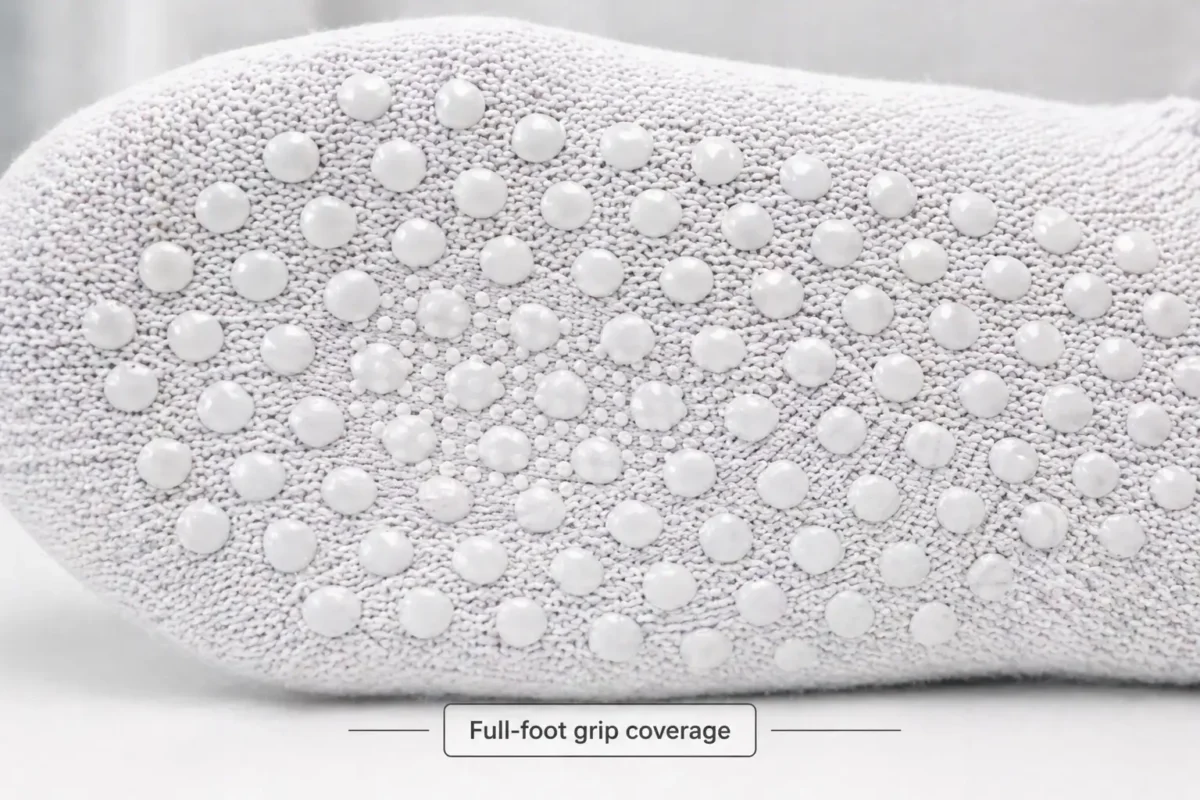
The grip element is what separates a hospital sock from a regular sock. Rubber dots are applied post-knit across the sole — full-foot coverage for mobile patients, sole-only for bed-bound settings. Hilton Enterprises manufactures both latex and latex-free grip variants.
Hospitals and care facilities that order regular socks for patient use — regardless of grip markings — consistently report higher replacement rates and earlier grip failure. Browse Hilton Enterprises’ hospital socks range for ISO-certified specifications across all grip types and GSM weights.
How hospital socks differ from everyday grip socks
Fitness grip socks — used in pilates, yoga, and barre — use a similar grip principle but are not built for healthcare laundry environments. Key differences that matter for procurement:
- Wash durability: Fitness grip socks typically survive 30–50 consumer wash cycles. Hospital-grade socks must withstand 150–200 industrial wash cycles at 60–71°C.
- Grip retention: Clinical grip socks maintain traction performance across the full service life. Fitness grip socks see rapid grip degradation after repeated high-heat washing.
- Material specification: Healthcare-grade socks are manufactured to a defined GSM weight with documented material composition. Fitness socks are not.
What Are Hospital Socks Called? Common Terms Explained
Hospital socks are known by several names depending on the clinical setting and the buyer. The most common terms used interchangeably are: grip socks, non-slip socks, non-skid socks, slipper socks, tread socks, and patient socks. In procurement documentation, “safety socks” and “fall prevention socks” are also widely used.
The terms are functionally equivalent — all refer to hosiery with a rubber or latex grip element applied to the sole or full foot surface for fall prevention. The specific terminology varies by facility, country, and clinical protocol. When sourcing in bulk, specify by the technical parameters (GSM weight, grip pattern, latex or latex-free) rather than the product name alone — two suppliers’ “hospital grip socks” may be manufactured to significantly different specifications.
2. The Clinical Case for Non-Slip Hospital Socks
What the evidence says about fall prevention
Falls are the most common adverse event in hospital settings. A — published in a clinical nursing journal and indexed in PubMed — found that the consistent use of non-slip footwear across ward populations contributed to measurable reductions in patient fall incidents. The study specifically identifies grip sock use as a low-cost, scalable intervention within existing fall prevention protocols.
This matters for procurement managers for two reasons:
- Clinical accountability: Purchasing under-specified or incorrectly graded socks creates documented institutional risk. A hospital that specifies the right product — with tested grip retention and industrial wash durability — demonstrates due diligence in its fall prevention program.
- Cost-per-fall vs cost-per-sock: The cost of a single patient fall — treatment, extended stay, documentation, potential litigation — significantly exceeds the cost of correctly specified grip socks across an entire ward. Procurement decisions here are risk management decisions.

Falls are the most common adverse event in hospital settings. Correctly specified non-slip grip socks — with tested grip retention across 150+ industrial wash cycles — are one of the lowest-cost, highest-impact interventions in a structured fall prevention program.
How hospital grip socks fit into formal fall prevention programs
The CDC STEADI fall prevention program — Stopping old Accidents, Deaths and Injuries — identifies appropriate footwear as one of the core environmental interventions in fall prevention for both inpatient and outpatient settings. The CDC STEADI program explicitly references grip socks as an appropriate footwear intervention for patients at elevated fall risk during hospitalisation and post-discharge care.
Facilities operating a formal STEADI-aligned fall prevention program should document their sock specification as part of their environmental safety protocol — including grip type, GSM weight, and industrial wash rating.
For facilities managing fall risk across both linen and patient footwear programs, our fitted sheets for hospital beds guide covers the complementary linen specification decisions that affect patient safety on articulating clinical beds.
3. Hospital Grip Socks: Construction, GSM Weight, and Grip Patterns
Knitted vs woven: why construction matters
Manufacturers knit the overwhelming majority of hospital-grade grip socks — they do not weave them. Knitted construction delivers three properties that woven construction cannot:
- Elasticity across the full fabric: The interlocking loop structure stretches to accommodate varied foot widths without requiring precise sizing. One size serves a much wider patient range than a woven equivalent.
- Moisture management: The loop structure allows air circulation, reducing maceration risk in bed-bound patients — a clinical concern in extended-stay and ICU settings.
- Grip element adhesion: Latex or rubber dots bond more effectively to knitted surfaces. The textured loop structure creates mechanical adhesion beyond the chemical bond, extending grip service life.
Woven hospital socks exist, but facilities typically use them in home care or light clinical settings where industrial laundry is not required and precise sizing is manageable.
Understanding GSM weight for hospital sock specification
GSM (grams per square metre) is the primary specification metric for knitted hospital socks — equivalent to thread count in woven linen. Choose GSM based on clinical setting and laundry frequency:
- 120–140 GSM: Good moisture wicking. Suitable for mobile patients in rehabilitation or post-surgical ambulation programs. Lower durability — not recommended for high-frequency industrial laundry programs.
- 150–165 GSM: Mid-weight. The most commonly specified range for general ward use. Balances durability, patient comfort, and wash cycle performance across 150–180 industrial cycles.
- 170–180 GSM: Maximum durability. Choose this option for high-turnover programs — emergency departments, short-stay units, and care homes with daily laundry — where sock replacement cycles are compressed.
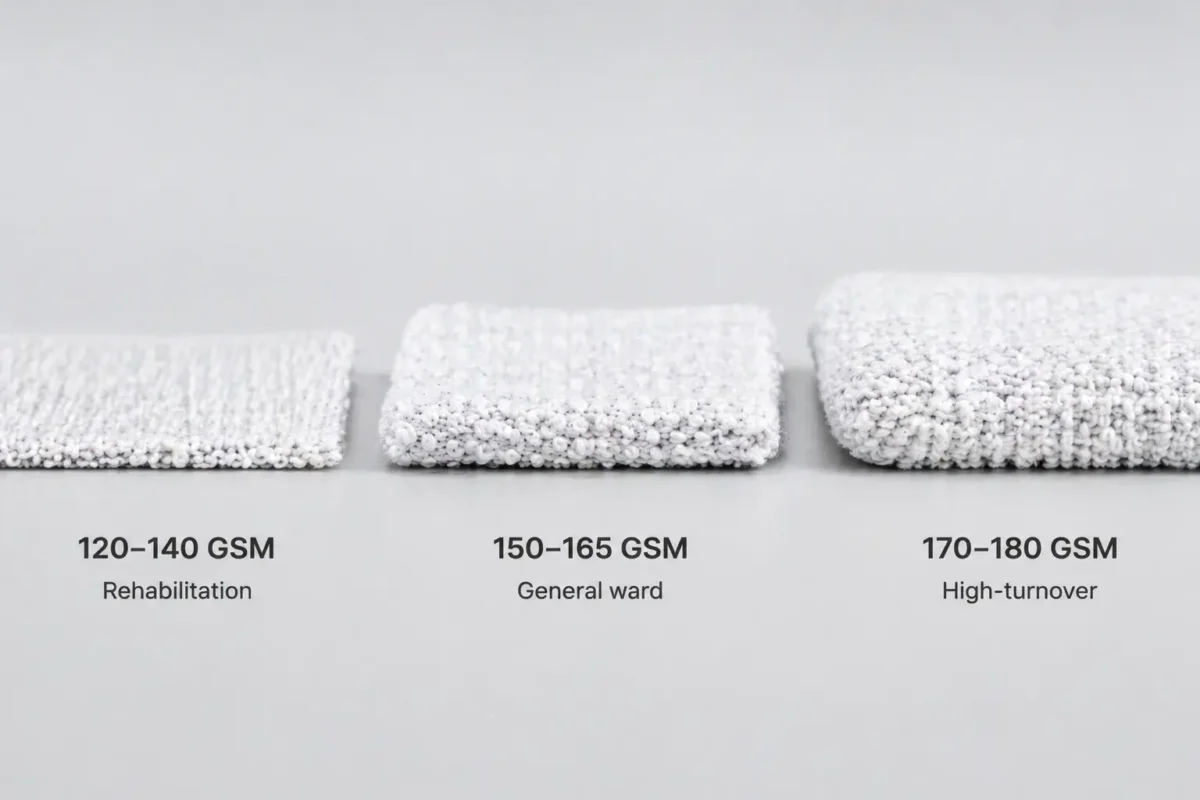
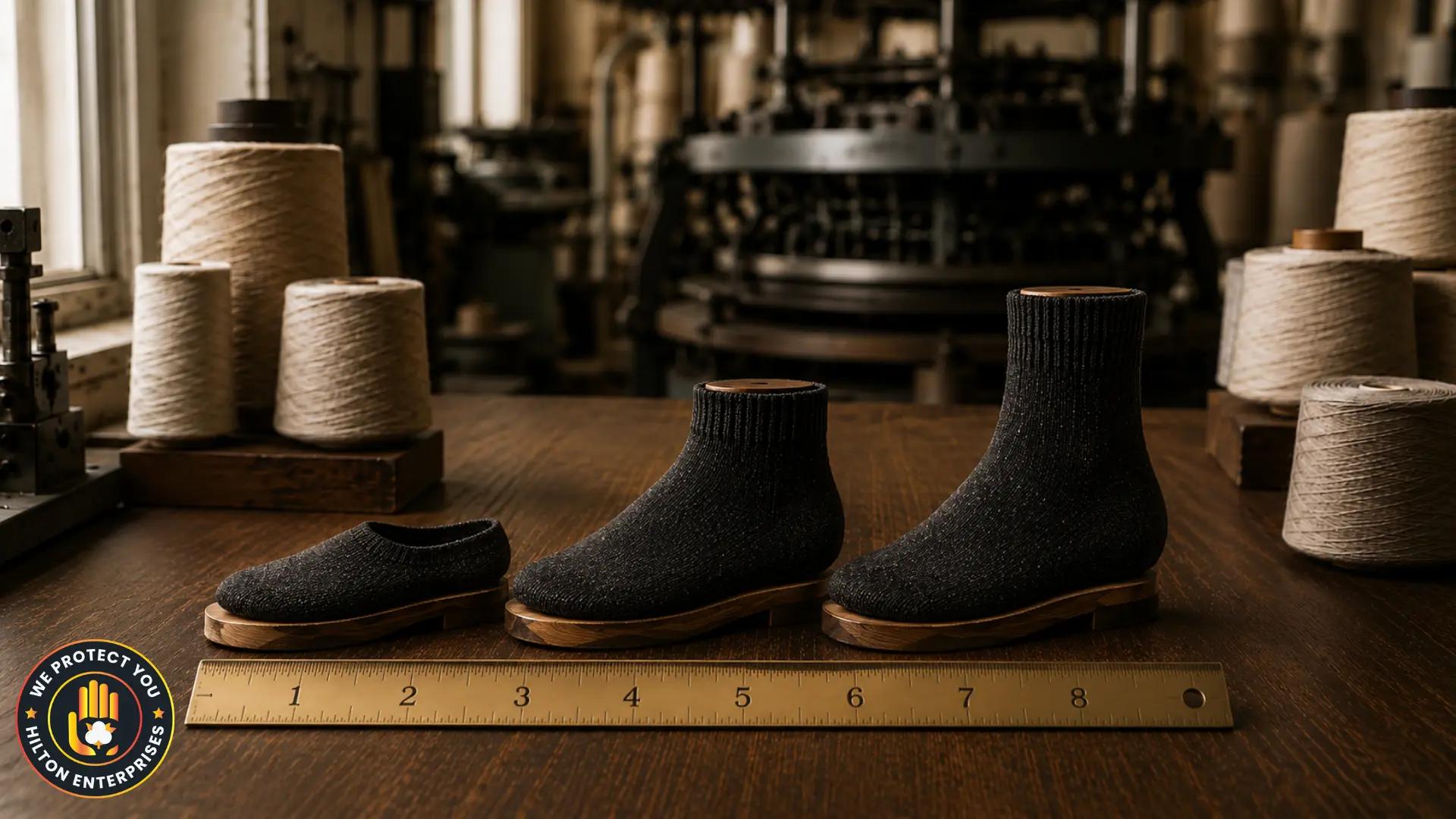
GSM weight determines wash durability and patient comfort. Left: 120–140 GSM — lightweight, good moisture wicking, suitable for rehabilitation. Centre: 150–165 GSM — the most widely specified for general ward use, best cost-per-wash ratio. Right: 170–180 GSM — heavyweight, maximum durability for high-turnover industrial laundry programs.
Specification tip: For most institutional hospital programs, specify 150–165 GSM in a 75% cotton / 25% polyester blend. This delivers the best wash durability, acceptable patient comfort, and reliable grip adhesion across the full service life.
Grip pattern selection guide
Not all grip patterns serve the same clinical purpose. Specify by patient mobility status and ward type — not by personal preference or cost alone.
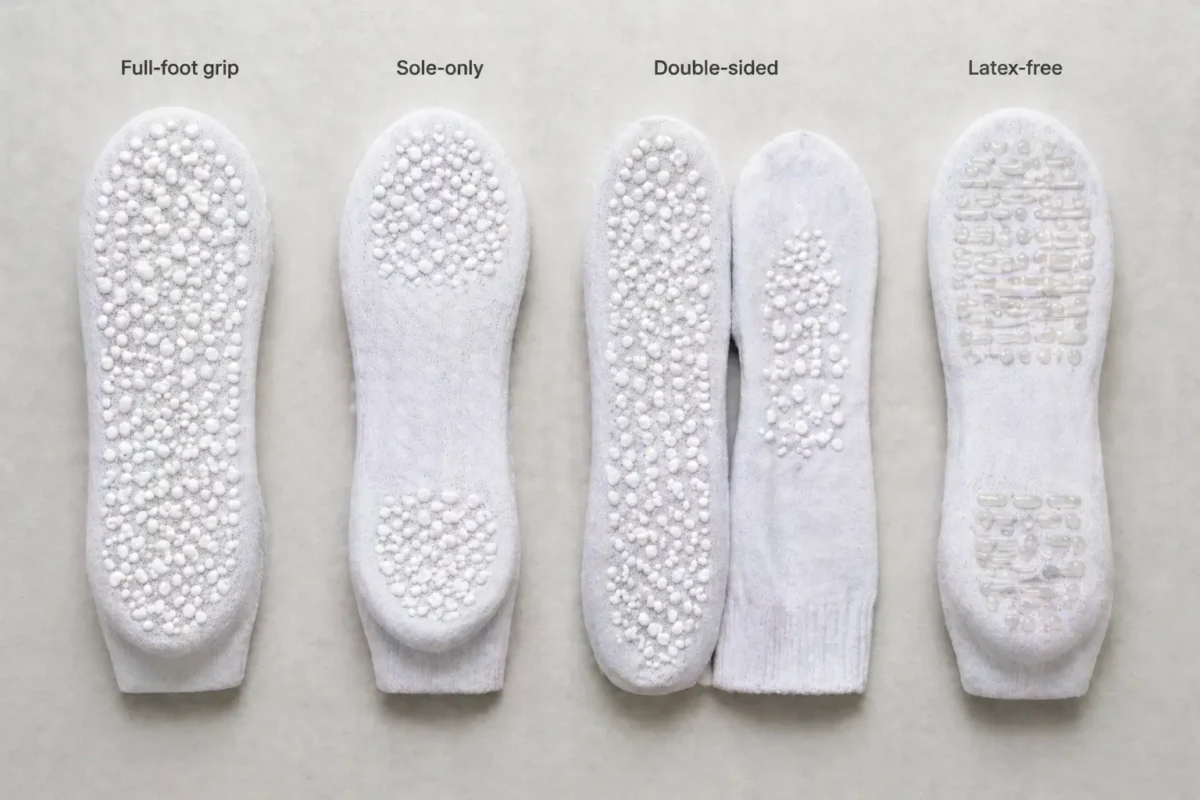
Left to right: full-foot grip (toe-to-heel coverage, mobile patients), sole-only (bed-bound settings), double-sided grip (fall prevention programs and care homes), and latex-free rubber dot (paediatric, ICU, allergy-sensitive wards). All four variants are available from Hilton Enterprises in 5,000 units per size.
| Grip pattern | Best application | Performance note | Procurement guidance |
| Toe-to-heel full-foot | Mobile patients, rehabilitation, post-op walking | Highest traction — grip fires in every step position | Standard for hospital wards where patients move between beds and the corridor |
| Sole-only (bottom tread) | Bed-bound patients, post-surgical, with limited movement | Lower traction reduces the risk of skin irritation on bed surfaces | Most common in acute care settings; cost-effective for high-volume programs |
| Double-sided (top + sole) | Fall prevention programs, care homes, stroke rehab | Maximum grip — prevents sheet-slip and floor-slip | Recommended for high-fall-risk patients; endorsed in fall prevention literature |
| Latex-free rubber dot | Allergy-sensitive wards, paediatric, ICU | Hypoallergenic; grip performance equivalent to latex | Specify for any facility with a latex-free policy; same MOQ as standard |
Hospital Sock Colour Meanings: What Each Colour Indicates
Many healthcare facilities use colour-coded hospital socks as a visual patient safety communication tool. The colour system varies by institution — there is no universal standard — but the most widely adopted coding in US hospitals is:
- Yellow: fall risk. The most universally recognised colour code. Yellow socks signal elevated fall risk to all staff at a glance, without requiring access to the patient’s chart.
- White: standard patient. No elevated fall or allergy risk beyond the baseline. The default specification for most institutional linen programs.
- Red: latex allergy or, in some facilities, do-not-resuscitate (DNR) status. Always confirm with the facility’s specific protocol before specifying red socks, as the meaning varies significantly between institutions.
- Green: specific allergy (non-latex) or patient observation requirement. Usage is institution-specific.
- Orange or purple: used in some facilities for bariatric patients or high-dependency care. Not universal.
For bulk buyers supplying multiple facilities, latex-free grip socks manufactured to your colour specification are available from the standard MOQ. Hilton Enterprises produces hospital socks in any colour to Pantone specification — contact our team for colour matching options.
4. Sock Specification Comparison: Knitted vs Standard
The table below gives procurement teams a complete side-by-side reference for specifying between knitted hospital grip socks and standard woven socks across the key institutional parameters.
| Specification | Knitted hospital sock | Woven / standard sock | Procurement note |
| Construction | Knitted loop structure throughout the fabric | Woven grid structure, hemmed edges | Knitted for articulating beds; woven for standard clinical use |
| Grip element | Latex dots or rubber grip pattern, sole-only or full-foot | Same — applied post-knit | Full-foot grip recommended for mobile patients; sole-only for bed use |
| GSM weight | 120–180 GSM (lightweight, moisture-wicking) | N/A — rated by thread count T-130–T-200 | Higher GSM = more durable; 150–180 GSM recommended for institutional programs |
| Elasticity | High — stretches to fit varied foot widths | Low — sized to measurement | Knitted construction eliminates sizing gaps across patient populations |
| Wash durability | 150–200 industrial cycles at 60°C | 100–150 cycles | Industrial wash rating essential; request test reports before ordering |
| Sizing | S / M / L / XL — stretch compensates width | Precise foot measurement required | For bariatric patients, specify extra-wide or request a custom size |
| Primary use | Hospital wards, care homes, rehabilitation | Home care, light clinical use | Institutional programs should specify knitted as the default |
| MOQ (Hilton) | 5,000 units per size | 5,000 units per size | Both types available from the same order; matched colour and specification |
Industrial wash rule: Always request a documented wash test report before committing to a bulk order. The report should confirm grip retention performance after a minimum of 100 industrial wash cycles at 60°C. Suppliers who cannot provide this documentation are not manufacturing to a clinical-grade standard.
5. Non-Slip Socks for Care Homes and Senior Care Facilities
Why care homes need a different specification than hospitals
Care home buyers have a distinct procurement context from hospital buyers. Non-slip socks for older adults in a residential care setting must balance fall prevention performance with two additional requirements that acute hospital settings do not prioritise: comfort for extended wear, and presentation quality for residents who wear the socks visibly throughout the day.
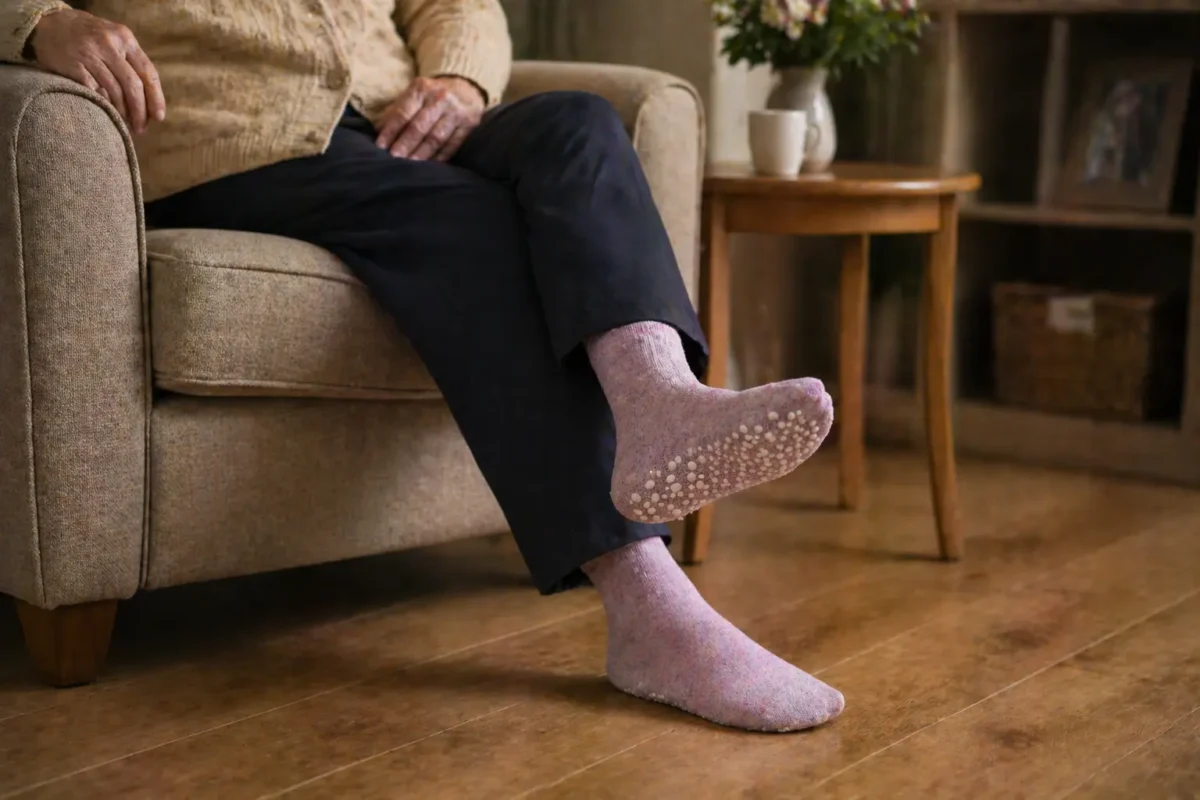
Care home grip socks require a different specification than acute hospital socks — softer GSM weight for extended wear comfort, double-sided grip for carpet and hard floor surfaces, and a colour range that improves resident acceptance. Hilton Enterprises supplies latex-free care home grip socks from 5,000 units per size in a full colour range.
The specification differences that matter for care home procurement:
- GSM weight: 150–165 GSM is appropriate for most care home settings. Heavier GSM can feel rigid during extended wear — a relevant comfort concern for residents wearing the socks throughout the day and evening.
- Double-sided grip: Care home residents walk on carpets, wooden floors, and bathroom tiles — all with different traction properties. We strongly recommend a double-sided grip (top and sole) because it prevents sheet slippage in bed as well as floor slippage during transfers.
- Colour range: Unlike acute hospital settings, where white or single-colour institutional socks are standard, care homes frequently specify coloured grip socks to aid resident identification and to improve acceptance among residents who associate white hospital socks with clinical environments.
- Latex-free: Many older residents develop latex sensitivities or have them identified late in life. That is why we recommend latex-free grip socks. Latex-free rubber grip socks should be the default specification for care home programs.
Fall risk in care home settings — why double-sided grip matters
Falls account for more than 700,000 hospital admissions per year in the United States, with older adults representing the highest-risk group according to CDC STEADI data. In residential care settings — where patient monitoring is less intensive than in acute wards — the environmental fall prevention burden falls more heavily on product specification. Medical grip socks and medical non-slip socks specified with double-sided grip and 150–165 GSM weight provide the most consistent protection across the varied floor surfaces and activity levels found in residential care.
Hilton Enterprises supplies care home operators across the USA, Canada, UAE, and Europe with latex-free, double-sided grip socks in a full colour range, from 5,000 units per size with lead times of 4–6 weeks ex-factory.
6. Bulk Ordering Hospital Socks from a Certified Manufacturer
Why manufacturer vs distributor matters for specification compliance
Most US medical supply channels — including GripJoy, Silverts, AssistiveLivingStore, and Vitality Medical — source hospital socks from manufacturers and resell them at a distributor margin. Ordering directly from an ISO-certified manufacturer delivers three advantages:
- Specification control: Direct from the factory, buyers can specify exact GSM weight, grip pattern type, colour, size range, and material blend — parameters that distributors cannot customise on your behalf.
- Cost: Eliminating the distributor margin reduces unit cost by 20–35% for equivalent specifications. At 5,000 units per size across a multi-SKU hospital linen program, this is a material procurement saving.
- Private label: Distributors sell branded products. Manufacturers produce custom-branded products. Hilton Enterprises produces private label hospital socks — woven labels, printed labels, and custom packaging — from the same MOQ as standard orders.
See our ISO 9001:2015 certified facility
Hilton Enterprises: MOQ and lead times for hospital socks
Hilton Enterprises manufactures all hospital sock variants — standard, bariatric, care home, and private label — from a single ISO 9001:2015 and Sedex-certified facility in Faisalabad, Pakistan. All orders include pre-production sample approval, inline inspection at 50% production, and full documentation.
| Product type | MOQ | Lead time | Available specifications |
| Standard hospital socks (knitted) | 5,000 units per size | 4–6 weeks ex-factory | S / M / L / XL — latex or latex-free grip |
| Bariatric hospital socks | 5,000 units per size | 5–7 weeks ex-factory | Wide-fit, configurable GSM weight |
| Care home grip socks (older people) | 5,000 units per size | 4–6 weeks ex-factory | Double-sided grip, softer GSM options available |
| Private label (custom branding) | 5,000 units per size | +1–2 weeks for branding | Woven labels, printed labels, custom packaging |
| Mixed program (multiple variants) | 5,000 per SKU each | 4–7 weeks ex-factory | All SKUs manufactured in the same facility, matched specifications |
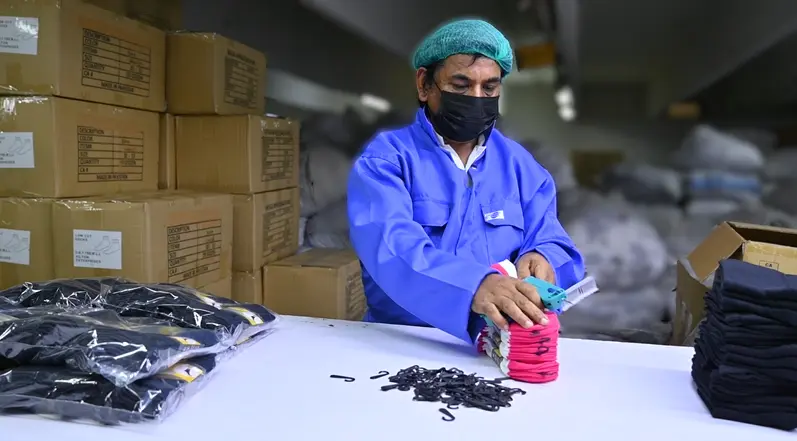
Hilton Enterprises supplies bulk hospital socks — standard, bariatric, latex-free, and private label — from 5,000 units per size out of Faisalabad, Pakistan. Lead times of 4–6 weeks ex-factory, with full documentation including certificate of compliance and wash test reports.
Browse our complete hospital socks range — standard, bariatric, care home, and latex-free variants. Review certifications on our certifications page.
Lead times are ex-factory from Faisalabad. Sea freight to US East Coast ports adds 21–28 transit days. Air freight is available for urgent initial orders or sampling programs.
What to request before placing a bulk order
Before committing to 5,000+ units per size, request the following from any supplier you evaluate:
- Pre-production sample — in your specified GSM weight, grip pattern, and colour, before production begins.
- Wash test report — confirming grip retention performance after a minimum of 100 industrial wash cycles at 60°C.
- Certification copies — ISO 9001 registration number and Sedex membership ID. Verify both against their respective registries.
- Material composition sheet — confirming fibre blend percentages and latex or latex-free grip specification.
- Size grade specification — confirming that each size designation corresponds to a documented foot measurement range, not an arbitrary label.
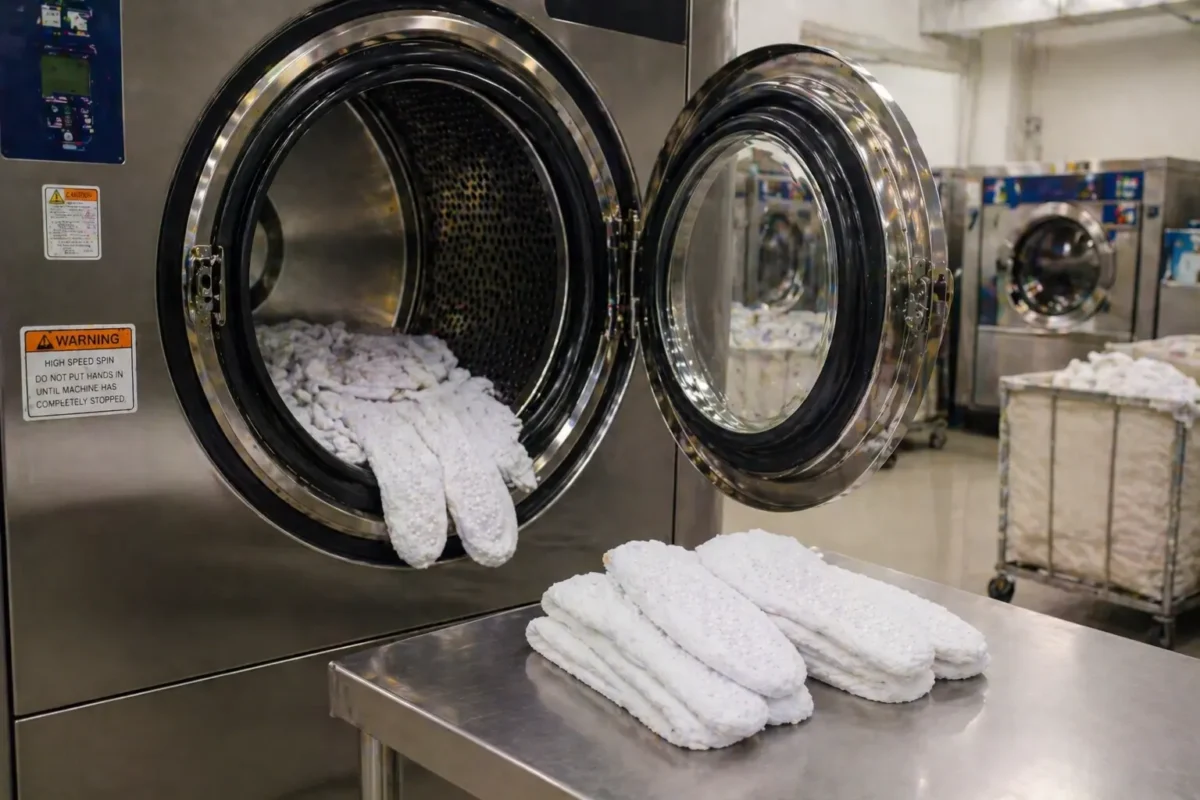
Hospital-grade grip socks must be tested across a minimum of 100 industrial wash cycles at 60°C before bulk specification. Request a documented wash test report from any supplier before ordering. Hilton Enterprises provides grip retention test documentation with all sample orders.
7. Frequently Asked Questions
What do non-slip hospital socks do?
Non-slip hospital socks serve a single primary clinical function: fall prevention. The rubber or latex grip element on the sole or full foot surface maintains traction between the patient’s foot and floor or bed surfaces during transfers, ambulation, and repositioning. Hospitals, care homes, rehabilitation centres, and post-surgical recovery settings use them.
What is the difference between hospital socks and regular socks?
Manufacturers produce hospital socks with a non-slip grip element. They specify these socks to a defined GSM weight and rate them for industrial laundering at 60–71°C across 150–200 wash cycles. Regular socks have no grip element, no GSM specification, and manufacturers do not rate them for industrial laundry environments.
Using regular socks in a clinical setting creates both clinical risk and rapid replacement cost.
Why do hospital socks have grip on both sides?
Double-sided hospital socks — with rubber grip on both the sole and the top of the foot — are specified for fall prevention programs where patients move between bed and floor surfaces. The grip on the sole prevents slipping on floor surfaces during walking and transfers. The grip on the top of the foot prevents the sock from sliding against bed sheets during repositioning, which can cause the sock to bunch or twist and create a tripping hazard when the patient stands. Double-sided grip is the recommended specification for high fall-risk patients, care home residents, and stroke rehabilitation settings.
What do the colours of hospital socks mean?
Hospital sock colours are used as visual patient safety codes, though there is no universal standard. The most widely adopted system in US hospitals: yellow indicates fall risk, white indicates standard patient with no elevated risk, red indicates latex allergy or DNR status (varies by facility), green indicates a specific allergy or observation requirement. Always confirm the colour coding protocol with the specific facility before bulk ordering.
What are hospital socks called in procurement?
Hospital socks are referred to by several names in procurement documentation: grip socks, non-slip socks, non-skid socks, safety socks, patient socks, tread socks, and fall prevention socks. All refer to the same product category — hosiery with a non-slip grip element for clinical fall prevention. When placing bulk orders, always specify by technical parameters (GSM weight, grip pattern type, latex or latex-free, pocket depth rating) rather than product name, as the same term may describe significantly different specifications across suppliers.
What grip pattern is best for hospital socks?
For mobile patients in hospital wards — walking between bed, bathroom, and corridor — specify toe-to-heel full-foot grip. While, For bed-bound or low-mobility patients, a sole-only grip reduces skin irritation while maintaining traction during repositioning. For high-fall-risk patients and care home residents, a double-sided grip (top and sole surface) provides maximum protection across both bed and floor surfaces.
What GSM weight should I specify for hospital socks?
For most institutional hospital programs, 150–165 GSM in a 75% cotton / 25% polyester blend delivers the best balance of wash durability, patient comfort, and grip adhesion. Specify 120–140 GSM for lightweight rehabilitation programs; 170–180 GSM for high-turnover programs with daily industrial laundry cycles.
Are hospital grip socks latex-free?
Not automatically. Standard hospital grip socks use latex rubber dots as the grip element. Latex-free hospital socks use a synthetic rubber grip compound that provides equivalent traction performance without latex allergen exposure. Always specify latex-free for paediatric wards, ICU settings, and care home programs where latex sensitivity is prevalent. Hilton Enterprises manufactures both standard and latex-free grip socks from the same MOQ.
What is the minimum order for bulk hospital socks?
Hilton Enterprises accepts a minimum order of 5,000 units per size for standard and bariatric hospital socks. Private label branding — custom woven labels, printed labels, and retail packaging — is available from the same MOQ. Lead times are 4–6 weeks ex-factory from Faisalabad, Pakistan.
Can we private label hospital socks?
Yes. Hilton Enterprises produces private label hospital grip socks from the standard MOQ of 5,000 units per size. Branding options include woven labels at the ankle or cuff, heat-transfer printed labels, and custom retail or institutional packaging. Branding adds 1–2 weeks to the standard lead time. Contact our Socks division team with your brand specifications, and we will provide a sample and pricing within one business day.
For broader questions on payment terms, sampling policy, and export documentation, visit the full FAQ page.
Source Hospital Socks Directly from a Certified Manufacturer
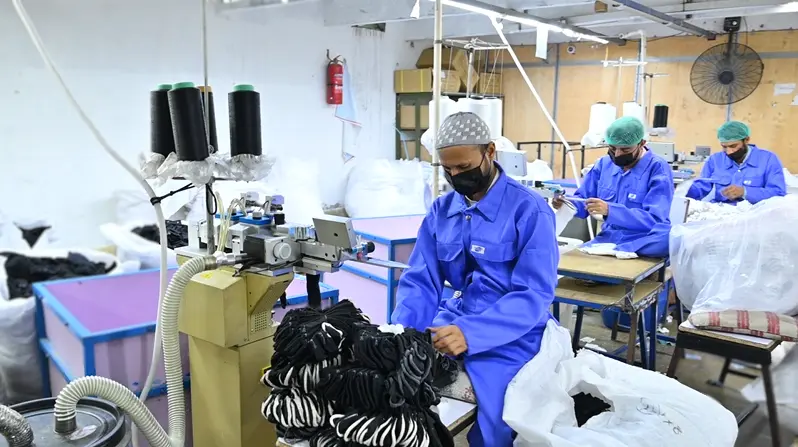
Hilton Enterprises’ Socks division operates from an ISO 9001:2015, ISO 14001:2015, Sedex, and CTPAT-certified manufacturing facility in Faisalabad, Pakistan. Hospital grip socks — all variants — are produced in the same facility under a single quality management system.
Hilton Enterprises manufactures and exports hospital grip socks, non-slip care home socks, and private label institutional footwear to healthcare facilities, distributors, and linen program operators across the USA, Canada, UAE, and Europe.
Our Socks division operates from an ISO 9001:2015, ISO 14001:2015, Sedex, and CTPAT-certified facility in Faisalabad, Pakistan — with 55+ years of B2B textile manufacturing behind every order.
- Explore our hospital socks range — standard, bariatric, care home, and latex-free variants.
- Review our certifications and company background — ISO 9001, ISO 14001, Sedex, CTPAT.
- Request pricing, samples, or a full specification sheet — our Socks division team responds within one business day.