
Starting a clothing brand has never been more accessible for aspiring entrepreneurs. The global apparel market is projected to reach $2 trillion by 2026, with private label clothing brands capturing an increasingly significant share. Whether you’re dreaming of launching a streetwear line, athleisure brand, or sustainable fashion label, this comprehensive guide will walk you through every step of how to start a clothing brand successfully.
From creating your clothing brand business plan to finding reliable apparel manufacturers, we’ll cover everything you need to know about building a profitable private label apparel business in 2026. By the end of this guide, you’ll understand the manufacturing process, know how much to start a clothing brand, and have a clear roadmap to launch your vision.
Table of Contents
- What is Private Label Clothing and Why It’s Perfect for Startups
- OEM vs ODM Manufacturing: Understanding Your Options
- How to Create a Clothing Brand Business Plan
- How to Find Reliable Apparel Manufacturers
- 10 Steps to Start Your Clothing Business
- Selecting Your Private Label Clothing Line
- Private Label Clothing Manufacturers for the USA Market
- Frequently Asked Questions
What is Private Label Clothing and Why It’s Perfect for Startups
Private label clothing refers to garments manufactured by one company but sold under another company’s brand name. As a private label brand owner, you work with a clothing manufacturer to produce custom designs that carry your unique branding, labels, and packaging. This business model has become the preferred choice for entrepreneurs looking to start a clothing business without investing in their own manufacturing facilities.
Benefits of Private Label Manufacturing
Unlike dropshipping or print-on-demand services, private label apparel offers several distinct advantages:
- Brand Control: Complete ownership of your designs, quality standards, and brand identity
- Higher Profit Margins: Typically 40-60% margins compared to 10-20% for dropshipping
- Quality Assurance: Direct communication with manufacturers ensures consistent product quality
- Scalability: Easy to scale production as your clothing businesses grow
- Customization: Full control over fabrics, fits, colors, and finishing details
Working with an established private label manufacturer allows you to focus on product development, marketing strategy, and building your brand while leaving the complex manufacturing process to experienced professionals.
Private Label vs Other Business Models
| Business Model | Startup Costs | Profit Margins | Brand Control | Quality Control |
|---|---|---|---|---|
| Private Label | $10,000-$50,000 | 40-60% | Full | Full |
| White Label | $5,000-$15,000 | 30-40% | Limited | Medium |
| Dropshipping | $500-$5,000 | 10-20% | None | None |
| Print-on-Demand | $1,000-$10,000 | 20-30% | Medium | Limited |
OEM vs ODM Manufacturing: Understanding Your Options
When researching apparel manufacturers, you’ll encounter two primary manufacturing models: OEM and ODM. Understanding the difference between OEM vs. ODM manufacturing is crucial for choosing the right partner for your clothing brand.
What is OEM Manufacturing?
OEM (Original Equipment Manufacturer) means you provide complete designs, tech packs, and specifications to the clothing manufacturer. The manufacturer produces your exact designs according to your requirements. This model offers:
- Complete Design Control: You own all design elements and intellectual property
- Unique Products: Your designs are exclusive to your brand
- Higher Development Costs: You bear all design and development expenses
- Longer Lead Times: Additional time needed for pattern development and sampling
OEM manufacturing is ideal for established brands with in-house design teams or entrepreneurs working with fashion designers who want truly unique products.
What is ODM Manufacturing?
ODM (Original Design Manufacturer) means the manufacturer offers pre-existing designs that you can customize with your branding. The ODM manufacturer handles product development, and you select from their catalog. This approach provides:
- Lower Startup Costs: No design development fees
- Faster Time to Market: Existing patterns and samples speed up production
- Proven Designs: Products already tested and refined
- Limited Exclusivity: Other brands may sell similar styles
ODM manufacturing works well for startups testing the market or entrepreneurs who want to launch quickly without significant upfront investment in product development.
Which Model is Right for Your Brand?
Choose OEM if:
- You have unique design concepts
- You’re willing to invest more
- Brand differentiation is your priority
- You have design expertise in-house
Choose ODM if:
- You’re launching your first clothing line
- The budget is limited
- Speed to market is critical
- You want to test demand before investing in custom designs
At Hilton Enterprises, we specialize in OEM apparel manufacturing for US brands looking to create distinctive product lines. Our comprehensive OEM services include tech pack development, pattern making, sampling, and full-scale production with complete design confidentiality.
Most successful clothing businesses start with ODM to validate their market, then transition to OEM as they scale and develop their unique design identity.
How to Create a Clothing Brand Business Plan
A comprehensive clothing brand business plan is essential for securing funding, staying focused, and measuring progress. According to the Small Business Administration, a well-structured business plan increases your chances of securing funding and helps you navigate challenges. Your business plan serves as your roadmap from concept to profitable business model.
Essential Components of Your Business Plan
1. Executive Summary
Your executive summary should concisely present your vision, target market, unique value proposition, and financial projections. This section, though written last, appears first and determines whether investors read further. Include:
- Brand mission and vision
- Target customer demographics
- Unique selling proposition
- Financial highlights (projected revenue, profit margins)
- Funding requirements
2. Market Analysis
Research your niche thoroughly. Understanding market trends, customer preferences, and competition is crucial. Include:
- Industry Overview: Current apparel market trends, growth projections
- Target Market: Age, income, lifestyle, and shopping habits of your ideal customers
- Competitive Analysis: Direct competitors, their strengths/weaknesses, market gaps
- Market Positioning: How your brand fills unmet needs
3. Product Line Strategy
Detail your initial product offerings and expansion plans. For a clothing startup, this typically includes:
- Product Categories: Will you start with private label t-shirts, hoodies, activewear, or a mix?
- Pricing Strategy: How your pricing compares to competitors
- Product Development Timeline: When new styles will launch
- Quality Standards: Materials, construction methods, certifications
4. Marketing Strategy
Your marketing strategy should outline how you’ll attract and retain customers:
- Brand Identity: Logo, color palette, brand voice, visual aesthetic
- Digital Marketing: Social media, influencer partnerships, content marketing
- Sales Channels: E-commerce, retail, wholesale, or multi-channel approach
- Customer Acquisition Cost: Estimated cost to acquire each customer
- Launch Strategy: Pre-launch buzz, launch events, initial promotions
5. Operations Plan
Explain your day-to-day operations and manufacturing process:
- Manufacturing Partners: Your chosen clothing manufacturer, backup suppliers
- Supply Chain: From raw materials to customer delivery
- Inventory Management: How you’ll manage stock levels
- Quality Control: Inspection processes, defect handling
- Fulfillment: Warehousing, shipping, returns processing
6. Financial Projections
Include detailed financial forecasts for at least three years:
- Startup Costs: Initial inventory, branding, website, marketing
- Revenue Projections: Conservative, realistic, and optimistic scenarios
- Profit & Loss Statements: Monthly for year one, quarterly for years two and three
- Cash Flow Analysis: Ensure you can cover expenses during slow periods
- Break-Even Analysis: When you’ll become profitable
A well-crafted business plan not only guides your decisions but also demonstrates professionalism to potential investors, manufacturers, and retail partners.
How to Find Reliable Apparel Manufacturers
Finding the right apparel manufacturers is perhaps the most critical decision you’ll make when learning how to start a clothing brand. Your manufacturing partner directly impacts product quality, delivery times, and ultimately, customer satisfaction.
Types of Manufacturers to Consider
Understanding the different types of manufacturers helps you identify the best fit for your brand:
1. Domestic Manufacturers (USA)
- Pros: Faster shipping, easier communication, “Made in USA” marketing appeal
- Cons: Higher costs (typically 3-5x international prices), higher MOQs
- Best For: Premium brands, quick turnarounds, small-batch production
2. International Manufacturers (Pakistan, Bangladesh, China, Vietnam)
- Pros: Lower costs, vast production capacity, established textile infrastructure
- Cons: Longer lead times, communication challenges, quality control requires diligence
- Best For: Cost-conscious brands, larger production runs, scaling operations
3. Full-Package vs CMT (Cut-Make-Trim)
- Full-Package: Manufacturer sources materials, produces garments, handles quality control
- CMT: You source materials; the manufacturer only cuts fabric and assembles garments
- Best For: Full-package for startups; CMT for brands with specific material requirements
Why Pakistan Manufacturers Excel for USA Brands
Pakistan has emerged as a premier textile manufacturing hub, particularly for private label clothing brands targeting the USA market. Here’s why:
Quality Textile Heritage Pakistan is the world’s 4th largest cotton producer and has a 70+ year textile manufacturing tradition. This expertise translates to superior fabric quality and construction techniques.
Cost-Effectiveness Without Compromising Quality Pakistani manufacturers offer competitive pricing—typically 20-30% lower than Chinese manufacturers while maintaining comparable quality standards.
USA-Focused Certifications Leading Pakistani manufacturers hold certifications crucial for US importers:
- C-TPAT Certification: Faster customs clearance, reduced inspections
- ISO 9001: International quality management standards
- OEKO-TEX Standard 100: Chemical safety certification
- SEDEX: Ethical supply chain verification
Established Export Infrastructure Pakistan exports over $15 billion in textiles annually, with well-developed logistics networks to major US ports (Los Angeles, New York, Miami).
What to Look for in a Custom Clothing Manufacturer
When evaluating potential manufacturing partners, assess these critical factors:
1. Production Capabilities
- Product range (knits, wovens, both?)
- Specializations (activewear, denim, outerwear?)
- Production capacity
- Technology and equipment
2. Minimum Order Quantities (MOQ)
- Industry standard: 5000-10,000 pieces per style per color
- Lower MOQs typically mean higher per-unit costs
- Consider starting with one style in 2-3 colors to minimize risk
3. Quality Assurance Systems
- In-house quality control team
- Third-party inspection options
- Defect rate guarantees
- Sample approval process
4. Communication and Transparency
- Responsive to inquiries (within 24-48 hours)
- Clear production timelines
- Regular progress updates
- Transparent pricing with no hidden fees
5. Certifications and Compliance
- Industry-recognized certifications
- Social compliance audits
- Environmental standards
- USA import compliance knowledge
6. References and Portfolio
- Similar products manufactured
- Successful USA brand partnerships
- Sample quality and craftsmanship
Taking time to thoroughly vet manufacturers prevents costly mistakes and establishes a foundation for long-term success.
10 Steps to Start Your Clothing Business
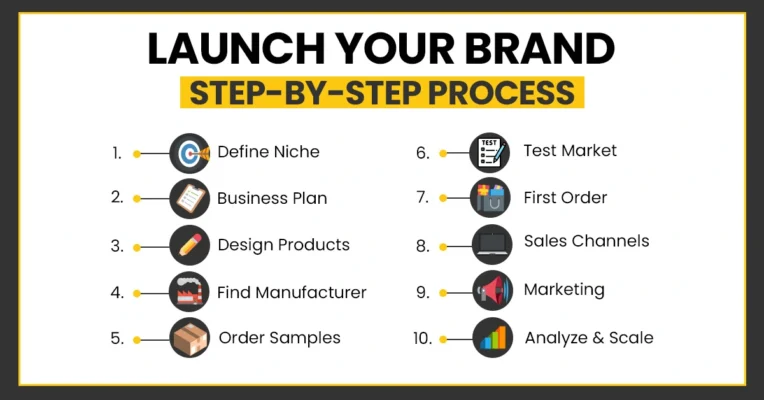
Now that you understand the fundamentals, let’s walk through the practical steps of how to start clothing business from concept to first sale.
Step 1: Define Your Niche and Target Market
Don’t try to be everything to everyone. Successful clothing brands serve specific audiences with defined needs.
Research Questions:
- What gap exists in the current market?
- Who is your ideal customer (age, income, lifestyle, values)?
- What problem does your clothing solve for them?
- What makes your brand different from existing options?
Example Niches:
- Sustainable activewear for eco-conscious millennials
- Plus-size streetwear for women
- Professional athletic wear for specific sports
- Modest fashion for Muslim women
- Performance workwear for trade professionals
Step 2: Create Your Clothing Brand Business Plan
Using the framework outlined earlier, develop your comprehensive business plan. This document will guide your decisions and help secure funding if needed.
Allocate 2-4 weeks for thorough market research and financial planning. Consider using business plan software like LivePlan or working with a business consultant familiar with the apparel industry.
Step 3: Design Your Initial Product Line
Start focused—most successful brands launch with 3-8 core products. Consider these factors:
Product Selection:
- Choose complementary items (e.g., hoodies + matching joggers)
- Select versatile colorways (2-4 colors that work together)
- Ensure products align with your target market’s needs
- Consider seasonal timing (don’t launch swimwear in November)
Design Development:
- Create detailed tech packs (technical drawings with measurements, materials, construction details)
- Develop your brand’s unique design elements (signature fits, details, trims)
- Consider working with a fashion designer or technical designer
- Invest in professional sketches and specifications
Step 4: Find Your Manufacturing Partner
Using the criteria outlined in the previous section, identify 5-10 potential manufacturers. Contact them with:
- Your product concepts or tech packs
- Estimated order quantities
- Timeline requirements
- Quality expectations
- Budget parameters
Evaluate responses based on:
- Communication quality and speed
- Understanding of your vision
- Competitive pricing
- Production capabilities
- Flexibility and willingness to work with startups
Step 5: Order and Evaluate Samples
Never skip the sampling phase. Request:
Pre-Production Samples:
- First iteration based on your tech packs
- Evaluate fit, fabric quality, construction
- Make necessary adjustments
Production Samples:
- Final sample before bulk production
- Should be identical to mass production
- Your last chance for changes before full order
Budget $1,000-$5,000 for sampling, depending on complexity. This investment prevents costly production mistakes.
Step 6: Test the Market
Before committing to large production runs, validate demand:
Testing Methods:
- Pre-orders or crowdfunding campaigns (Kickstarter, Indiegogo)
- Limited production run (minimum MOQ only)
- Pop-up shops or local markets
- Social media feedback on designs
- Focus groups with target customers
This step minimizes risk and provides real market feedback before significant investment.
Step 7: Place Your First Production Order
Once you’ve validated demand and finalized samples, place your initial production order.
First Order Recommendations:
- Start with the manufacturer’s minimum MOQ (typically 5000-7,000 pieces for new brands)
- Order deeper into your best-selling sizes (based on industry standards for your demographic)
- Include 2-3 colorways maximum to test preferences
- Build in 10% buffer for quality control issues
Production Timeline:
- Production: 30-60 days
- Shipping: 15-30 days (air freight) or 30-45 days (ocean freight)
- Customs clearance: 3-7 days
- Total: Plan for 60-120 days from order to delivery
Step 8: Set Up Your Sales Channels
While production is underway, build your sales infrastructure:
E-commerce Platform:
- Shopify (most popular for apparel brands)
- WooCommerce (WordPress-based)
- BigCommerce (enterprise-level features)
- Squarespace (simple, beautiful templates)
Essential Features:
- Mobile-responsive design
- Secure payment processing
- Inventory management
- Customer accounts
- Email marketing integration
Additional Sales Channels:
- Amazon (massive reach, high competition)
- Etsy (handmade/unique items)
- Social media shops (Instagram, Facebook)
- Wholesale to boutiques
- Pop-up shops and markets
Step 9: Launch Your Marketing Campaign
Build momentum before your launch date:
Pre-Launch (60 days before):
- Build email list (offer discount for early access)
- Create social media presence
- Develop content (brand story, behind-the-scenes)
- Reach out to influencers and bloggers
- Create lookbook/product photography
Launch Week:
- Email announcement to list
- Social media campaign
- Limited-time promotions
- Press release to relevant media
- Influencer partnerships go live
Post-Launch (ongoing):
- User-generated content campaigns
- Customer reviews and testimonials
- Retargeting ads
- Email nurture sequences
- Community building
Step 10: Analyze, Adjust, and Scale
After your initial launch, carefully track:
Key Metrics:
- Sales by product, size, color
- Customer acquisition cost
- Lifetime customer value
- Return/exchange rates
- Website conversion rates
- Social media engagement
Optimization Strategies:
- Discontinue poor sellers
- Reorder bestsellers
- Adjust sizing based on return data
- Refine marketing based on customer feedback
- Expand product line strategically
Plan your second production order 60-90 days after selling 50-70% of your initial inventory.
Selecting Your Private Label Clothing Line
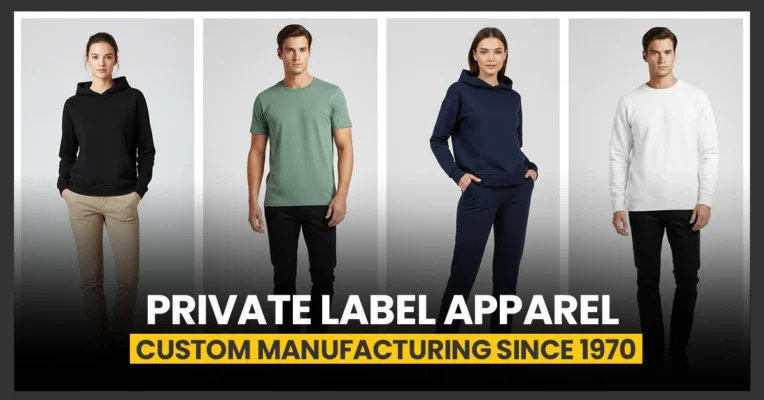
Choosing the right products for your initial launch dramatically impacts your success. Start focused, test the market, then expand strategically.
Most Popular Product Categories for Startups
Private Label T-Shirts
- Why Popular: Low MOQs, universal appeal, versatile styling
- Startup Investment: $15,000-$30,000 for 5000-10,000 units
- Profit Margins: 50-60%
- Best For: Testing designs, building brand awareness, and everyday wear brands
T-shirts remain the gateway product for most clothing brands. They’re affordable to produce, easy to market, and provide a canvas for your brand’s creative vision.
Private Label Hoodies
- Why Popular: High perceived value, strong profit margins, seasonal bestseller
- Startup Investment: $25,000-$50,000 for 5000-10,000 units
- Profit Margins: 55-65%
- Best For: Streetwear brands, athleisure, university/community brands
Hoodies command higher price points ($40-$80 retail) while manufacturing costs remain reasonable, creating excellent profit potential.
Custom Tracksuits
- Why Popular: Growing athleisure trend, coordinated sets, premium positioning
- Startup Investment: $80,000-$116k for 5000-10,000 sets
- Profit Margins: 50-60%
- Best For: Athletic brands, loungewear, fashion-forward activewear
Matching sets simplify customer decisions and increase average order value. The athleisure market continues rapid growth, projected to reach $450 billion globally by 2026.
Product Mix Strategies
Strategy 1: The Capsule Collection Launch with 3-4 complementary items:
- 2 t-shirt styles (crew neck, v-neck)
- 1 hoodie style
- 1 bottom (joggers or shorts)
Benefits: Coordinated outfits, higher average order value, professional presentation
Strategy 2: The Hero Product Focus Launch with 1-2 products done exceptionally well:
- Perfect fit and quality
- Multiple colorways (4-6 options)
- Deep inventory
Benefits: Simplified operations, stronger brand association, easier marketing
Strategy 3: The Lifestyle Collection Launch with complete outfits for specific activities:
- Gym/athletic (sports bra, leggings, tank, jacket)
- Lounge (matching set, robe, socks)
- Workwear (multiple pieces for a specific profession)
Benefits: Clear target market, solution-focused, community building
Seasonal Considerations
Spring/Summer Collection:
- T-shirts (lightweight cotton, moisture-wicking)
- Tank tops
- Shorts
- Light hoodies
- Swimwear (if appropriate for brand)
Fall/Winter Collection:
- Hoodies and sweatshirts
- Long-sleeve tees
- Joggers and sweatpants
- Jackets
- Fleece items
Plan your product line around your launch timing—launching winter products in spring means waiting 6+ months for peak sales season.
Private Label Clothing Manufacturers for the USA Market
When targeting the USA market, choosing manufacturers who understand American sizing, quality expectations, and import requirements is crucial.
Why Pakistan Excels for USA-Focused Private Label Brands
Strategic Trade Advantages
Pakistan benefits from preferential trade agreements and established export relationships with the United States. The country’s textile industry accounts for over 60% of its export earnings, with the USA being a primary market. This focus has created infrastructure and expertise specifically tuned to American brand requirements.
C-TPAT Certification Benefits
C-TPAT (Customs-Trade Partnership Against Terrorism) is a voluntary supply chain security program led by U.S. Customs and Border Protection. Working with C-TPAT-certified Pakistani manufacturers provides:
- Expedited Customs Processing: Reduced inspection times, faster clearance
- Lower Risk of Delays: Priority lane processing at ports
- Enhanced Security: Vetted supply chain reduces shipment holds
- Cost Savings: Fewer inspections mean lower drayage and storage fees
These advantages translate to 3-7 days faster delivery and reduced logistics headaches.
USA Sizing Expertise
American sizing differs significantly from European and Asian standards. Experienced Pakistani manufacturers working with USA brands understand:
- Vanity sizing expectations
- Plus-size grading requirements
- Athletic vs. relaxed fits
- Contemporary fit preferences
This expertise prevents costly fit issues that plague many new brands importing from manufacturers unfamiliar with the USA market expectations.
Understanding the Import Process
Timeline from Order to Delivery:
- Production: 30-60 days (varies by product complexity and order size)
- Quality Inspection: 3-5 days (recommended before shipment)
- Freight Booking: 3-7 days (securing cargo space)
- Ocean Transit: 25-35 days (Karachi to LA/NY)
- Customs Clearance: 3-7 days (faster with C-TPAT)
- Inland Transport: 1-3 days (port to warehouse)
Total Timeline: 65-120 days for ocean freight, 45-90 days for air freight
Import Costs and Duties:
- Customs Duties: Generally 16.5% for apparel (varies by specific product classification)
- Freight Costs: $1,500-$4,000 for full container (ocean), $4-$8/kg (air)
- Insurance: 0.3-0.5% of goods value
- Customs Broker: $100-$500 per shipment
- Drayage: $200-$500 (port to warehouse)
Compliance Requirements for USA Market
Mandatory Label Requirements:
All apparel sold in the USA must include:
- Country of origin (“Made in Pakistan”)
- Fiber content (percentages of each fiber)
- Care instructions (washing, drying, ironing)
- Manufacturer or dealer identity
These requirements are mandated by the Federal Trade Commission to protect consumers and ensure transparency in the textile industry.
Optional, But Recommended:
- Size designation
- RN number (Registered Identification Number from FTC)
- Sustainability certifications (OEKO-TEX, GOTS, etc.)
CPSIA Compliance (if selling children’s wear):
Children’s products require:
- Lead testing certification
- Phthalate testing
- Tracking label (batch code)
- Third-party testing documentation
Reputable manufacturers understand these requirements and can guide you through compliance, often handling testing and certification as part of their services.
Working with Hilton Enterprises: Your Pakistan Manufacturing Partner
With 54 years of textile manufacturing excellence, Hilton Enterprises combines traditional craftsmanship with modern sustainable practices. As Pakistan’s first solar-powered textile factory, we bring unique advantages to USA brands:
Certifications That Matter:
- ISO 9001:2015 (Quality Management)
- ISO 14001:2015 (Environmental Management)
- OEKO-TEX Standard 100 (Product Safety)
- SEDEX (Ethical Supply Chain)
- C-TPAT (USA Customs Security)
Product Capabilities:
- Private label t-shirts in cotton, blends, and performance fabrics
- Private label hoodies with various weights and finishes
- Custom tracksuits and activewear
- Bedding and home textiles for lifestyle brands
Sustainable Manufacturing: Our 750 kW solar power system has eliminated over 16,500 metric tons of carbon emissions since 2010. We use responsibly sourced materials and maintain ethical working conditions verified through regular SEDEX audits.
Startup-Friendly Approach:
- Minimum order quantities from 5,000 pieces (negotiable for exceptional projects)
- Dedicated account management for USA brands
- Tech pack development assistance
- Quality control and pre-shipment inspection
- Transparent pricing with no hidden fees
Frequently Asked Questions
What is private label clothing?
Private label clothing is apparel manufactured by one company (the manufacturer) and sold under another company’s brand name (your brand). You work with a clothing manufacturer to produce custom designs that feature your branding, labels, and packaging. Unlike white label (where multiple brands sell identical products) or branded goods (where you buy pre-made merchandise), private label gives you complete control over design, materials, and brand identity while the manufacturer handles production.
How much does it cost to start a clothing brand?
Starting a clothing brand typically requires $15,000-$50,000 in initial capital. This includes business setup ($500-$2,000), branding and design ($1,500-$10,000), product development and samples ($1,000-$5,000), first production run ($8,000-$30,000), e-commerce setup ($1,000-$3,000), and marketing ($2,000-$10,000). Minimal launches can succeed with $10,000-$15,000 by starting with smaller quantities and basic branding, while optimal launches with professional positioning typically invest $40,000-$60,000. Plan for additional monthly operating costs of $680-$4,500 for the first year.
What’s the difference between OEM and ODM manufacturing?
OEM (Original Equipment Manufacturer) means you provide complete designs and specifications, and the manufacturer produces your exact custom designs. You own all design elements and get unique products, but bear higher development costs and longer lead times. ODM (Original Design Manufacturer) means the manufacturer offers existing designs that you customize with your branding. This offers lower costs, faster production, and proven designs, but limited exclusivity. Choose OEM for unique, differentiated products when you have budget for design investment ($15,000+). Choose ODM for faster, more affordable launches ($5,000-$15,000) ideal for startups testing the market.
How do I start a private label clothing line?
Starting a private label clothing line involves ten key steps: (1) Define your niche and target market through research, (2) Create a comprehensive business plan with financial projections, (3) Design your initial product line (3-8 core items), (4) Find reliable apparel manufacturers specializing in your product type, (5) Order and evaluate pre-production samples, (6) Test market demand through pre-orders or limited runs, (7) Place your first production order (typically 500-5,000 units), (8) Set up e-commerce and sales channels, (9) Launch targeted marketing campaigns, and (10) Analyze results and scale based on data. Plan for 4-6 months from concept to first sales.
Where can I find clothing manufacturers for my brand?
Find clothing manufacturers through online directories like Maker’s Row (USA-focused) and Alibaba (international), trade shows such as MAGIC Las Vegas and Texworld, industry referrals from other brand owners, Google searches for “[product-type] manufacturer Pakistan/USA,” and direct outreach to manufacturers whose work you admire. Evaluate manufacturers based on production capabilities, minimum order quantities (500-5,000 pieces typical), certifications (ISO, OEKO-TEX, C-TPAT for USA imports), communication quality, and sample work. Request references from current clients and always order samples before committing to production.
What is a typical MOQ for private label clothing?
Typical minimum order quantities (MOQ) for private label clothing range from 500 to 5,000 pieces per style per color, depending on the manufacturer and product complexity. Smaller manufacturers may accept 100-300 pieces but charge higher per-unit costs. Larger, more established manufacturers typically require 1,000-5,000 pieces. For a balanced first order, plan for 1,000-2,000 total units across 3-4 styles in 2-3 colors each. This investment typically requires $8,000-$20,000, depending on product type. Some manufacturers offer lower MOQs for first orders to establish relationships, then require higher quantities for reorders.
Launch Your Private Label Clothing Brand Today
The apparel industry offers tremendous opportunities for entrepreneurs willing to invest time in planning and partnering with the right manufacturers. Success in how to start a clothing brand comes down to clear vision, thorough market research, quality manufacturing partnerships, and persistent execution.
Remember these key takeaways as you move forward:
- Start Focused: Launch with 3-8 core products rather than trying to offer everything
- Plan Financially: Budget $20,000-$50,000 for a professional launch and 6-12 months of operating capital
- Choose Manufacturers Carefully: Prioritize communication, certifications, and USA market experience
- Test Before Scaling: Validate demand with samples, pre-orders, or minimum production runs
- Build for the Long Term: Focus on quality and customer satisfaction over quick profits
The journey from concept to successful clothing brand takes dedication, but with proper planning and the right manufacturing partner, your vision can become a profitable reality.
Start Your Journey with Experienced Partners
Hilton Enterprises has helped hundreds of USA entrepreneurs launch successful private label clothing brands since 1970. Our combination of traditional textile expertise, modern sustainable manufacturing, and startup-friendly approach makes us ideal partners for your clothing brand journey.
Ready to take the next step?
- Request Samples: See our quality firsthand
- Discuss Your Vision: Free consultation for serious entrepreneurs
- Get Pricing: Transparent quotes with no hidden fees
- Start Production: From samples to shipping in 60-90 days
Contact our USA brand development team today to explore how our on-demand manufacturing capabilities, commitment to ethical production, and sustainable practices can bring your clothing brand vision to life.
Your clothing brand journey starts here. Let’s build something remarkable together.
About Hilton Enterprises
Since 1970, Hilton Enterprises has been a leading textile manufacturer in Faisalabad, Pakistan, serving brands across the USA, Canada, UAE, and beyond. As Pakistan’s first solar-powered textile factory, we combine 54 years of manufacturing excellence with modern sustainable practices. Our certifications include ISO 9001, ISO 14001, OEKO-TEX Standard 100, SEDEX, and C-TPAT, ensuring quality, safety, and ethical production for every order.
Learn more about our commitment to People, Planet, and Community.

Recent Comments